
Your list is empty, add products to the list to send a request












What Are the Two Types of Fire Alarm Panels?

26
Jul
Fire alarm panels are the heart of any fire detection system. Whether it’s a commercial building, industrial space, or residential complex, your fire alarm panel is responsible for receiving signals from detection devices and triggering emergency responses.
But not all panels are created equal. In fact, there are two main types of fire alarm panels—conventional and addressable. Choosing the right one is critical for building safety, response time, and ease of maintenance.
In this blog, you’ll learn the key differences between these two types, how they work, their pros and cons, and how to select the right system for your needs.
What Is a Fire Alarm Panel?
A fire alarm panel (also called a fire alarm control panel or FACP) is the central unit that manages your entire fire alarm system. It connects with input devices like:
- Smoke detectors
- Heat sensors
- Manual call points (MCPs)
- Flame detectors
…and output devices like:
- Alarm sounders
- Flashing strobes
- Sprinklers
- Emergency communication systems
The panel constantly monitors for fire indicators. When it receives a signal, it processes the input, triggers alarms, and displays the alert on its interface.
The Two Main Types of Fire Alarm Panels
Fire alarm panels fall into two categories: Conventional and Addressable. Here’s what sets them apart:
- Conventional Fire Alarm Panels
How They Work:
Conventional panels divide a building into physical zones. Each zone has multiple detection devices wired to the panel. If a fire is detected, the panel identifies the zone but not the exact device or room.
For example, if a smoke detector in Zone 2 goes off, the panel will display “Zone 2 – Alarm,” but you’ll need to physically inspect Zone 2 to find the exact detector triggered.
Key Features:
- Hardwired zones (e.g. Zone 1 = Reception, Zone 2 = Storage)
- Each zone has its own circuit
- Basic status indicators (LEDs or zone lights)
- Manual configuration required
Advantages:
- Simple to install
- Lower upfront cost
- Ideal for small buildings or single-floor premises
- Addressable Fire Alarm Panels
How They Work:
Addressable panels assign a unique ID (address) to every device on the system. This allows the panel to display the exact device that triggered the alarm, down to the room or location.
The devices are all connected in a loop, which also reduces cabling.
For instance, instead of just showing “Zone 2,” an addressable panel will show:
“Smoke Detector – Office Room 204 – Fire Alarm Activated.”
Key Features:
- Device-level control and identification
- Programmable response settings
- Data logging and diagnostics
- LCD screen with detailed messages
Advantages:
- Immediate pinpoint of the exact device
- Easier maintenance and testing
- Supports larger, more complex buildings
- Scalable and flexible layout
Limitations:
- Higher upfront cost
- More technical setup required
- Needs programming expertise
Quick Comparison Table
| Feature | Conventional Panel | Addressable Panel |
| Device Identification | By zone only | Exact device and location |
| Wiring | Separate wires per zone | Loop wiring (less cable) |
| Cost | Lower | Higher |
| Best For | Small buildings | Medium to large buildings |
| Programming | Minimal | Fully programmable |
| Fault Detection | General zone fault | Specific device fault |
Which Fire Alarm Panel Should You Choose?
Choose an Addressable Panel if:
- Your building is large, multi-storey, or complex
- You need quick, accurate identification of fire sources
- You want event logging and smart diagnostics
- You require integration with building management systems (BMS)
Choose a Conventional Panel if:
- Your building has 1–3 zones
- You want a cost-effective solution
- You prefer a straightforward system
- You don’t need advanced location tracking
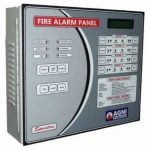
Featured Product: Avani Addressable Fire Alarm Panel
If you’re considering an addressable system, the Avani Addressable Fire Alarm Control Panel is a smart, scalable solution.
Key Benefits:
- LCD display with full addressable mapping
- Supports multiple loops
- Ideal for hospitals, schools, offices, warehouses
- Built-in backup for power failure
- Modular, upgradeable, and standards-compliant
Fire Alarm Panel Maintenance Tips
Regardless of type, all panels require regular checks:
- Daily: Check panel status (should read “Normal”)
- Weekly: Test one device from each zone or loop
- Monthly: Check battery voltage and connections
- Annually: Full inspection and testing by a certified technician
Fire safety isn’t just about having the right panel—it’s about ensuring it works when it matters.
Frequently Asked Questions
1. What is a fire alarm panel?
A fire alarm panel is the core control unit in a fire detection system. It receives input signals from devices like smoke detectors and activates alarms. It also provides status updates, zone identification, and, in advanced systems, detailed device info and logs.
2. What are the two types of fire panels?
The two main types are:
- Conventional Panels: Divide areas into zones, show basic location.
- Addressable Panels: Identify the exact device triggered and offer full system diagnostics.
3. What is an addressable fire alarm control panel?
An addressable panel assigns a unique address to every device in the system. It provides precise data about where an alarm or fault is located, making it ideal for large or complex buildings. It also offers features like loop wiring, event logging, and programmable responses.
Final Thoughts
Choosing between the two types of fire alarm panels—conventional and addressable—comes down to your building size, risk profile, and safety requirements. A conventional system may be enough for smaller spaces, but if you need accuracy, scale, and smart diagnostics, an addressable system is worth the investment.
And remember: your fire panel is the command centre of your fire safety strategy. Choosing the right one ensures faster response, less confusion, and ultimately—saved lives and protected property.
Looking for a reliable addressable system?
Order your Ravel Avani panel from Fire Supplies. Designed for performance, reliability, and full compliance, it’s your best defence against fire emergencies.

