
Your list is empty, add products to the list to send a request









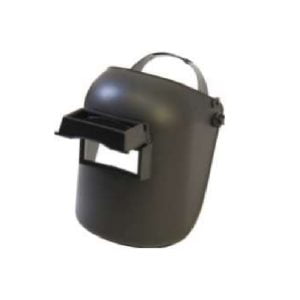
Anzensei AZS37 Auto Darkening Welding Helmet
Anzensei AZS37 Auto Darkening Welding Helmet Made of clear plastic and provides good visibility to both the wearer and the patient. Adjustable band to attach firmly around the head and fit snuggly against the forehead. Fog resistant Completely covers the sides and length of the face. Looking for a safety face shield that is practical and recyclable.
Close
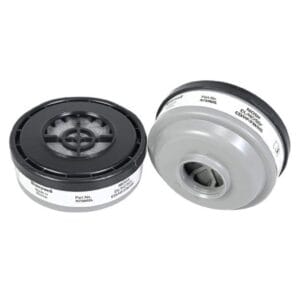
Honeywell Cartridge OV AG – Reusable Respirators
Combination filter cartridges feature a low profile with curved top that will not catch on pipes or other objects. Easy to perform user seal checks: even on the gas and vapor cartridges. Full offering, from organic vapors to multi-contaminant.
Close
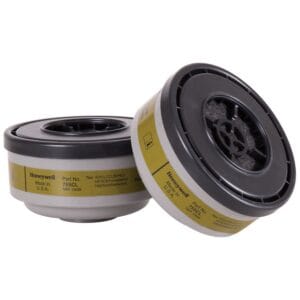
Honeywell Multi Gas Cartridge – Reusable Respirators
Lower pro?le so cartridges dont intrude into the work zone, see everything you need to see, even when doing close up detail work. Even with the smallest, most petite hands, you can achieve an easy user seal check. No struggling or using adapters to achieve a negative check. Threaded connectors that ?t North by Honeywell half and full Air Purifying Respirators. Get the job done without frequent change outs.
Close
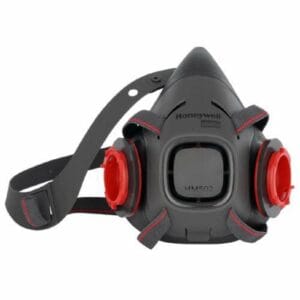
Honeywell Half Face Mask – Reusable Respirators – HM502TM
Lighter than other masks with cartridges on the market. The N-series filters and cartridges are. 20% lighter than the T-series.
Soft material better touch and seal with skin for long-time use. Advanced over-molding manufacturing. Easy assembly and disassembly. Drop-down option for quick work breaks.
Close
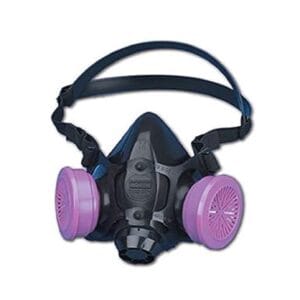
Honeywell Half Face Mask – Reusable Respirators – 770030M
Comfortable and durable. Cradle suspension system. Easy to clean. Low dead air space for less worker fatigue.
Close
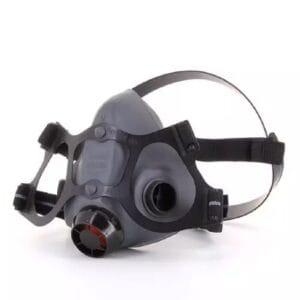
Honeywell Half Face Mask – Reusable Respirators – 550030M
Can be adapted to PAPR or Supplied Air for added ?exibility in the workplace. Only 9 replacement parts, for quick and easy strip down and clean. These masks are latex free, no need to be concerned about latex allergens. Strategically engineered exhalation valve placement allows more breath to be exhaled faster, making the mask more comfortable and cooler to wear.
Close
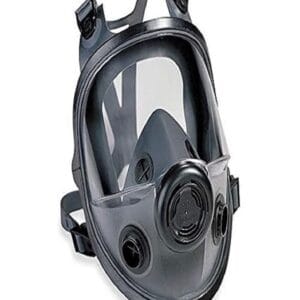
Honeywell Full Face Mask – Reusable Respirators
Wide sealing area ?ts more facial types. Nose cup provides less dead air space and channels exhaled breath out. Latex free, with no natural rubber proteins which may cause an allergic reaction. Wide panoramic lens provides optimal ?eld of vision in all directions. Polycarbonate lens meets ANSI requirements forhigh impact. Can be adapted to PAPR or Supplied Air for greater ?exibility in the workplace.
Close
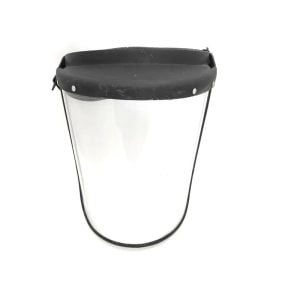
Anzensei AZS36 Plastic Face Visor
Anzensei AZS36 Plastic Face Visor Made of clear plastic and provides good visibility to both the wearer and the patient. Adjustable band to attach firmly around the head and fit snuggly against the forehead. Fog resistant Completely covers the sides and length of the face. Looking for a safety face shield that is practical and recyclable.
Close
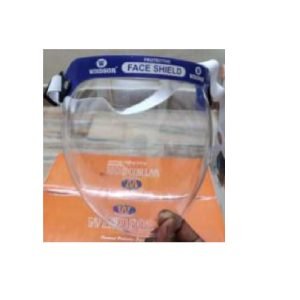
Anzensei AZS35 Face Shield
Anzensei AZS35 Face Shield Made of clear plastic and provides good visibility to both the wearer and the patient. Adjustable band to attach firmly around the head and fit snuggly against the forehead. Fog resistant Completely covers the sides and length of the face. Looking for a safety face shield that is practical and recyclable.
Close
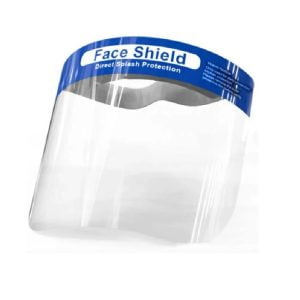
Anzensei AZS34 Face Shield (pack of 50)
Anzensei AZS34 Face Shield Made of clear plastic and provides good visibility to both the wearer and the patient. Adjustable band to attach firmly around the head and fit snuggly against the forehead. Fog resistant Completely covers the sides and length of the face. Looking for a safety face shield that is practical and recyclable.
```html
```
Face Protection FAQs
1. What is face protection and why is it important?
Face protection is personal protective equipment (PPE) designed to shield the face from impacts, flying debris, chemical splashes, heat, sparks, and other workplace hazards. It helps reduce the risk of facial injuries and is commonly used in construction, manufacturing, welding, laboratories, and industrial environments.
2. What types of face protection are available?
Common face protection equipment includes face shields, welding shields, visor systems, chemical splash shields, and arc flash face protection. Each type is designed to protect against specific workplace hazards while allowing workers to perform tasks safely and efficiently.
3. What is the difference between a face shield and safety goggles?
A face shield protects the entire face, while safety goggles primarily protect the eyes from hazards. Face shields provide broader coverage against impacts, splashes, and debris but are often used together with safety goggles for comprehensive facial and eye protection.
4. When should a face shield be worn?
A face shield should be worn whenever there is a risk of flying particles, chemical splashes, molten materials, sparks, or high-impact hazards. Industries such as metalworking, grinding, chemical processing, healthcare, and manufacturing commonly require face shield protection.
5. Can a face shield replace safety glasses or goggles?
No, a face shield should not typically replace safety glasses or goggles when eye hazards are present. Most workplace safety guidelines recommend wearing approved eye protection underneath a face shield to provide complete protection against airborne particles and splashes.
6. How do I choose the right face protection?
The right face protection depends on the specific workplace hazards, comfort requirements, and compatibility with other PPE. Important factors include impact resistance, chemical resistance, optical clarity, visor material, coverage area, and compliance with applicable safety standards.
7. Which industries commonly use face protection?
Face protection is widely used in industries where workers face impact, heat, chemical, or splash hazards. Common sectors include construction, manufacturing, welding, mining, healthcare, laboratories, metal fabrication, oil and gas, and electrical maintenance.
8. What materials are commonly used in face shields?
Face shields are commonly manufactured from polycarbonate, acetate, PETG, and other high-impact-resistant materials. These materials provide durability, optical clarity, chemical resistance, and protection against workplace hazards while maintaining user visibility.
9. What safety standards should face protection comply with?
Quality face protection should comply with recognized safety standards to ensure reliable protection and performance. Depending on the application and market, products may comply with ANSI Z87.1, EN 166, CE, ISO, or IS standards for occupational face and eye protection.
10. How often should face protection be inspected and replaced?
Face protection should be inspected regularly and replaced if it becomes scratched, cracked, damaged, or loses visibility. Routine inspections help ensure shields, visors, headgear, and mounting systems remain effective and capable of providing the required level of workplace protection.

