
Your list is empty, add products to the list to send a request










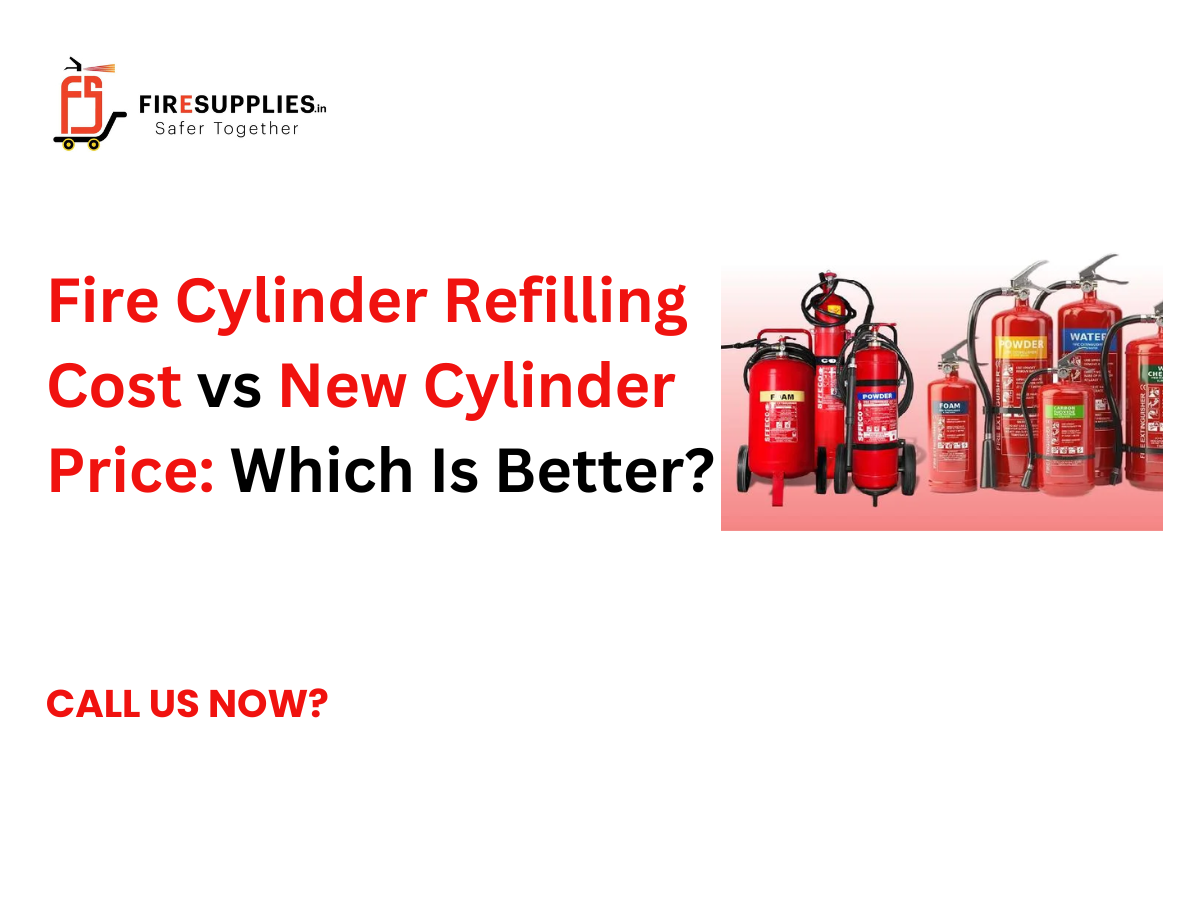
Fire Cylinder Refilling Cost vs New Cylinder Price: Which Is Better?

22
Jun
When a fire extinguisher goes off or simply reaches its service date you face a common question: should you refill it or replace it? Understanding fire cylinder refilling cost vs new cylinder price is essential for making a smart, safe, and cost-effective decision. Whether you manage a commercial property or maintain fire safety equipment at home, this guide breaks down everything you need to know.
What Does Fire Cylinder Refilling Actually Mean?
Fire cylinder refilling (also called recharging) is the process of restoring an extinguisher’s extinguishing agent such as dry chemical powder, CO₂, foam, or clean agent to its original capacity after use or scheduled service.
A trained technician inspects the cylinder, tests its pressure integrity, replaces worn components such as seals or valves if needed, and refills it with the correct agent. The result is a cylinder that performs exactly like a new one at a fraction of the cost.
This process is governed by fire safety standards and must be carried out by a certified service provider. It is not a DIY procedure.
Fire Cylinder Refilling Cost vs New Cylinder Price: A Direct Comparison
| Factor | Refilling a Fire Cylinder | Buying a New Fire Cylinder |
| Cost | Generally 30–60% less than new | Higher upfront cost |
| Time | 1–3 business days on average | Available immediately |
| Best For | Good condition, serviceable cylinders | Old, damaged, or expired cylinders |
| Environmental Impact | Lower reduces waste | Higher adds to material waste |
| Performance After Service | Equivalent to new when done correctly | New and ready to use |
| Compliance | Must meet service standards | Factory-certified from the start |
| Agent Types Covered | ABC powder, CO₂, foam, clean agent | All types available |
When Is Fire Extinguisher Refilling the Right Choice?
Refilling is typically the smarter financial decision in these situations:
- After minor or partial use If the cylinder was discharged briefly but not emptied, a professional refill restores it fully.
- During scheduled servicing Annual or periodic maintenance often includes refilling as part of a full inspection.
- When the cylinder is structurally sound No visible corrosion, dents, or damage means the body is safe to reuse.
- For newer cylinders A cylinder within its service life is an excellent candidate for refilling rather than replacement.
- For businesses with multiple extinguishers Bulk refilling programs from fire safety equipment suppliers can offer significant savings.
Choosing to refill a serviceable cylinder reduces fire extinguisher maintenance costs without compromising safety or compliance.
When Should You Replace Instead of Refill?
There are situations where replacing the cylinder outright is the safer and more practical option:
- Physical damage Dents, deep scratches, or bulging indicate structural compromise.
- Severe corrosion Surface rust may seem minor, but internal corrosion can be dangerous under pressure.
- Cylinder age Most cylinders have a recommended service life. Older models may no longer be viable for refilling.
- Failed hydrostatic testing Pressure testing is required periodically. A failure means the cylinder must be retired.
- Repeated refills After several refill cycles, replacement may be the more economical long-term choice.
- Unavailable parts If replacement seals, valves, or nozzle components are no longer available, the cylinder cannot be safely serviced.
When in doubt, consult a qualified fire safety equipment supplier who can inspect the unit and advise you properly.
Fire Extinguisher Refill Cost: What Influences the Price?
The cost of refilling a fire extinguisher is not fixed it varies based on several factors:
Type of extinguishing agent:
- ABC dry powder extinguishers are among the most affordable to refill.
- CO₂ extinguishers require special handling and equipment, which can raise the cost.
- Clean agent and foam extinguishers may carry a higher fire extinguisher refilling charge due to the cost of the agent itself.
Cylinder size:
- Larger cylinders require more agent and take more time to service.
- Smaller units (such as 1 kg or 2 kg cylinders) are generally less expensive to refill.
Service provider and location:
- Prices vary by region and provider. Searching for fire cylinder refill near me can help you compare local rates.
- Some providers include inspection, recharging, and certification in a single service fee.
Additional parts:
- If seals, O-rings, valves, or the gauge need replacing, labour and parts are added to the base refill cost.
As a general guide, ABC fire extinguisher refill cost is often significantly lower than purchasing a new unit of the same size and specification.
New Fire Extinguisher Price: What You Get for the Investment
Purchasing a new fire extinguisher guarantees a factory-fresh unit with full certification, no service history, and no prior wear. The new fire extinguisher price includes:
- A brand-new cylinder body and components
- A freshly charged extinguishing agent
- Manufacturer’s certification and compliance documentation
- A complete service life ahead of it
New cylinders make the most sense when replacement is necessary not when a perfectly serviceable unit simply needs recharging. Spending money on a new cylinder when refilling would have sufficed is an avoidable cost.
Fire Cylinder Refilling Cost vs New Cylinder Price: Use Cases and Applications
Residential Properties: Homeowners with a single fire extinguisher often wonder whether a fire safety cylinder refill or a full replacement is worth it. For a cylinder in good condition, refilling is almost always the more economical option.
Commercial and Industrial Premises: Businesses required to maintain multiple fire fighting products across large premises benefit most from scheduled refilling programs. The cumulative savings from refilling rather than replacing can be substantial over several years.
Vehicles and Workshops: Compact extinguishers in vehicles or workshops are used in high-risk environments and may need servicing more frequently. Refilling serviceable units helps keep costs manageable.
Schools, Hospitals, and Public Buildings: High-compliance environments need certified fire protection equipment at all times. Refilling is a standard practice that keeps certification current without unnecessary expenditure.
Advantages and Limitations of Refilling vs Replacing
Advantages of Refilling
- Lower fire extinguisher replacement cost compared to buying new
- Reduces waste and supports sustainability
- Maintains compliance with fire safety standards when done by a certified professional
- A properly refilled cylinder performs identically to a new one
Limitations of Refilling
- Not always possible for severely damaged or aged cylinders
- Requires scheduling and a short turnaround time
- Dependent on the availability of a qualified service provider nearby
Advantages of Buying New
- Immediate availability no waiting for servicing
- Guaranteed performance from the factory
- Suitable when refilling is not viable
Limitations of Buying New
- Higher upfront cost, particularly for CO₂ or clean agent types
- Greater environmental impact due to new material production
- No cost advantage if the existing cylinder is in good condition
Refill or Replace?
Use this simple checklist before making your decision:
Consider refilling if:
- The cylinder is within its recommended service life
- There is no visible physical damage or corrosion
- It has not failed a pressure or hydrostatic test
- Replacement parts are readily available
- A certified service provider is accessible
Consider replacing if:
- The cylinder is corroded, dented, or structurally compromised
- It has failed required safety testing
- Parts are no longer available for servicing
- It has exceeded its recommended service lifespan
- The cylinder has been refilled many times and is nearing retirement
Standards and Certifications to Know
Fire cylinder servicing and replacement are governed by specific standards depending on your country or region. Common frameworks include:
- IS 2878 / IS 15683 Indian standards for fire extinguisher manufacturing and performance
- BIS certification Bureau of Indian Standards marking for fire safety products in India
- EN 3 European standard for portable fire extinguishers (relevant for imported equipment)
- NFPA 10 National Fire Protection Association standard for portable fire extinguishers (widely referenced globally)
Always ensure your fire safety equipment supplier works in compliance with applicable local and national regulations. Ask for service records and certification documentation after every refill.
Useful Resources:
- National Fire Protection Association (NFPA) Standards, guidelines, and fire safety research
- Bureau of Indian Standards (BIS) Indian product certification and standards
- Fire Industry Association (FIA) Professional guidance on fire protection equipment servicing
Fire Cylinder Refilling Cost vs New Cylinder Price
Refilling a fire cylinder is usually cheaper than buying a new one. If the cylinder is undamaged and within its service life, a professional refill costs significantly less and restores full performance. Only replace if the cylinder is damaged, corroded, or has failed safety testing.
FAQs About Fire Cylinder Refilling Cost vs New Cylinder Price
1. Is it better to refill a fire cylinder or buy a new one?
Refilling is usually more cost-effective if the fire cylinder is in good condition and has passed safety inspections. However, replacing the cylinder may be the better option if it is old, damaged, or nearing the end of its service life. A certified technician can advise you after a proper inspection.
How much does it cost to refill a fire cylinder?
The cost of refilling a fire extinguisher depends on its type, size, and extinguishing agent. ABC, CO₂, foam, and clean agent extinguishers have different servicing requirements, which affect the overall fire extinguisher refilling charges. Contact a local fire safety supplier for an accurate quote based on your specific unit.
How often should a fire cylinder be refilled?
A fire cylinder should be refilled immediately after use. Beyond that, it should be serviced according to the manufacturer’s maintenance schedule typically annually. Regular inspections help ensure the cylinder remains ready for emergencies and compliant with fire safety regulations.
Can all fire extinguishers be refilled?
Most fire extinguishers can be refilled, but damaged or expired cylinders may need replacement instead. A professional inspection by a qualified fire protection equipment provider can determine whether refilling is safe and practical for your specific unit.
How do I know if my fire cylinder needs refilling?
Signs that a fire cylinder may need refilling include low pressure indicated on the gauge, a broken or missing safety seal, recent use (even partial), or an overdue service date. Routine inspections by a qualified technician can identify these issues before they become safety risks.
What is the lifespan of a fire cylinder?
A properly maintained fire cylinder can last for many years. Its lifespan depends on usage frequency, environmental conditions, maintenance history, and compliance with periodic testing requirements. Most manufacturers specify a recommended service life, after which replacement is advised.
Is it safe to use a refilled fire cylinder?
Yes. A professionally refilled fire cylinder is completely safe when serviced according to industry standards. Qualified technicians inspect, test, and recharge the cylinder before returning it to service, restoring it to full operational readiness.
When should I replace my fire cylinder instead of refilling it?
You should replace a fire cylinder if it is heavily corroded, physically damaged, leaking, or fails required safety tests. Replacement is also recommended for very old cylinders that have exceeded their service life or for units where spare parts are no longer available.
Does refilling a fire cylinder affect its performance?
No. A properly refilled fire cylinder should perform as intended during an emergency. Professional servicing restores the correct quantity and type of extinguishing agent and verifies the cylinder’s operational readiness before it is returned to use.
Can businesses save money by refilling fire cylinders instead of replacing them?
Yes. Businesses can significantly reduce fire safety maintenance costs by refilling serviceable cylinders rather than purchasing new ones. Bulk servicing programs offered by fire safety equipment suppliers can provide additional cost savings for commercial and industrial properties.
Ready to Service Your Fire Safety Equipment?
Don’t wait until an emergency to find out your fire extinguisher isn’t ready. Whether you need a fire extinguisher refill or guidance on fire cylinder replacement cost, our certified fire safety team is here to help.
Get a quote today for professional fire cylinder servicing, refilling, and inspection. We supply and service a full range of fire safety products, fire fighting products, and fire protection equipment for homes, businesses, and industrial sites.
Call us now or fill out our contact form to speak with a fire safety specialist.
Protect what matters. Stay compliant. Stay safe.

