
Your list is empty, add products to the list to send a request









PASS vs RACE: Understanding Essential Fire Safety Procedures

24
Jul
Fire emergencies happen fast, and knowing the right response can save lives. PASS vs RACE: Understanding Essential Fire Safety Procedures is a topic every workplace, school, and facility manager should understand thoroughly. RACE is the step-by-step emergency response process, while PASS is the correct technique for operating a fire extinguisher. Together, these two procedures form the backbone of effective fire safety training, and understanding both helps employees, building occupants, and safety officers act quickly and confidently during a fire.
This guide breaks down both procedures in simple terms, compares them side by side, and explains how proper fire safety products support each step.
What Are PASS and RACE in Fire Safety?
PASS and RACE are two distinct but complementary fire safety procedures. RACE guides people through the overall emergency response from rescuing occupants to extinguishing or evacuating. PASS, on the other hand, is a narrower technique used specifically to operate a portable fire extinguisher.
In short:
- RACE = What to do during a fire emergency (the big picture)
- PASS = How to use a fire extinguisher (a specific action within that picture)
Understanding this distinction is the foundation of any workplace fire safety training program, and it directly influences how organizations select fire alarm systems, fire protection equipment, and other fire safety products.
What Does RACE Stand For?
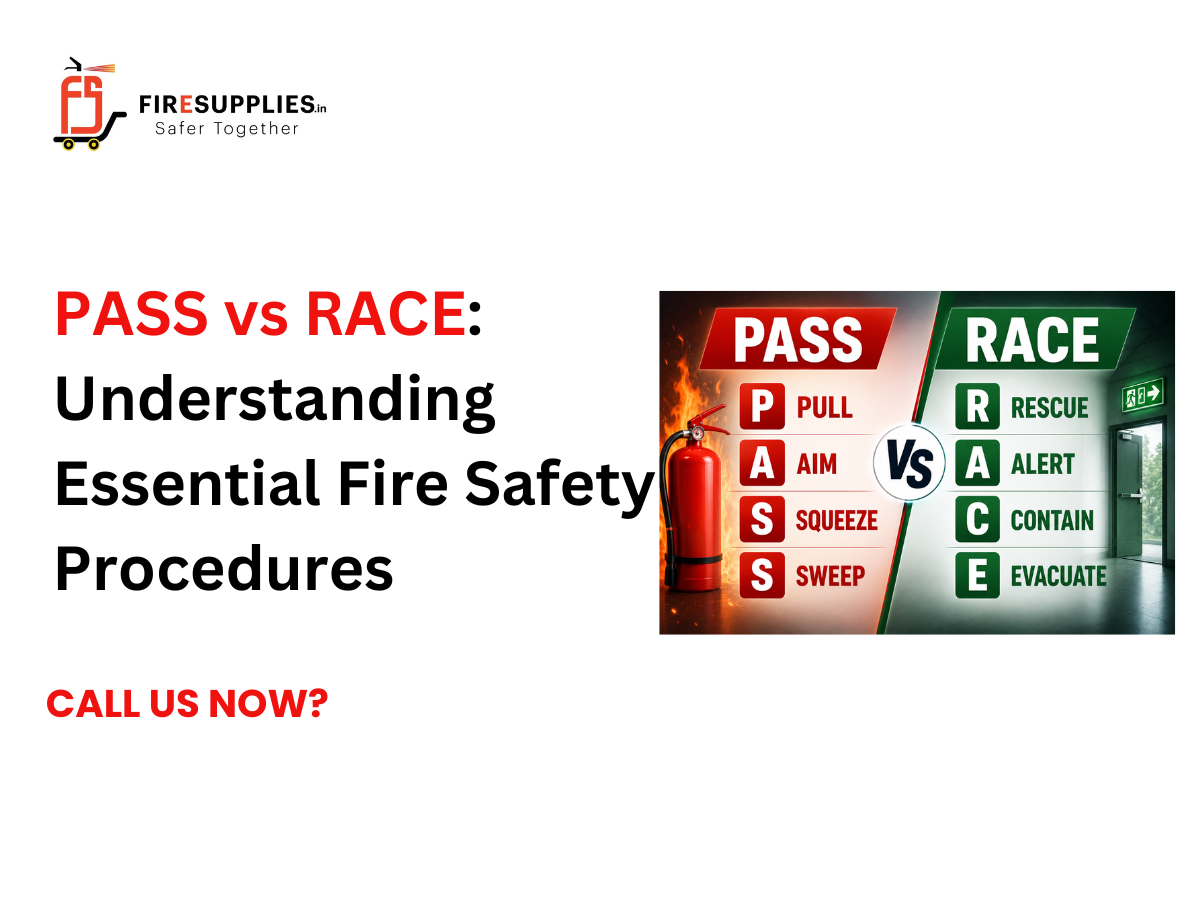
RACE stands for Rescue, Alarm, Contain, Extinguish (or Evacuate). It is a fire emergency response procedure designed to help people prioritize actions in the correct order.
| Step | Action | Purpose |
| R – Rescue | Move anyone in immediate danger to safety | Protects lives first |
| A – Alarm | Activate the fire alarm system or call emergency services | Alerts others and initiates response |
| C – Contain | Close doors and windows to slow fire spread | Limits damage and smoke movement |
| E – Extinguish/Evacuate | Use a fire extinguisher if safe, or evacuate immediately | Controls small fires or ensures safe exit |
RACE is taught widely in hospitals, offices, and industrial facilities because it keeps the focus on human safety before property protection.
What Does PASS Stand For?
PASS stands for Pull, Aim, Squeeze, and Sweep. It is the standard fire extinguisher operating method taught in nearly every fire safety training course.
- Pull the safety pin from the extinguisher handle
- Aim the nozzle at the base of the fire, not the flames
- Squeeze the handle slowly to release the extinguishing agent
- Sweep the nozzle side to side until the fire is fully out
This technique applies to most portable fire extinguishers, though the exact agent used depends on the type of fire, such as electrical, flammable liquid, or ordinary combustible fires.
PASS vs RACE: Key Differences
While both procedures relate to fire response, they serve different purposes. RACE is a broad emergency action plan, while PASS is a focused extinguisher-use technique that fits inside the “Extinguish” step of RACE.
| Aspect | RACE | PASS |
| Purpose | Overall fire emergency response | Fire extinguisher operation |
| Scope | Whole-building or area response | Individual extinguisher use |
| Priority | People first, then property | Controlling small, contained fires |
| When used | As soon as a fire is discovered | Only after RACE steps confirm it is safe |
| Outcome | Safe evacuation or fire containment | Fire extinguished at an early stage |
Understanding fire safety procedures in this layered way helps employees avoid confusion during high-stress situations, where every second matters.
Technical Overview of Fire Response Equipment
Effective execution of both PASS and RACE depends heavily on having reliable fire protection equipment in place. Below is a quick technical reference for common fire safety equipment used alongside these procedures.
| Equipment | Function | Typical Use Case |
| Portable Fire Extinguisher | Used in the PASS technique to suppress small fires | Offices, kitchens, warehouses |
| Fire Alarm System | Triggers the “Alarm” step in RACE | Commercial buildings, schools |
| Manual Call Point | Manually activates the fire alarm system | Corridors, exits, stairwells |
| Smoke Detector | Provides early fire detection | Residential and commercial spaces |
| Emergency Exit Lighting | Supports safe evacuation during “Extinguish/Evacuate” | Multi-story buildings |
| Fire Blanket | Smothers small fires, especially kitchen fires | Commercial kitchens, labs |
Investing in certified fire fighting products ensures that both procedures can be carried out safely and effectively when it matters most.
Use Cases and Applications
PASS and RACE procedures apply across a wide range of environments where fire risks exist. Understanding how these procedures function in real settings helps organizations plan appropriate training and equipment.
- Offices: Fire alarm systems and extinguishers positioned near exits support quick RACE execution.
- Hospitals: Rescue prioritization is critical due to patients with limited mobility.
- Hotels: Clear evacuation routes and visible fire safety signage support guest safety.
- Schools and colleges: Regular fire drills reinforce both RACE and PASS training.
- Warehouses and manufacturing plants: Higher fire loads make contain-and-extinguish steps especially important.
- Data centres: Specialized extinguishing agents are often required due to sensitive equipment.
Advantages and Limitations
Advantages of Following PASS and RACE
- Provides a clear, memorable structure during high-stress emergencies
- Reduces panic by giving people a defined set of actions
- Improves survival outcomes by prioritizing rescue and evacuation
- Standardizes fire extinguisher use across different environments
Limitations to Keep in Mind
- PASS is only effective on small, early-stage fires
- Both procedures require regular training to remain effective
- Incorrect extinguisher selection can reduce PASS effectiveness
- RACE steps may need adjustment based on building layout and fire risk level
Buying Guide: Choosing the Right Fire Safety Equipment
Selecting the right fire safety equipment supplier is essential for workplace compliance and preparedness. When purchasing fire protection equipment, consider the following:
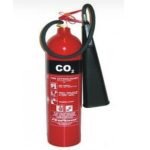
- Fire type compatibility: ABC extinguishers suit general fire risks, CO₂ extinguishers work well for electrical fires, foam extinguishers handle flammable liquids, and wet chemical extinguishers are designed for kitchen fires.
- Building size and layout: Larger facilities need more extinguisher points and stronger fire alarm system coverage.
- Certification standards: Always choose equipment tested to recognized fire safety standards.
- Maintenance support: Choose a fire safety equipment supplier that offers inspection and servicing.
- Training compatibility: Ensure staff are trained specifically on the extinguisher types installed.
Working with a trusted fire safety equipment supplier ensures your organization stays compliant while giving employees the tools they need to respond confidently.
Standards and Certifications
Fire safety equipment should meet recognized national or international safety standards to ensure reliability during emergencies. Organizations such as the National Fire Protection Association (NFPA) and the Occupational Safety and Health Administration (OSHA) provide widely referenced guidelines for fire extinguisher use, workplace fire drills, and emergency evacuation planning. For further reading on official fire safety guidance, you can refer to resources from NFPA and OSHA, which outline detailed requirements for fire prevention and response in commercial settings.
Regular inspection, servicing, and certification of fire protection equipment ensures it performs reliably when needed most.
FAQs About PASS and RACE Fire Safety Procedures
- What do PASS and RACE mean in fire safety?
PASS and RACE are two essential fire safety procedures used during fire emergencies. RACE helps people respond safely to a fire, while PASS explains the correct method for operating a portable fire extinguisher. - What does RACE stand for?
RACE stands for Rescue, Alarm, Contain, and Extinguish (or Evacuate). It provides a step-by-step approach to protecting people, raising the alarm, limiting the spread of fire, and using a fire extinguisher only if it is safe to do so. - What does PASS stand for?
PASS stands for Pull, Aim, Squeeze, and Sweep. It is the standard method for operating a portable fire extinguisher effectively during the early stages of a fire. - What is the difference between
PASS and RACE? RACE is a fire emergency response procedure, while PASS is a fire extinguisher operating technique. RACE focuses on protecting lives and initiating emergency actions, whereas PASS explains how to safely use a fire extinguisher after the area has been assessed as safe. - When should I use the PASS technique?
Use the PASS technique only for small, controllable fires when you have been trained, have a clear escape route, and it is safe to use a fire extinguisher. If the fire is spreading rapidly or producing heavy smoke, evacuate immediately and call the fire service. - Is RACE used before PASS?
Yes, RACE should be followed before PASS in most fire emergencies. Rescuing people, activating the alarm, and containing the fire take priority before attempting to extinguish a fire with a portable extinguisher. - Where are PASS and RACE procedures commonly used?
PASS and RACE procedures are widely used in workplaces where fire safety training is required. Common locations include offices, hospitals, hotels, schools and colleges, warehouses, manufacturing plants, shopping malls, data centres, commercial buildings, and industrial facilities. - Do employees need training on PASS and RACE?
Yes, employees should receive regular fire safety training on PASS and RACE procedures. Practical fire drills and refresher training help staff respond quickly and safely during an emergency. - Which fire extinguisher should I use with the PASS method?
The correct extinguisher depends on the type of fire. ABC extinguishers are suitable for many common fire risks, CO₂ extinguishers are preferred for electrical fires, foam extinguishers are used for flammable liquids, and wet chemical extinguishers are designed for commercial kitchen fires. - Where can I buy fire safety equipment for PASS and RACE compliance?
Fire safety equipment such as fire extinguishers, fire alarm systems, smoke detectors, manual call points, emergency lighting, and fire safety signage is available from authorized fire safety equipment suppliers. Using certified equipment supports workplace preparedness and compliance with fire safety requirements.
Conclusion
Understanding PASS vs RACE: Understanding Essential Fire Safety Procedures gives employees and facility managers a clear, practical framework for handling fire emergencies. RACE prioritizes human safety through rescue, alarm activation, containment, and evacuation, while PASS provides the precise technique for using a fire extinguisher when it is safe to do so. Together, these procedures supported by reliable fire fighting products, fire alarm systems, and fire protection equipment form the foundation of effective workplace fire safety.
Ready to strengthen your fire safety readiness? Explore our range of certified fire extinguishers, fire alarm systems, smoke detectors, and other fire safety equipment. Contact our team today for expert guidance on choosing the right fire protection equipment for your facility, or request a free consultation to build a fire safety plan tailored to your needs.

