
Your list is empty, add products to the list to send a request










How to Recharge a Fire Extinguisher?

18
Jul
A fire extinguisher is a critical safety device — but it’s only effective if it’s fully charged and ready to go. Whether it’s been partially used, fully discharged, or simply reached the end of its pressure cycle, it needs to be recharged. That brings us to one of the most important questions: how to recharge a fire extinguisher?
This blog covers everything you need to know — including when to recharge, how the process works, what signs to watch for, and how to ensure your extinguisher stays in good working condition. If you’re responsible for fire safety at home, in a business, or on the road, this guide will help you stay prepared.
What Does “Recharging a Fire Extinguisher” Mean?
Recharging a fire extinguisher means refilling it with the appropriate extinguishing agent and re-pressurising it to the correct level. This is necessary after every use, even if it was only used briefly.
It’s also required at regular intervals, based on the manufacturer’s guidelines and local fire safety laws, to ensure the extinguisher stays functional and safe.
When Should You Recharge a Fire Extinguisher?
There are a few key times when recharging is necessary:
1. After Any Use
Even a short burst of discharge means the extinguisher must be recharged. Losing pressure or chemical agent can affect future performance.
2. If the Pressure Gauge Shows “Low”
Many extinguishers have a pressure indicator. If it falls below the green zone, it’s time for a recharge.
3. During Routine Inspections
If your fire extinguisher fails a monthly or annual check, especially for pressure or weight, it should be serviced and recharged.
4. After 5 Years (Stored Pressure Units)
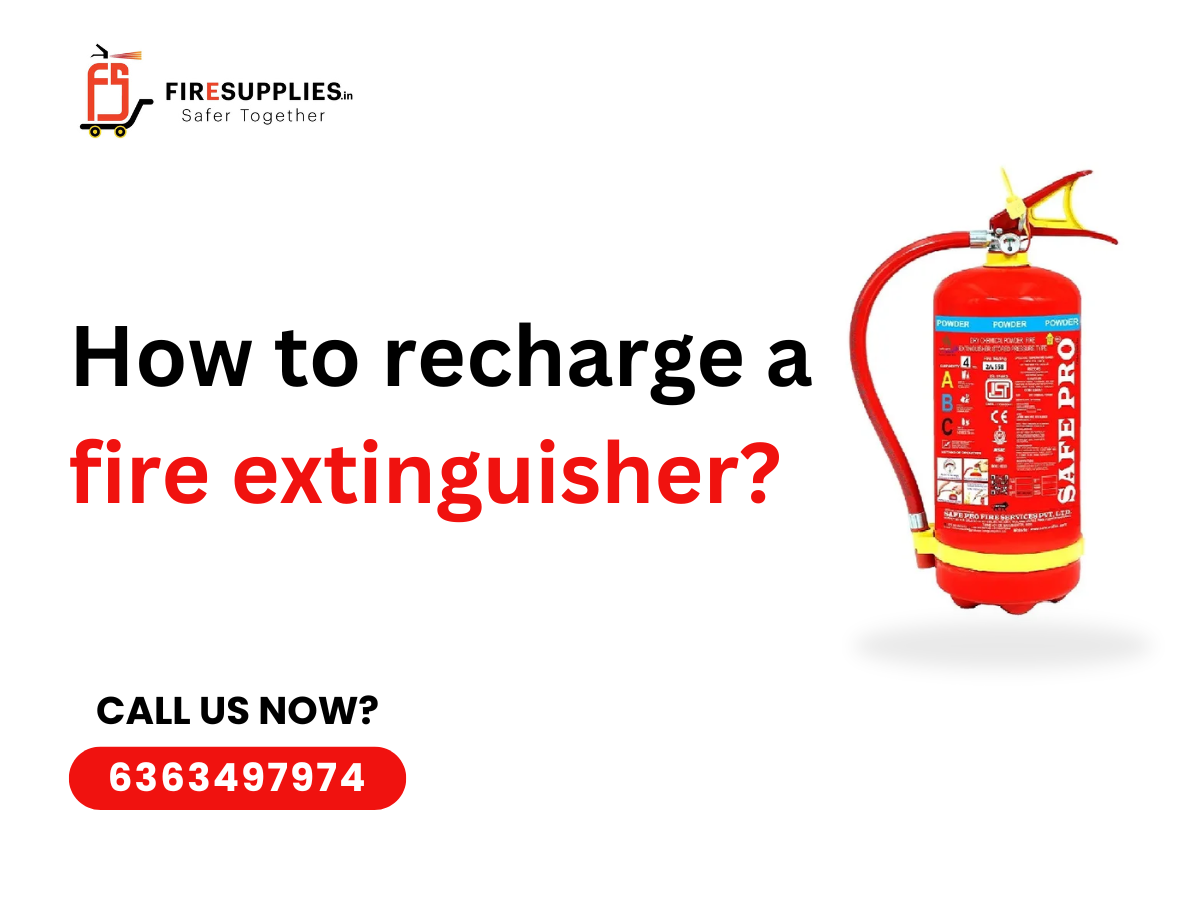
Most ABC fire extinguishers like the Safepro 6kg ABC Fire Extinguisher require recharging every 5 years — even if unused — to maintain performance and compliance.
How to Recharge a Fire Extinguisher: Step-by-Step Overview
You should never attempt to recharge a fire extinguisher yourself unless you’re a licensed technician. The process requires special tools, training, and safety measures. However, here’s how a professional does it:
Step 1: Depressurise the Extinguisher
The technician releases any residual pressure from the extinguisher, ensuring it’s safe to open.
Step 2: Disassemble and Inspect
The unit is disassembled and examined for:
- Damage or rust
- Blocked nozzles
- Seal condition
- Valve function
Step 3: Refill with Extinguishing Agent
The extinguisher is filled with the correct extinguishing powder, foam, or gas depending on its type.
For example, an ABC extinguisher uses mono ammonium phosphate powder.
Step 4: Re-Pressurise
Using a special pressurising machine, the unit is filled with nitrogen or compressed air to the manufacturer’s recommended level.
Step 5: Leak and Weight Check
The technician checks for leaks, confirms the weight is correct, and ensures the pressure gauge points to the green zone.
Step 6: Seal, Tag, and Certify
A tamper-proof seal is added, along with a new inspection tag showing the service date and expiry. This proves the extinguisher is ready for use.
Can I Recharge a Fire Extinguisher at Home?
The short answer is no. Fire extinguisher recharging requires:
- Specialised equipment
- Knowledge of pressure systems
- Approved refill agents
- Compliance with safety regulations
Attempting a DIY recharge could result in underfilled or overpressurised extinguishers, which may fail during emergencies, or even explode.
Always use a BIS-approved fire safety servicing company or authorised dealer for recharging.
What Happens If You Don’t Recharge a Fire Extinguisher?
An uncharged extinguisher might look fine, but it won’t work when you need it most.
If you skip recharging:
- You risk extinguisher failure during a fire
- You may be liable in case of property damage or injury
- You might fail fire audits or insurance inspections
- The extinguisher may corrode from the inside due to moisture
The cost of neglect is far greater than the small fee for regular recharging.
How to Know If Your Fire Extinguisher Is Still Good
Here’s a quick checklist to evaluate your extinguisher:
- The pressure gauge is in the green zone
- The tamper seal is intact
- No visible damage or rust
- The inspection tag is current
- No discharge from the nozzle
- Weight matches manufacturer specs
If any of these checks fail, recharge or replace the extinguisher immediately.
Recharging Safepro 6kg ABC Fire Extinguisher
The Safepro 6kg ABC Stored Pressure Fire Extinguisher is a high-quality, BIS-certified model designed for easy refilling and servicing.
Why it’s ideal:
- Covers Class A, B, and C fires
- Widely accepted in homes, offices, vehicles, and shops
- Simple pressure-check window
- Long-lasting with proper recharge cycles
- Fully refillable by certified professionals
Recharge vs Replacement: Which One Is Better?
| Scenario | Recharge | Replace |
| Minor use / slight discharge | Yes | No |
| Used completely | Yes | No |
| The cylinder is damaged or corroded | No | Yes |
| Past expiry / failed inspection | No | Yes |
Recharging is more cost-effective and eco-friendly, as long as the cylinder is structurally sound.
Frequently Asked Questions
1. Can I recharge a fire extinguisher at home?
No. Recharging must be done by licensed professionals using specialised equipment. DIY recharges are dangerous and often illegal.
2. What happens if you don’t recharge a fire extinguisher?
An uncharged extinguisher may fail to work in an emergency. This puts lives, property, and legal compliance at risk. Always recharge after use or as recommended by the manufacturer.
3. How do I know if my fire extinguisher is good?
Check for:
- Pressure gauge in the green
- Intact seal
- No rust or leakage
- Up-to-date service tag
- Correct weight
If any of these are off, service or replace the extinguisher.
Need a Refillable, Long-Lasting Extinguisher?
Looking for a reliable extinguisher that’s easy to maintain?
- Choose the Safepro 6kg ABC Fire Extinguisher.
- BIS Certified
- Easy to recharge
- Works on Class A, B, and C fires
- Ideal for homes, offices, and small businesses
Final Thoughts
Knowing how to recharge a fire extinguisher is a crucial part of being fire-ready. Whether it’s been used once or is sitting idle for years, keeping it pressurised and filled could make all the difference during an emergency.
Don’t wait until it’s too late. Schedule regular servicing, or upgrade to a model like Safepro that’s built for easy recharging and long-term protection.
Keep your fire extinguisher ready for action.
Shop Safepro 6kg ABC Fire Extinguisher from Fire Supplies
Fire doesn’t wait. Neither should you.

