
Your list is empty, add products to the list to send a request










Why Gas Detectors Are Essential for Workplace Safety

10
Jun
Every year, thousands of workers are injured or killed due to toxic gas exposure and gas-related explosions most of which could have been prevented. Why gas detectors are essential for workplace safety is not just a compliance question; it is a matter of life and protection for every person on-site.
Gas detectors are your first line of defence against invisible, odourless, and often lethal hazards. Whether you manage a chemical plant, a construction site, a confined space, or a commercial building, having reliable workplace gas detection equipment in place is non-negotiable.
What Is a Gas Detector?
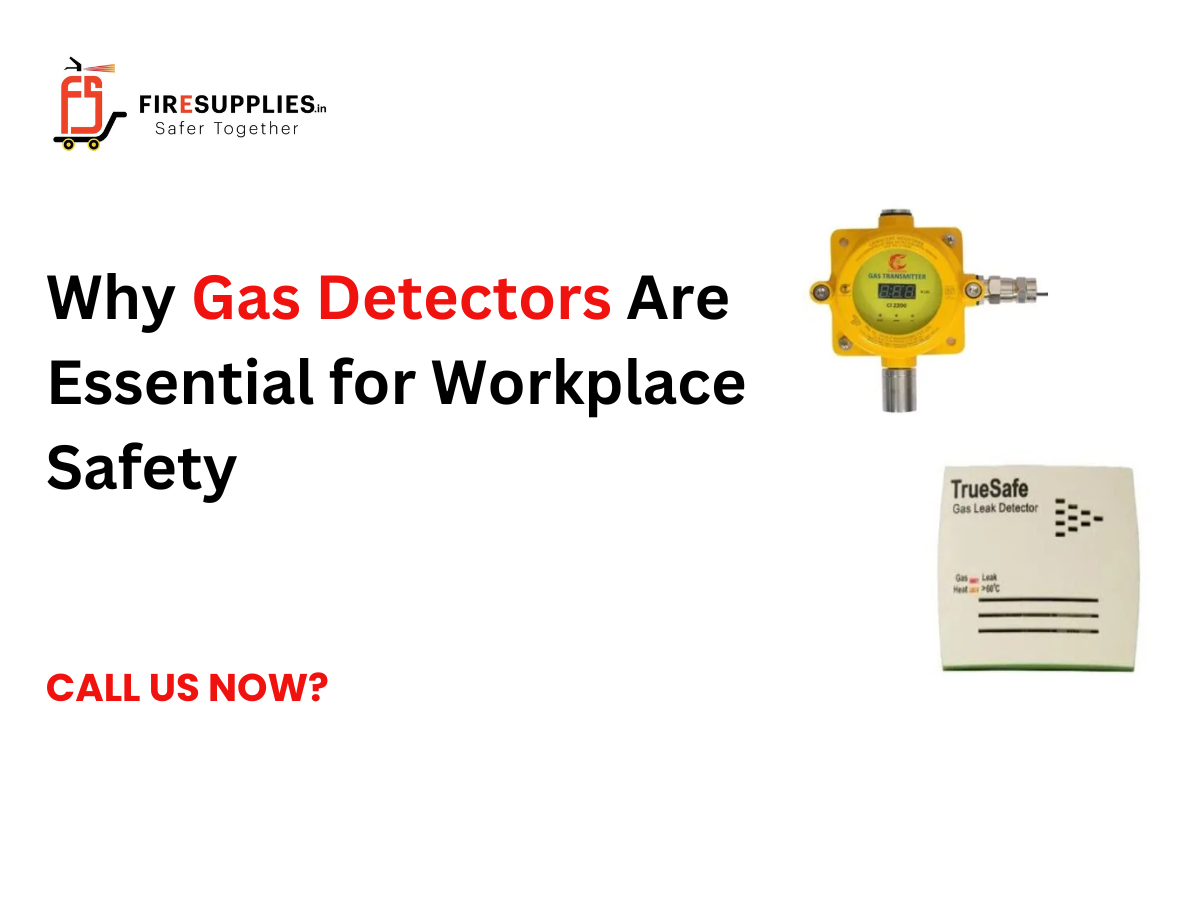
A gas detector is an electronic safety device that continuously monitors the air for the presence of dangerous gases including toxic, flammable, and oxygen-deficient atmospheres. It triggers an audible, visual, or digital alarm when gas concentrations exceed safe thresholds, giving workers time to evacuate or take protective action before harm occurs.
Technical Specifications: Gas Detection System Overview
| Feature | Portable Gas Detector | Fixed Gas Detection System |
| Deployment | Worn by individual workers | Permanently installed at site |
| Gases Monitored | 1–4 gases (multi-gas models available) | Up to 32+ sensor points |
| Response Time | < 30 seconds | < 15 seconds (hardwired) |
| Alarm Type | Audible, vibration, visual | Audible, strobe, control panel alert |
| Battery Life | 12–24 hours (rechargeable) | Continuous (mains-powered) |
| Connectivity | Bluetooth, data logging | RS485, Modbus, 4–20 mA output |
| Calibration | Field or bump-test calibration | Remote/automated calibration |
| Certifications | ATEX, IECEx, UL, CE | ATEX, EN 50271, IECEx |
| Suitable For | Confined spaces, fieldwork | Boiler rooms, plants, warehouses |
| Best Used With | Fire safety equipment, PPE | Fire alarm system, SCADA |
Why Gas Detectors Are Essential for Workplace Safety: The Core Reasons
1. Gases Are Invisible You Cannot Detect Them Without Equipment
The most dangerous gases carbon monoxide (CO), hydrogen sulphide (H₂S), methane (CH₄), and oxygen deficiency have no colour and little or no smell. A worker entering a confined space or industrial area has no way of knowing if the air is safe without a gas leak detection device.
Without detection equipment, exposure can happen within seconds. Many victims of gas incidents report feeling fine right up until they lost consciousness.
2. Legal Compliance and Regulatory Requirements
In most countries, employers are legally required to monitor and control workplace air quality. Regulations such as OSHA 1910.146 (confined spaces), COSHH in the UK, and guidelines from the Health and Safety Executive (HSE) mandate that businesses assess gas risks and provide adequate detection.
Failure to comply can result in heavy fines, work stoppages, and criminal liability. A proper industrial gas detector setup is not just best practice it is required by law.
3. Protecting Workers in High-Risk Environments
Industries including oil and gas, mining, construction, wastewater treatment, food and beverage, and chemical manufacturing are routinely exposed to dangerous gas concentrations. Workers in these sectors rely on:
- Portable gas detectors clipped to clothing for personal monitoring
- Fixed gas detection systems installed throughout facilities
- Multi-gas detectors that simultaneously monitor several hazards
Each of these workplace safety equipment solutions plays a distinct role in keeping teams safe.
What Are the 4 Gases in a Gas Detector?
Most standard multi-gas detectors are designed to monitor four core gases:
- Oxygen (O₂) Detects oxygen-deficient or oxygen-enriched atmospheres. Normal air is 20.9% O₂; below 19.5% is dangerous.
- Carbon Monoxide (CO) A colourless, odourless gas produced by combustion engines and heating systems. Highly toxic even at low levels.
- Hydrogen Sulphide (H₂S) Found in sewers, oil refineries, and wastewater facilities. Causes rapid unconsciousness at high concentrations.
- Combustible Gases (LEL) Methane, propane, and other flammable gases are measured as a percentage of their Lower Explosive Limit. Crossing this threshold creates explosion risk.
These four gases account for the majority of gas-related workplace incidents globally.
Use Cases and Applications of Gas Detection Systems
Confined Space Entry
The main reason for using gas detectors in confined spaces is that these enclosed areas tanks, tunnels, manholes, vaults can trap toxic or flammable gases with no natural ventilation. A pre-entry atmospheric test with a calibrated detector is mandatory before any worker enters.
Oil, Gas, and Petrochemical Plants
Fixed gas detection systems are installed throughout refineries and processing plants to monitor for hydrocarbon leaks, H₂S release, and oxygen displacement. These systems integrate directly with fire alarm systems and emergency shutdown controls.
Construction and Mining Sites
Workers in underground tunnels or excavations face risks from diesel exhaust fumes (CO), blasting gases (NOₓ), and methane pockets. Portable gas detectors worn on the body provide continuous personal protection.
Boiler Rooms and Utility Spaces
CO and natural gas (methane) accumulation in boiler rooms and plant rooms is a major hidden hazard. Fixed gas detection systems in these areas protect both workers and building occupants.
Food and Beverage Industry
CO₂ used in carbonation, refrigeration leaks of ammonia (NH₃), and oxygen depletion in cold stores all present serious risks. Gas detection in these environments prevents quiet, invisible fatalities.
Advantages and Limitations of Gas Detection Equipment
Advantages
- Early warning: Detects gas before concentrations reach harmful or explosive levels
- 24/7 monitoring: Fixed systems never take a break always watching
- Data logging: Modern detectors record exposure history for compliance reports
- Scalable: From single portable units to enterprise-wide networked systems
- Integration: Connects with fire fighting products, sprinkler systems, and alarm panels
- Worker confidence: Empowers teams to work safely in hazardous environments
Limitations
- Sensor drift: Electrochemical sensors degrade over time and require regular calibration
- Cross-sensitivity: Some sensors can falsely react to similar chemicals
- Maintenance required: Regular bump testing and sensor replacement are essential
- Cost: High-quality fixed gas detection systems require upfront investment
- Training needed: Equipment is only effective when workers know how to use and respond to it
The Importance of Gas Safety in the Workplace
Gas safety extends beyond simply owning a detector. It involves creating a culture where monitoring, reporting, maintenance, and emergency response are built into daily operations.
Key pillars of a strong gas safety programme include:
- Risk assessment identifying where and which gases may be present
- Equipment selection matching the right detector type to the hazard
- Calibration schedule regular bump tests and full calibrations
- Training ensuring all workers understand alarm responses and evacuation procedures
- Record-keeping maintaining logs for regulatory compliance
Gas safety is directly tied to your broader fire protection equipment strategy. When a gas leak is detected early, it prevents the conditions that lead to fires and explosions making gas detectors a critical part of any fire safety equipment supplier’s recommended package.
Buying Guide: How to Choose the Right Gas Detection System
Selecting the right gas detector for your workplace does not have to be complex. Follow these practical steps:
Step 1 Identify the hazard: What gases are present? Review your COSHH or safety data sheets.
Step 2 Choose the form factor:
- Use a portable gas detector for workers who move between locations or enter confined spaces
- Use a fixed gas detection system for permanent monitoring of a plant, room, or process area
Step 3 Check sensor compatibility: Make sure the unit detects the specific gases relevant to your site not just the standard four.
Step 4 Verify certifications: Look for ATEX or IECEx approval for use in explosive atmospheres. Look for CE or UL marking for general industrial use.
Step 5 Consider connectivity: For large facilities, choose systems that integrate with your existing fire alarm system or building management system.
Step 6 Plan for maintenance: Factor in the cost and schedule for sensor replacement, calibration gas, and bump testing.
Step 7 Source from a trusted fire safety equipment supplier who can provide after-sales support, calibration services, and spare parts.
Standards and Certifications for Gas Detectors
When purchasing gas detection equipment, always verify compliance with recognised standards:
| Standard | Region | Application |
| ATEX Directive (2014/34/EU) | Europe | Equipment for explosive atmospheres |
| IECEx | International | Global explosive atmosphere certification |
| EN 50271 | Europe | Fixed gas detection system electronics |
| EN 60079 | Europe | Equipment in explosive gas atmospheres |
| OSHA 29 CFR 1910.146 | USA | Confined space entry requirements |
| BS EN 45544 | UK/Europe | Workplace exposure monitoring |
| UL 2034 | USA | Single/multiple station CO alarms |
Always purchase from a reputable fire safety equipment supplier that can provide full certification documentation.
Authoritative References
- Health and Safety Executive (HSE) Gas Detection in Confined Spaces: https://www.hse.gov.uk/confinedspace/
- OSHA Permit-Required Confined Spaces (1910.146): https://www.osha.gov/confined-spaces
- National Institute for Occupational Safety and Health (NIOSH) IDLH Values for Toxic Gases: https://www.cdc.gov/niosh/idlh/
FAQs About Gas Detectors Are Essential for Workplace Safety
1.Why Is a Gas Detector Important?
A gas detector helps identify toxic, flammable, and oxygen-deficient atmospheres before they become dangerous. It protects workers, prevents accidents, and improves workplace safety.
2.What Is the Importance of Gas Safety?
Gas safety helps prevent gas leaks, fires, explosions, and health hazards. It ensures a safer work environment and supports compliance with safety regulations.
3.What Is the Main Reason for Using Gas Detectors in Confined Spaces?
Gas detectors are used in confined spaces to detect toxic gases, low oxygen levels, and flammable gases, helping protect workers from poisoning, suffocation, and explosions.
Ready to Protect Your Workplace? Shop Gas Detectors and Fire Safety Equipment Today
At Fire Supplies, we stock a full range of gas detectors, fixed gas detection systems, portable gas detectors, and complete fire protection equipment including fire alarms, fire fighting products, and fire safeguard foam extinguishers.
Don’t wait for an incident to act. Speak with our expert team today to find the right gas detection and fire safety solution for your site.
Your team’s safety starts with the right equipment. Trust Fire Supplies your expert fire safety equipment supplier.

