
Your list is empty, add products to the list to send a request










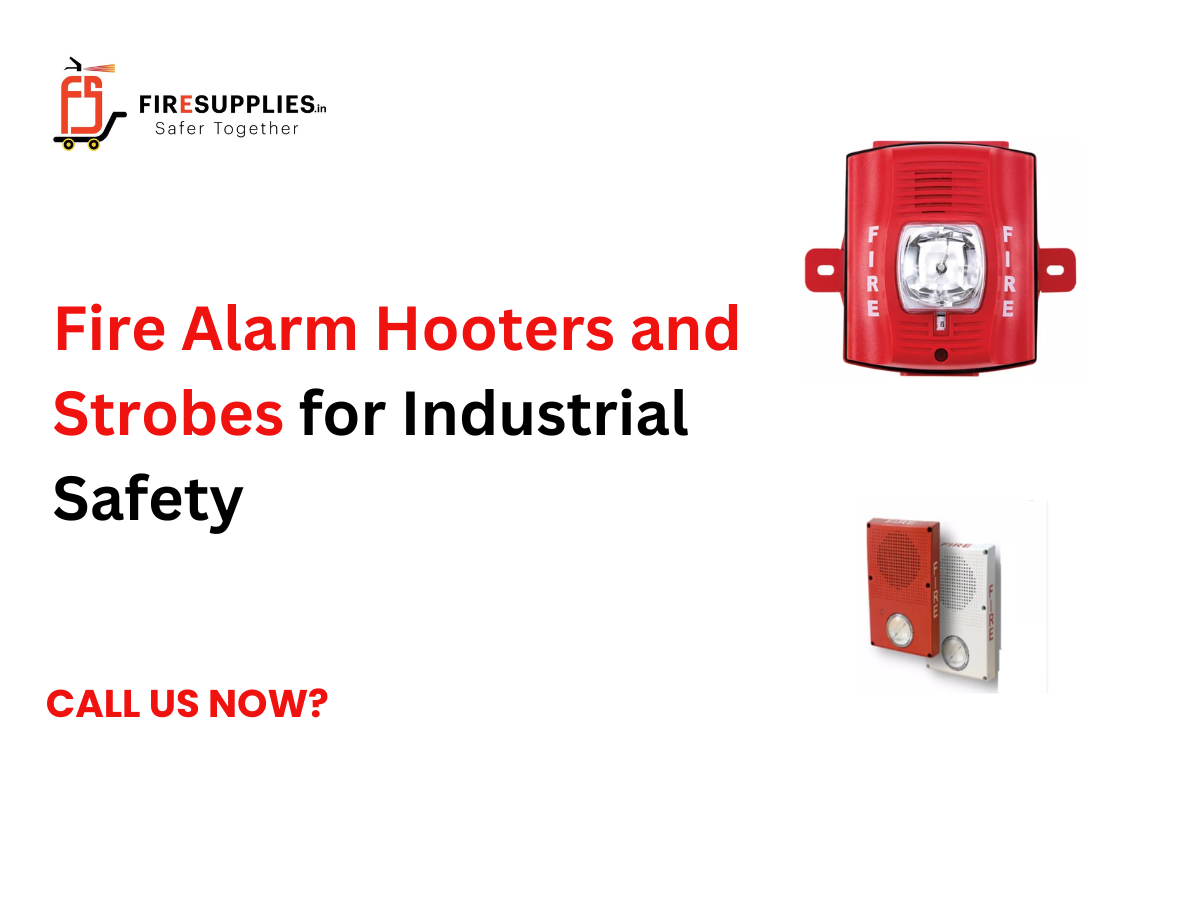
Fire Alarm Hooters and Strobes for Industrial Safety

09
Jun
Fire Alarm Hooters and Strobes for Industrial Safety are notification devices that deliver both audible and visual emergency warnings when a fire alarm system is triggered. A fire alarm hooter also known as a fire alarm sounder produces a loud, penetrating alarm tone to alert building occupants. A fire alarm strobe light emits high-intensity flashing signals to provide a visual warning, ensuring the alert reaches everyone, including those working in high-noise environments or those with hearing impairments. Together, these fire alarm warning devices form a critical layer of any industrial fire protection system, working in coordination with automatic detectors such as conventional beam detectors and smoke detectors to initiate rapid, effective evacuation.
Fire Alarm Hooters and Strobes at a Glance
The table below summarises the key technical specifications relevant to Fire Alarm Hooters and Strobes for Industrial Safety.
| Feature | Details |
| Device Types | Sounder only, strobe only, combined sounder-strobe |
| Sound Output | 80 dB(A) to 120 dB(A) at 1 metre |
| Tone Options | Multiple selectable tones (e.g. ISO 8201, DIN 33404-3, temporal patterns) |
| Strobe Flash Rate | 1 Hz (typically, per EN 54-23 requirements) |
| Operating Voltage | 12 V DC / 24 V DC (most common industrial standard) |
| Current Consumption | 15 mA to 400 mA depending on model and tone |
| Multi-Panel Sync | Supported via synchronisation modules (Wheelock, System Sensor) |
| Ingress Protection | IP21 to IP66 depending on environment |
| Operating Temperature | -25°C to +70°C (industrial-grade models) |
| Mounting | Wall, ceiling, or conduit mount |
| Key Products | Honeywell P2RK, Edwards G1AVRF, SYS-HS |
| Standards Compliance | EN 54-3, EN 54-23, BS 5839-1, NFPA 72 |
| Colour | Red housing (standard); white available for commercial applications |
| Loop Compatibility | Conventional and addressable fire alarm systems |
How Fire Alarm Hooters and Strobes Work in Industrial Fire Alarm Systems
When a fire is detected whether by a smoke detector, heat detector, conventional beam detector, or a manual call point the fire alarm control panel sends a signal to all connected notification devices on that zone or loop.
The fire alarm sounder receives this signal and activates its audible warning tone. Sound output levels in industrial environments are typically set between 90 dB(A) and 110 dB(A) to cut through background machinery noise.
The fire alarm strobe light simultaneously begins flashing at a regulated rate, providing a visual cue that is visible across large production floors, warehouses, and plant rooms even when personal protective equipment (PPE) such as ear defenders limits audibility.
In synchronised systems, all strobes flash in unison. This is critical in open-plan industrial spaces, as out-of-sync strobes can cause disorientation and, in rare cases, trigger photosensitive responses in vulnerable individuals.
Use Cases and Applications of Fire Alarm Hooters and Strobes
Fire alarm notification devices are deployed wherever people need to be warned of an emergency quickly and reliably. Key industrial and commercial applications include:
Manufacturing Plants and Production Floors High ambient noise from machinery makes audible-only alarms unreliable. Combined sounder-strobe units mounted at regular intervals ensure all workers receive both the audible and visual alert, regardless of their position on the floor.
Warehouses and Distribution Centres Large footprints and high racking create acoustic dead zones where sound may not travel effectively. Industrial fire alarm strobes installed at ceiling height provide visible coverage across the full space, complementing audible fire alarms.
Chemical and Petrochemical Facilities In hazardous area zones, ATEX-certified sounder-strobe units are specified alongside conventional reflective beam detectors and gas detection systems. These environments require fire alarm warning devices capable of operating safely in explosive atmospheres.
Oil and Gas Platforms and Refineries Outdoor and semi-exposed environments demand fire alarm notification devices with high ingress protection ratings IP65 or above to withstand wind, rain, and temperature extremes.
Data Centres and Server Rooms Low-noise environments in data centres still require compliant notification devices. Here, lower-output sounders with EN 54-23 compliant strobes are specified to meet accessibility standards without disrupting sensitive equipment.
Commercial Buildings and High-Rise Offices In commercial fire alarm systems, hooter-strobe combinations are installed in stairwells, corridors, and assembly areas to guide occupants during evacuation. Visual strobes are particularly important in open-plan areas where partitioning limits sound travel.
Transport and Infrastructure Tunnels, airports, and rail stations use high-output audible fire alarms and long-range strobes to cover vast spaces, often in coordination with public address (PA) systems.
Advantages and Limitations of Fire Alarm Hooters and Strobes
Advantages
- Dual-modality warning Audible and visual alerts together ensure no occupant is missed, regardless of noise levels or hearing ability.
- Wide coverage A single sounder-strobe unit can cover large floor areas, reducing the number of devices needed.
- Flexible installation Wall, ceiling, and conduit mount options suit all industrial environments.
- Multi-tone capability Selectable tones allow differentiation between fire, evacuation, and alert signals.
- Synchronisation Strobe sync modules eliminate flicker confusion in open-plan spaces.
- Compliance-ready Products such as the Honeywell P2RK, Edwards G1AVRF, and SYS-HS are pre-certified to EN 54-3 and EN 54-23.
- Accessible design Strobe lights support hearing-impaired personnel, meeting disability and inclusion obligations.
Limitations
- Sound attenuation in large spaces Even high-output sounders lose effectiveness over very long distances; multiple units or PA integration may be required.
- Strobe visibility limitations In environments with heavy smoke, strobe effectiveness can be reduced as smoke scatters light.
- Power dependency Both sounders and strobes require reliable power and battery backup; any power failure compromises notification.
- Synchronisation complexity Multi-panel synchronisation requires careful design and commissioning to function correctly.
- Environmental constraints Standard IP-rated units are not suitable for ATEX zones; specialist certified devices must be specified, which carry a higher cost.
For the most robust fire safety outcome, fire alarm hooters and strobes should always be deployed as part of a complete fire detection and alarm system alongside automatic detectors including beam detectors, Edwards beam detectors, and optical smoke detectors.
Key Products: Fire Alarm Hooters and Strobes for Industrial Use
Honeywell P2RK


The Honeywell P2RK is a combined sounder-strobe unit widely used in both commercial and light industrial fire alarm systems. It delivers a loud, clear audible alert alongside a high-intensity strobe flash, and is compatible with Honeywell’s addressable and conventional fire alarm platforms. Its compact design and multiple mounting options make it one of the most versatile fire alarm notification devices on the market.
Edwards G1AVRF

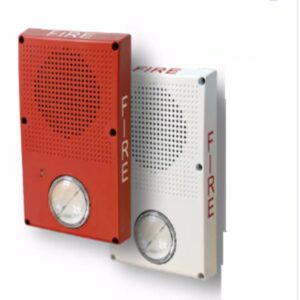
The Edwards G1AVRF is a ceiling-mount audible-visual notification appliance from the Edwards EST range. Designed for commercial and industrial environments, it supports multi-candela strobe options and is compatible with Edwards addressable fire alarm systems. The G1AVRF meets UL 1971 and UL 464 listing requirements, making it a preferred choice for North American industrial fire protection projects.
SYS-HS


The SYS-HS is a conventional sounder-strobe unit suitable for cost-effective industrial installations. Offering a range of selectable tones and a bright, visible strobe output, the SYS-HS is commonly installed in warehouses, plant rooms, and production facilities as a reliable audible and visual fire alarm warning device within conventional fire alarm systems.
Choosing the Right Fire Alarm Hooters and Strobes
When specifying fire alarm hooters and strobes for industrial safety, consider the following factors carefully:
- Environment and IP Rating Assess the installation environment. Indoor, temperature-controlled areas may only need IP21 protection, while outdoor or wash-down areas require IP65 or higher. Explosive zone areas require ATEX-certified devices.
- Sound Output Level Measure the ambient noise level in the target area during normal working hours. The fire alarm sounder output must exceed background noise by at least 5 dB(A) and by 65 dB(A) at the pillow level in sleeping areas (per BS 5839-1).
- Strobe Intensity Select the correct candela (cd) rating for the size and layout of the space. EN 54-23 and NFPA 72 both provide guidance on strobe coverage areas relative to candela output.
- System Compatibility Confirm whether your fire alarm system is conventional or addressable, and select notification devices certified for that platform. Mixed-compatibility devices can cause signalling failures or non-compliance.
- Synchronisation Requirements For open-plan spaces with multiple strobes in view of each other, include synchronisation modules in your design to avoid out-of-sync flash patterns.
- Standards Compliance In the UK and Europe, specify EN 54-3 (sounders) and EN 54-23 (visual alarms) certified products. In the US, specify UL 464 (sounders) and UL 1971 (visual notification appliances).
- Supplier Reliability Source devices from an established fire safety equipment supplier who can provide full product documentation, installation support, and warranty coverage.
Standards and Certifications for Fire Alarm Hooters and Strobes
| Standard | Region | Scope |
| EN 54-3 | Europe / UK | Fire detection and fire alarm systems fire alarm devices (sounders) |
| EN 54-23 | Europe / UK | Fire detection and fire alarm systems visual alarm devices |
| BS 5839-1 | United Kingdom | Fire detection and alarm systems for buildings design, installation and commissioning |
| NFPA 72 | United States | National Fire Alarm and Signalling Code |
| UL 464 | United States | Audible Signal Appliances |
| UL 1971 | United States | Signaling Devices for the Hearing Impaired |
| ATEX / IECEx | International | Certification for devices used in explosive atmospheres |
| ISO 8201 | International | Acoustic evacuation signal standard |
| IEC 60529 | International | Ingress protection (IP) ratings |
FAQs About Fire Alarm Hooters and Strobes for Industrial Safety
1. What is a fire alarm hooter and strobe?
A fire alarm hooter and strobe is a notification device that delivers both audible and visual emergency fire alerts. The hooter generates a loud warning sound, while the strobe emits high-intensity flashing light. Together, they ensure that all occupants including those in high-noise environments or with hearing impairments receive a clear, immediate signal to evacuate.
2. Why are fire alarm hooters and strobes essential in industrial facilities?
Industrial environments present unique challenges for emergency notification. Loud machinery, large open spaces, and the use of PPE such as ear defenders can all prevent a standard audible alarm from being heard. Fire alarm hooters and strobes provide a dual-modality warning sound and light that is reliably perceived even under these conditions, making them a mandatory component of any effective industrial fire alarm system.
3. What is the difference between a fire alarm sounder and a fire alarm strobe?
A fire alarm sounder (hooter) produces an audible alert tone. A fire alarm strobe produces a visual alert through high-intensity flashing light. Many modern fire alarm notification devices combine both functions in a single unit such as the Honeywell P2RK or Edwards G1AVRF to provide complete audible and visual coverage from one installation point.
4. Where should fire alarm hooters and strobes be installed in an industrial building?
Fire alarm notification devices should be positioned so that every occupant can both hear and see an alert from their normal working position. Common installation locations include:
- Production floors and assembly areas
- Warehouses and loading bays
- Corridors, stairwells, and emergency exit routes
- Control rooms and plant rooms
- Offices and rest areas within industrial facilities
The exact layout and spacing should be designed by a qualified fire alarm engineer in accordance with BS 5839-1 (UK) or NFPA 72 (US).
5. Are fire alarm strobes required by law in industrial buildings?
In many jurisdictions, visual fire alarm devices are legally required, particularly in areas where ambient noise levels are high or where hearing-impaired personnel work. In the UK, the Equality Act 2010 supports the provision of visual alarms as a reasonable adjustment. BS 5839-1 and EN 54-23 both provide guidance on when visual alarm devices must be included. Always consult your local authority having jurisdiction (AHJ) for site-specific requirements.
Upgrade your industrial fire safety with certified, high-performance notification devices.
Whether you are designing a new installation or upgrading an existing fire detection and alarm system, our fire protection specialists are ready to help you specify the right Fire Alarm Hooters and Strobes for Industrial Safety for your facility.
We supply a comprehensive range of fire safety products and fire protection equipment including the Honeywell P2RK, Edwards G1AVRF, SYS-HS, conventional beam detectors, Edwards beam detectors, and conventional reflective beam detectors from the industry’s most trusted brands.
Contact us today for a free product consultation, system design review, or competitive quote.
Your trusted fire safety equipment supplier delivering compliant, reliable fire protection solutions for industrial and commercial environments.

