
Your list is empty, add products to the list to send a request






Water, Foam, ABC, CO₂, or Clean Agent: Understanding the Safex Fire Extinguisher Range

16
Jun
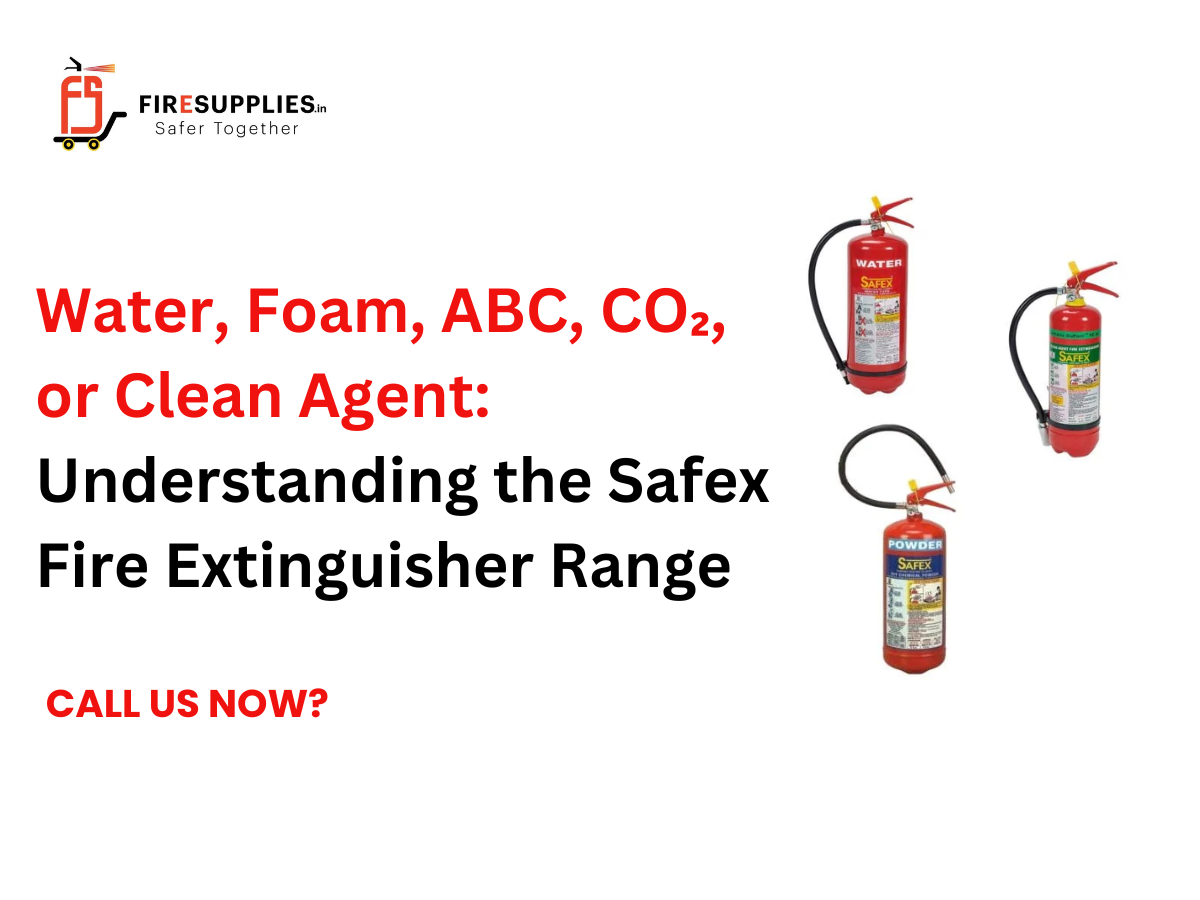
Choosing the right fire extinguisher is one of the most important decisions in workplace safety. The Safex Fire Extinguisher Range covers every major fire class from water-based models for ordinary combustibles to clean agent extinguishers for sensitive electronic environments. Whether you manage a small office or a large industrial facility, understanding the Types of Safex Fire Extinguishers helps you build a reliable fire protection plan.
This guide breaks down the complete Safex Fire Safety Equipment lineup so you can make a confident, informed choice.
What Is the Safex Fire Extinguisher Range?
The Safex Fire Extinguisher Range is a comprehensive line of fire safety products that includes Water, Foam, ABC Dry Powder, CO₂, and Clean Agent extinguishers. Each type is engineered to combat specific fire classes A, B, C, D, E, or F making Safex one of the most versatile fire protection equipment suppliers for homes, offices, factories, and server rooms. These extinguishers meet national and international fire safety standards and are trusted by fire safety professionals across industries.
Safex Fire Extinguisher Types: Technical Comparison Table
| Extinguisher Type | Fire Classes Covered | Agent Used | Ideal Environment | Leaves Residue? |
| Safex Water Fire Extinguisher | Class A | Water / Water + Additive | Offices, schools, retail | Minimal (water) |
| Safex Foam Fire Extinguisher | Class A, B | AFFF / FFFP Foam | Garages, petrol storage, warehouses | Yes (foam blanket) |
| Safex ABC Fire Extinguisher | Class A, B, C | Monoammonium Phosphate Powder | Multi-risk workplaces, factories | Yes (powder residue) |
| Safex CO₂ Fire Extinguisher | Class B, E (Electrical) | Carbon Dioxide Gas | Server rooms, labs, electrical panels | No |
| Safex Clean Agent Fire Extinguisher | Class A, B, C, E | HFC / FK-5-1-12 / Inert Gas | Data centres, museums, archives | No |
Why Fire Extinguisher Selection Matters for Workplace Safety
Using the wrong type of fire extinguisher can make a fire worse or even cause injury. For example, using a water extinguisher on an electrical fire creates a serious electrocution risk. This is why understanding each Safex Fire Extinguisher model is essential before installing them in your building.
Regulations in most countries require businesses to assess fire risks and install appropriate fire fighting products for each zone. The Fire Safety Equipment range is built to help you meet those requirements efficiently.
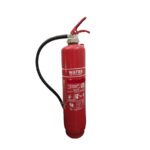
Safex Water Fire Extinguisher: Best for Class A Fires
The Safex Water Fire Extinguisher is the most straightforward option for Class A fires those involving ordinary combustibles like wood, paper, textiles, and cardboard.
Key features:
- Cooling action removes heat from the fire triangle
- Available in water-only and water-with-additive variants
- Ideal for offices, schools, libraries, and retail shops
- Safe and non-toxic no chemical residue on surfaces
Limitation: Should never be used on electrical fires or flammable liquid fires. Always confirm the area is free of live electrical equipment before deploying.
Safex Foam Fire Extinguisher: Dual-Class Protection
The Safex Foam Fire Extinguisher handles both Class A (solid combustibles) and Class B (flammable liquids such as petrol, diesel, and paint) fires.
Key features:
- Forms a smothering blanket over liquid fires
- Prevents re-ignition by sealing the fuel surface
- Available in AFFF (Aqueous Film Forming Foam) formulations
- Suitable for vehicle workshops, fuel storage areas, and manufacturing plants
Limitation: Not suitable for use on live electrical equipment. Foam residue requires professional clean-up after deployment.
Safex ABC Fire Extinguisher: The Multi-Hazard Workhorse
The Safex ABC Fire Extinguisher is the most widely used model in commercial and industrial settings. It tackles Class A, B, and C fires covering solid combustibles, flammable liquids, and flammable gases respectively.
Key features:
- Dry powder (monoammonium phosphate) interrupts the chemical chain reaction of fire
- Versatile across multiple fire risk environments
- Fast suppression for high-intensity fires
- Suitable for factories, warehouses, car parks, and construction sites
Limitation: Powder residue causes damage to sensitive electronics and machinery. Post-deployment clean-up can be expensive. Not recommended in enclosed spaces due to visibility and inhalation risks.
Safex CO₂ Fire Extinguisher: Safe for Electrical Fires
The Safex CO₂ Fire Extinguisher is the go-to choice for Class B fires and electrical fires (Class E). It uses pressurised carbon dioxide gas, which displaces oxygen and extinguishes the fire without leaving any residue.
Key features:
- Zero residue no damage to equipment after use
- Electrically non-conductive safe for live electrical panels, computers, and switchboards
- Commonly installed in server rooms, offices, and laboratories
- Fast-acting with high discharge pressure
Limitation: CO₂ works by oxygen displacement, which can be hazardous in confined spaces. The horn becomes extremely cold during discharge never hold the horn directly. Not effective for Class A fires (solid combustibles) unless paired with another type.
Safex Clean Agent Fire Extinguisher: Zero-Residue Protection for High-Value Assets
The Safex Clean Agent Fire Extinguisher is the premium choice for protecting sensitive and high-value environments. Clean agents such as HFC-236fa, FK-5-1-12, or inert gas blends extinguish fires across Class A, B, C, and electrical hazards all without leaving any trace.
Key features:
- Leaves absolutely no residue ideal for museums, archives, and server rooms
- Electrically non-conductive and safe around people when used in ventilated spaces
- Suppresses fire using chemical interference (HFCs) or oxygen reduction (inert gases)
- Environmentally conscious formulations available with low global warming potential (GWP)
Limitation: Clean agent extinguishers carry a higher upfront cost compared to powder or water models. They are not suitable for Class D fires (combustible metals).
Use Cases and Applications by Industry
Different industries require different fire protection equipment. Here’s how the Safex range maps to common sectors:
| Industry | Recommended Safex Model |
| Schools & Offices | Water, CO₂ |
| Retail & Hospitality | Foam, ABC |
| Manufacturing & Warehouses | ABC, Foam |
| Data Centres & Server Rooms | CO₂, Clean Agent |
| Chemical Plants | ABC, CO₂ |
| Archives & Libraries | Clean Agent |
| Garages & Petrol Stations | Foam, ABC |
| Healthcare Facilities | CO₂, Clean Agent |
Advantages and Limitations of the Safex Fire Extinguisher Range
Advantages
- Complete fire class coverage one supplier for all your fire safety needs
- Compliance-ready designed to meet IS, CE, and other regional certifications
- Trusted brand widely used by fire safety professionals across India
- Scalable available in multiple capacities (1 kg to 9 kg and above)
- Low maintenance annual inspections are simple with clear pressure indicators
Limitations
- Powder-based extinguishers (ABC) require thorough clean-up after use
- CO₂ models are ineffective on Class A fires when used alone
- Clean agent models carry higher acquisition costs
- All extinguishers require periodic refilling and pressure checks by trained technicians
Buying Guide: How to Choose the Right Safex Fire Extinguisher
Use this quick checklist before purchasing:
- Identify fire risks in your space What materials or equipment could ignite? (Paper, fuel, electrical equipment?)
- Check the fire class Match the extinguisher type to Class A, B, C, D, E, or F.
- Consider residue tolerance High-value electronics? Choose CO₂ or Clean Agent.
- Assess space size Larger spaces may need higher-capacity units (6 kg, 9 kg).
- Check compliance requirements Confirm which fire safety standards apply to your building or industry.
- Plan placement Extinguishers should be accessible within 30 metres of any point in a covered area.
- Schedule maintenance Factor in annual servicing costs when budgeting.
For professional guidance, contact a certified fire safety equipment supplier to conduct a fire risk assessment before purchase.
Standards and Certifications
Safex fire extinguishers are manufactured to comply with relevant national and international fire safety standards. When purchasing Safex Fire Safety Equipment, look for the following certifications:
- IS 2171 Indian Standard for Dry Powder Fire Extinguishers
- IS 15683 Performance requirements for portable fire extinguishers (India)
- CE Marking Compliance with European safety directives
- BIS Certification Bureau of Indian Standards approval for fire fighting products
- ISO 9001 Quality management certification for the manufacturing process
Always verify that your chosen fire protection equipment carries valid certification markings and is serviced by authorised technicians.
Authoritative External References
For deeper reading on fire extinguisher standards and fire safety regulations, refer to these trusted sources:
- National Fire Protection Association (NFPA) www.nfpa.org The global authority on fire, electrical, and life safety standards, including NFPA 10 (Standard for Portable Fire Extinguishers).
- Bureau of Indian Standards (BIS) www.bis.gov.in India’s national standards body, which regulates fire safety equipment certifications under IS 2171 and IS 15683.
- Health and Safety Executive (HSE), UK www.hse.gov.uk Provides practical workplace fire safety guidance widely referenced by fire safety professionals internationally.
The Safex Fire Extinguisher Range includes five main types: Water, Foam, ABC Dry Powder, CO₂, and Clean Agent. Water and Foam fight ordinary fires. ABC covers multiple fire types. CO₂ is safe for electrical equipment. Clean Agent protects sensitive electronics without leaving residue. Choose based on your specific fire risk.
FAQs About the Safex Fire Extinguisher Range
1. What is the difference between a Safex ABC Fire Extinguisher and a CO₂ Fire Extinguisher?
The Safex ABC Fire Extinguisher uses dry powder and is effective on Class A, B, and C fires covering solid materials, flammable liquids, and flammable gases. It works quickly but leaves a powder residue that can damage equipment.
2. Which Safex fire extinguisher is best for a data centre or server room?
For data centres and server rooms, the Safex CO₂ Fire Extinguisher or the Safex Clean Agent Fire Extinguisher are the best choices. Both are electrically non-conductive and leave no residue, meaning they will not damage sensitive electronic equipment.
3. How often do Safex fire extinguishers need to be serviced or refilled?
All Safex Fire Extinguishers should be inspected visually every month and serviced professionally at least once a year. Refilling is required after every use, regardless of how much agent was discharged.
As a general rule:
- Annual service pressure check, weight verification, visual inspection of hose and nozzle
- 5-year overhaul full internal inspection and pressure testing (hydrostatic test)
- Replace or refill immediately after any deployment
Always use an authorised service technician to maintain compliance with fire safety regulations and ensure your fire protection equipment remains in peak operating condition.
4. Can I use a Safex Water Fire Extinguisher on an electrical fire?
No. You should never use a Safex Water Fire Extinguisher on a live electrical fire. Water conducts electricity and creates a serious risk of electrocution for the user.
5. What fire classes do Safex fire extinguishers cover?
The Safex Fire Extinguisher Range covers the following fire classes:
- Class A Solid combustibles (wood, paper, textiles) → Water, Foam, ABC, Clean Agent
- Class B Flammable liquids (petrol, diesel, paint) → Foam, ABC, CO₂, Clean Agent
- Class C Flammable gases (LPG, methane) → ABC, Clean Agent
- Class E Electrical equipment → CO₂, Clean Agent
- Class F Cooking oils and fats → Wet chemical (specialist type)
6. Where should Safex fire extinguishers be installed in a workplace?
Safex Fire Safety Equipment should be placed:
- At clearly visible, easily accessible locations
- Near fire exits and escape routes
- No more than 30 metres from any point within the covered area (as per IS standards)
- At a mounting height of 1–1.5 metres from the floor (handle height)
- Away from direct heat sources or areas where the extinguisher could be obstructed
Protect your workplace with the right fire safety equipment starting today.
The Safex Fire Extinguisher Range offers a complete solution for every fire risk, from everyday office environments to high-value server rooms and industrial facilities. Contact our fire safety specialists for a free consultation and site fire risk assessment. Browse the full Safex Fire Safety Equipment range and find the right extinguisher for your space. 📧 Request a quote for bulk supply of Safex fire extinguishers for your business or project.
Don’t wait for an emergency. Invest in certified fire protection equipment that you can trust and ensure your team, your assets, and your premises are protected at all times.

