
Your list is empty, add products to the list to send a request













Manual Call Points for Industrial Fire Alarm Systems: The Complete Guide

13
Jun
A Manual Call Point (MCP) also referred to as a break glass unit or pull station is a fire safety device that allows a person to manually trigger a fire alarm system immediately upon discovering a fire. In industrial fire alarm systems, manual call points serve as the human-initiated layer of a broader fire detection and alarm system, working alongside automatic detectors such as smoke detectors, heat detectors, and beam detectors. When activated, the MCP sends a signal to the fire alarm control panel, triggering evacuation alarms, alerting emergency services, and initiating suppression protocols. These devices are a foundational component of any compliant industrial fire protection system.
Technical Details: Manual Call Points at a Glance
The table below outlines the key technical specifications relevant to Manual Call Points for Industrial Fire Alarm Systems.
| Feature | Details |
| Operating Principle | Manual activation via break-glass or push-button mechanism |
| Signal Output | Normally Open (NO) or Normally Closed (NC) contact |
| Compatibility | Conventional and addressable fire alarm systems |
| Ingress Protection | IP54 to IP67 (depending on environment) |
| Operating Temperature | -25°C to +70°C (industrial-grade models) |
| Mounting | Surface mount or flush mount; wall or post-mount |
| Key Products | Apollo SA5900, Edwards SIGA-270, Simplex MCP |
| Standards Compliance | EN 54-11, BS 5839, NFPA 72, UL 38 |
| Reset Method | Key reset or replaceable glass element |
| Panel Sync | Multi-panel sync supported in addressable configurations |
| Loop Expandability | Expandable loops in SLC (Signalling Line Circuit) systems |
| LED Indicator | Activation indicator LED (red) on most models |
| Housing Material | ABS plastic or polycarbonate; red RAL 3000 |
How Manual Call Points Work in Industrial Fire Safety Systems
A manual call point in a fire alarm system operates on a simple but critical principle: any building occupant who observes a fire can activate it immediately, without waiting for automatic detection.
In most industrial environments, the process works as follows:
- The person breaks the glass element or pushes the protective cover to activate.
- An electrical signal is sent to the fire alarm control panel (FACP).
- The control panel triggers audible and visual alarms across the facility.
- Emergency services may be automatically notified, depending on system integration.
- The control panel logs the zone and device ID for the activated call point.
This manual layer is essential in industrial fire protection systems where large physical spaces, high-bay warehouses, or noisy machinery can delay automatic fire detection by conventional beam detectors or smoke detectors.
Use Cases and Applications of Manual Call Points
Manual call points are deployed across a wide variety of industrial and commercial environments. Here are the most common applications:
Manufacturing Plants and Warehouses Large floor areas and high ceilings can limit the effectiveness of conventional smoke detectors. MCPs positioned at exits, machinery stations, and walkways ensure personnel can trigger alarms regardless of detector placement.
Oil, Gas, and Chemical Facilities In hazardous area zones, certified explosion-proof MCPs (ATEX or IECEx rated) are used alongside conventional reflective beam detectors and other fire detection equipment to provide full-coverage fire safety.
Commercial and High-Rise Buildings In commercial fire alarm systems, MCPs are typically installed at stairwells and exit routes. They complement automatic systems as a backup activation method for emergency fire alarm activation.
Data Centres and Server Rooms Precision environments rely on both addressable MCPs and beam detectors. In these settings, manual activation can prevent false suppression triggers while still enabling rapid evacuation.
Transport Hubs and Infrastructure Airports, train stations, and tunnels use industrial-grade MCPs with high IP ratings to withstand dust, moisture, and temperature extremes.
Advantages and Limitations of Manual Call Points
Advantages
- Immediate activation No delay between a person spotting a fire and triggering the alarm.
- Low cost Among the most affordable fire alarm system components available.
- Simple installation Wired directly into conventional or addressable loops.
- Reliable in any environment No reliance on smoke or heat to trigger activation.
- Compliant Meet EN 54-11 and NFPA 72 standards for fire detection and alarm systems.
- Tamper-evident Break-glass design shows if a device has been activated or tampered with.
Limitations
- Human-dependent Requires a person to be present, aware, and close enough to activate the device.
- Cannot detect unoccupied-area fires A fire starting after working hours in an unmanned zone will not be caught by an MCP alone.
- Vandalism risk Glass-break models can be susceptible to accidental or deliberate false activation.
- Maintenance required Glass elements and reset keys must be replaced after each activation.
For comprehensive fire protection, MCPs should always be used alongside automatic detectors including conventional beam detectors, Edwards beam detectors, and optical smoke detectors as part of a layered fire detection strategy.
Top Manual Call Point Products for Industrial Use
Apollo SA5900

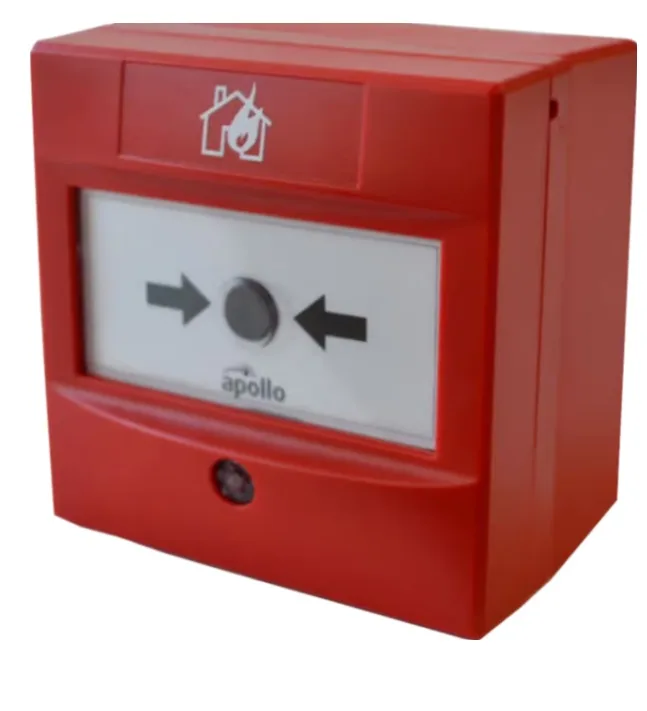
The Apollo SA5900 is one of the most trusted manual call points in the UK market. It is compatible with Apollo’s conventional and addressable systems, features a break-glass mechanism, and meets EN 54-11 standards. Its robust ABS housing makes it suitable for demanding industrial environments.
Edwards SIGA-270

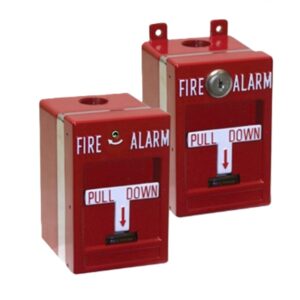
The Edwards SIGA-270 is an addressable manual call point designed for use with the Edwards EST fire alarm platform. It supports multi-panel synchronisation and is widely used in commercial fire alarm systems and large industrial sites. The SIGA-270 includes a key-operated reset and provides precise zone identification to the fire alarm control panel.
Simplex MCP

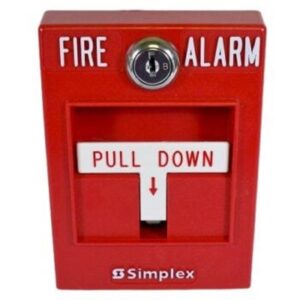
Simplex MCP devices are engineered for heavy-duty applications and are compatible with the Simplex fire alarm ecosystem. Known for their durability and compliance with NFPA 72, Simplex MCPs are commonly specified in North American industrial fire protection systems, particularly in manufacturing and process industries.
Choosing the Right Manual Call Point
When selecting a manual call point for your industrial fire alarm system, consider these key factors:
- System Compatibility Ensure the MCP is compatible with your existing FACP whether conventional or addressable. Mixing incompatible devices can cause signalling failures.
- Environmental Rating For outdoor, dusty, or wet environments, select an MCP with a minimum IP54 rating. Chemical or explosive environments require ATEX-certified units.
- Standards Compliance In the UK and Europe, specify EN 54-11 certified devices. In the US, look for UL 38 and NFPA 72 compliance.
- Mounting Requirements Consider whether flush or surface mounting is needed. In high-traffic industrial areas, recessed mounting can reduce vandalism risk.
- Reset Mechanism Key-reset models are recommended for industrial settings to prevent unauthorised resets after activation.
- Supplier Reliability Work with a reputable fire safety equipment supplier who can provide product certification, technical support, and after-sales service.
Standards and Certifications for Manual Call Points
Manual call points used in industrial fire alarm systems must comply with recognised standards to ensure reliability and legal compliance.
| Standard | Region | Scope |
| EN 54-11 | Europe / UK | Manual call points performance requirements |
| BS 5839-1 | United Kingdom | Fire detection and alarm systems for buildings |
| NFPA 72 | United States | National Fire Alarm and Signalling Code |
| UL 38 | United States | Manual signalling boxes for fire alarm systems |
| IEC 60529 | International | Ingress protection (IP) ratings |
| ATEX / IECEx | International | Explosive atmospheres certification |
| ISO 7240 | International | Fire detection and alarm systems |
Always verify that your chosen manual call point carries the relevant third-party certification mark such as the CE mark in Europe or UL listing in North America before installation.
FAQs About Manual Call Points for Industrial Fire Alarm Systems
1. What is a manual call point in a fire alarm system?
A manual call point (MCP) allows occupants to manually activate a fire alarm during an emergency. When the glass or resettable element is operated, the device sends an alarm signal to the fire alarm control panel, enabling a faster response to potential fire incidents in industrial and commercial facilities.
2. Where should manual call points be installed in industrial buildings?
Manual call points should be installed along escape routes, near exits, and at key access points throughout the facility. Proper placement ensures personnel can quickly raise an alarm during an emergency and supports compliance with fire safety regulations and fire risk assessment recommendations.
3. What is the Apollo SA5900 manual call point used for?
The Apollo SA5900 manual call point is designed for addressable fire alarm systems requiring reliable manual fire alarm activation. It is commonly installed in factories, warehouses, commercial buildings, data centers, and industrial facilities where rapid alarm reporting is critical for occupant safety.
4. What are the advantages of using the Edwards SIGA-270 manual call point?
The Edwards SIGA-270 provides reliable emergency alarm activation and seamless integration with compatible addressable fire alarm systems. It is widely used in industrial and commercial environments because of its durable construction, easy operation, and support for efficient fire alarm system monitoring.
5. How does a manual call point work during a fire emergency?
A manual call point activates the fire alarm system when a person identifies a fire before automatic detectors respond. Once operated, the device transmits an alarm signal to the fire panel, triggering notification appliances such as sounders, hooters, strobes, and emergency response procedures.
Protect your facility with reliable, standards-compliant fire safety equipment.
Whether you are specifying Manual Call Points for Industrial Fire Alarm Systems from scratch or upgrading an existing fire detection and alarm system, our team of fire protection specialists is ready to help.
We supply a full range of fire safety products and fire protection equipment including the Apollo SA5900, Edwards SIGA-270, Simplex MCP, conventional beam detectors, Edwards beam detectors, and conventional reflective beam detectors from the industry’s most trusted brands.
Get in touch today for a free consultation, product recommendation, or quote.
Your trusted fire safety equipment supplier delivering compliant, reliable fire protection solutions for industrial and commercial environments.

