
Your list is empty, add products to the list to send a request










How Fire Sprinkler Systems Protect Lives and Property

08
Apr
Fire hazards are one of the biggest risks to both residential and commercial spaces. Understanding how Fire Sprinkler Systems Protect Lives and Property is essential for anyone serious about safety. These systems are a critical part of modern fire safety solutions, designed to detect and suppress fires before they spread. An automatic fire sprinkler system responds instantly to heat, reducing fire damage and saving lives. Whether installed in homes, offices, or industrial facilities, these systems are a cornerstone of reliable fire protection sprinkler systems.
What Is a Fire Sprinkler System?
A fire sprinkler system is an automated safety system that detects heat from a fire and releases water through sprinkler heads to control or extinguish it. It works without human intervention and is a vital component of fire prevention equipment.
Technical Details of Fire Sprinkler Systems
| Feature | Description |
| Activation Mechanism | Heat-sensitive element (glass bulb or fusible link) |
| Water Supply | Connected to pressurized pipes or tanks |
| Coverage Area | Individual sprinkler activates independently |
| System Types | Wet pipe, dry pipe, pre-action, deluge |
| Installation | Integrated into ceilings and walls |
| Expandability | Easily scalable for large buildings |
| Synchronization | Multi-zone activation for large fires |
| Bandwidth (Flow Rate) | High water discharge for rapid suppression |
How Fire Sprinkler Systems Protect Lives and Property
Early Fire Detection and Immediate Response
The biggest advantage of a sprinkler fire safety system is its rapid response. Unlike manual firefighting methods, sprinklers activate automatically when heat reaches a certain threshold.
This early action:
- Controls fire before it spreads
- Reduces smoke production
- Gives occupants more time to evacuate
Minimizing Fire Damage
A building fire sprinkler system significantly reduces damage compared to fires without protection. Studies from organizations like the National Fire Protection Association (NFPA) show that properties with sprinklers experience far less destruction.
Instead of a full-scale fire:
- Damage is localized
- Repair costs are lower
- Business downtime is minimized
Life-Saving Protection
The primary goal of any fire protection sprinkler system is to save lives. By controlling flames and reducing toxic smoke, sprinklers create safer escape conditions.
This is especially critical in:
- Hospitals
- Schools
- Residential apartments
- Commercial buildings
Supports Firefighters
Sprinklers don’t replace firefighters—they support them. By the time emergency responders arrive, the fire is often already under control.
This:
- Reduces risk to firefighters
- Speeds up rescue operations
- Prevents structural collapse
Types of Fire Sprinkler Systems
Wet Pipe Systems
- Always filled with water
- Most common in residential buildings
- Fastest response time
Dry Pipe Systems
- Filled with air until activation
- Ideal for cold environments
Pre-Action Systems
- Require additional trigger before water release
- Used in data centers and sensitive areas
Deluge Systems
- All sprinklers activate simultaneously
- Used in high-risk industrial zones
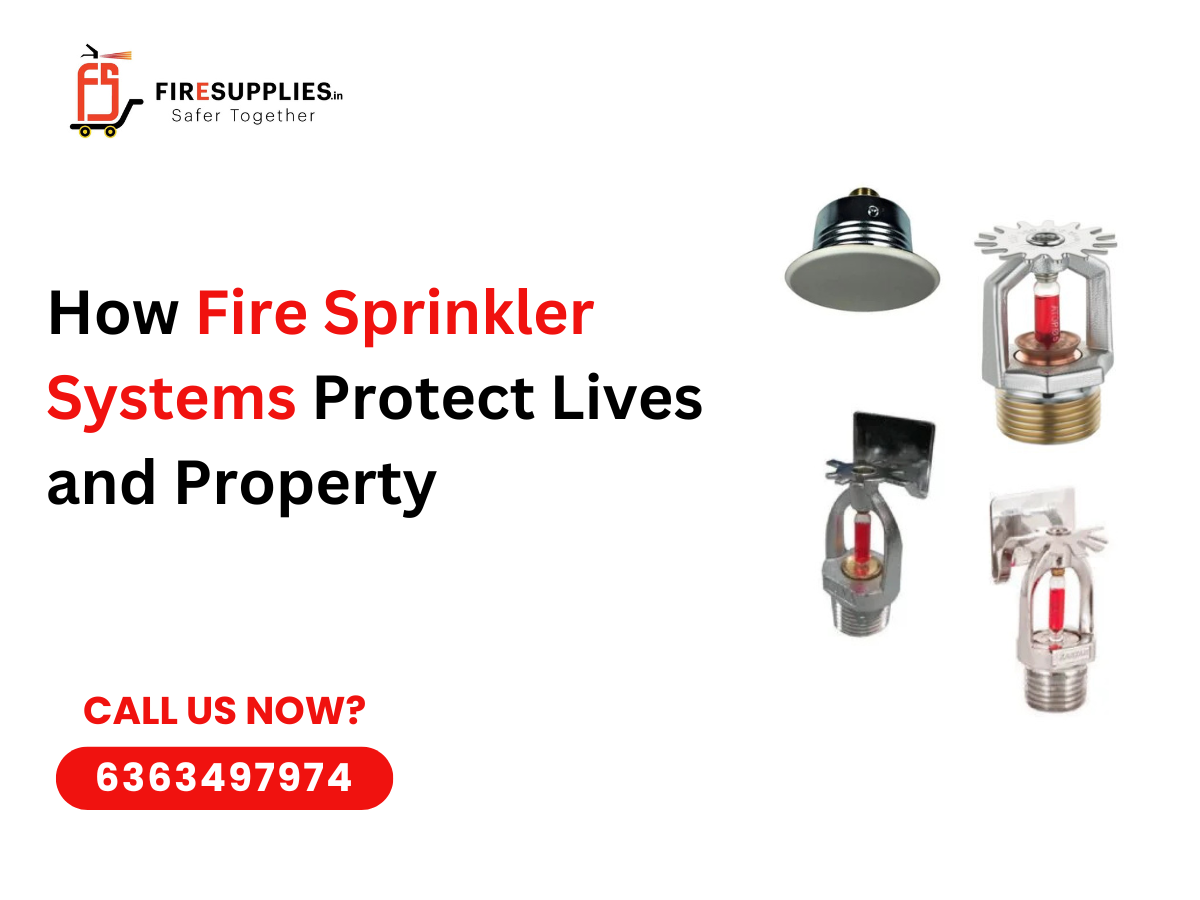
Types of Sprinkler Heads Used
Choosing the right sprinkler head is crucial for effective fire sprinkler protection:
- Upright Sprinklers – Installed on ceilings with exposed piping
- Pendent and Recessed Pendent Sprinklers – Common in offices and homes
- Concealed Pendent Sprinklers – Hidden design for aesthetic spaces
- Horizontal Sidewall Sprinklers – Mounted on walls for corridors
- Vertical Sidewall Sprinklers – Used in specialized layouts
Use Cases / Applications of Fire Sprinkler Systems
Fire sprinklers are used across various sectors:
Residential Buildings
- Apartments and villas
- Enhanced occupant safety
Commercial Spaces
- Offices and malls
- Protect assets and employees
Industrial Facilities
- Warehouses and factories
- Prevent large-scale losses
Healthcare Facilities
- Hospitals and clinics
- Protect vulnerable individuals
Educational Institutions
- Schools and colleges
- Ensure student safety
Advantages of Fire Sprinkler Systems
Key Benefits
- Automatic activation
- Rapid fire control
- Reduced property damage
- Lower insurance premiums
- Increased building value
- Reliable 24/7 protection
Limitations of Fire Sprinkler Systems
While highly effective, they do have some limitations:
- Initial installation cost
- Requires regular maintenance
- Water damage (minimal compared to fire damage)
- Not suitable for all fire types (e.g., chemical fires without modification)
Buying Guide: Choosing the Right Fire Sprinkler System
Selecting the right system is critical for safety and compliance.
Key Factors to Consider
- Type of building (residential/commercial)
- Fire risk level
- Water supply availability
- Compliance with safety standards
- Type of sprinkler heads required
- Professional fire sprinkler system installation
Pro Tip
Always work with a best fire extinguisher supplier who offers complete fire safety solutions, including design, installation, and maintenance.
Standards & Certifications
Fire sprinkler systems must comply with recognized standards:
- NFPA (National Fire Protection Association) guidelines
- BIS (Bureau of Indian Standards) codes
- ISO fire safety standards
- Local fire authority regulations
These ensure system reliability and effectiveness.
Authoritative References
- National Fire Protection Association (NFPA) – Fire sprinkler effectiveness data
- U.S. Fire Administration – Fire safety statistics
- ISO Fire Safety Standards – Global compliance benchmarks
Fire sprinkler systems protect lives and property by detecting heat and automatically releasing water to control fires early. They reduce fire spread, minimize damage, and improve survival chances, making them essential fire safety solutions for homes, offices, and industrial buildings.
FAQs About How Fire Sprinkler Systems Protect Lives and Property
1: How do fire sprinkler systems save lives?
Fire sprinkler systems save lives by detecting heat early and suppressing fires before they spread. They reduce smoke, control flames, and provide more time for evacuation, significantly lowering the risk of injury or death.
2: Do all fire sprinklers go off at the same time?
No, only the sprinkler closest to the fire activates. Each sprinkler operates independently based on heat, which helps control the fire efficiently while minimizing water damage.
3: How do fire sprinkler systems protect property?
They limit fire spread by controlling flames at the source. This reduces structural damage, protects assets, and lowers repair costs, making them a crucial part of fire prevention equipment.
Conclusion: Why Fire Sprinkler Systems Are Essential
Understanding how Fire Sprinkler Systems Protect Lives and Property highlights their importance in modern safety planning. They are not just an option—they are a necessity. From reducing fire damage to saving lives, these systems offer unmatched protection. Whether you’re safeguarding a home or a large facility, investing in a commercial fire sprinkler system ensures long-term safety and peace of mind. Looking for reliable fire safety solutions? Partner with Fire Supplies, your trusted best fire extinguisher supplier, for high-quality fire sprinkler systems, expert fire sprinkler system installation, and complete fire prevention equipment.
Protect your people.
Protect your property.
Act before disaster strikes.
Contact Fire Supplies today for expert guidance and customized fire protection solutions.

