
Your list is empty, add products to the list to send a request


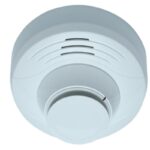
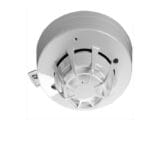






How to Clean a Smoke Detector? A Complete Fire Safety Maintenance Guide

28
May
Most people test their smoke detector monthly but very few ever clean it. That oversight is a real problem, because a dirty sensor can miss real smoke or trigger false alarms that lead people to disable the device entirely. This guide is for homeowners and facilities managers who want a reliable, properly maintained fire detection system that meets current safety standards.
KEY TAKEAWAYS • The NFPA recommends cleaning smoke alarms at least every six months to maintain accurate fire detection. • Dust, pet hair, kitchen grease, and insects are the most common causes of sensor degradation and false alarms. • Never spray aerosols, water, or cleaning chemicals directly inside a smoke detector use a soft brush and vacuum only. • Most smoke detectors should be fully replaced after 8-10 years, regardless of cleaning history. • Commercial and industrial buildings require documented cleaning schedules and certified technician inspections part of comprehensive fire safety solutions for buildings. |
Why Smoke Alarm Maintenance Matters More in 2026
Fire safety regulations across the UK and internationally have tightened significantly over the past two years. The 2026 update to BS 5839 guidance now places greater responsibility on building owners and facilities managers to document fire detection equipment maintenance not just annual testing. For residential properties, local authority housing inspections increasingly flag poorly maintained detectors as compliance failures.
40% of smoke alarms that fail during a fire were found to have discharged or missing batteries. Contaminated sensors are the second leading cause of device failure (NFPA data). Regular smoke alarm maintenance directly addresses both risks. |
In high-traffic environments industrial warehouses, care homes, commercial kitchens fire detection sensor cleaning is no longer optional best practice. It is increasingly a documented requirement tied to insurance policies and fire risk assessments. As a fire safety equipment supplier working with clients across residential, commercial, and industrial sectors, FireSupplies sees the consequences of neglected maintenance first-hand.
How to Clean a Smoke Detector Safely: 6 Steps
Cleaning a smoke detector takes less than ten minutes. The process is identical for both ionisation and photoelectric models, with one exception: optical (photoelectric) detectors have a more delicate sensing chamber, so extra care is needed around the sensor opening.
Step 1 Switch off the power
For hardwired units, isolate the circuit at the fuse board. For battery-operated models, remove the battery before doing anything else. This prevents accidental triggering and protects the sensor circuitry.
Step 2 Detach the unit from its mounting base
Most detectors twist anti-clockwise to release. Check the manufacturer’s guide if unsure forcing it can crack the casing and void any warranty.
Step 3 Vacuum the exterior vents
Using the soft brush attachment on a standard household vacuum, work around all exterior vents. This removes the bulk of accumulated dust and is the single most effective step in fire detection sensor cleaning.
Step 4 Brush the internal sensing chamber
Where the casing opens, use a soft-bristle paintbrush to gently dislodge debris from around the sensing chamber. Work inward from the edges avoid touching sensor components directly. Never use compressed air canisters, which can force debris deeper into the mechanism.
Step 5 Wipe the exterior casing
Dampen a lint-free cloth with a small amount of mild soap solution. Wipe the outer shell and dry immediately with a clean towel. Moisture must not enter the unit.
Step 6 Reinstall, restore power, and test
Reattach to the mounting base, reconnect the battery or circuit, and press the test button. A clear, strong alarm tone confirms the detector is functioning correctly after cleaning.
NEVER DO THIS: Do not spray any aerosol, cleaning fluid, or insecticide near or into a smoke detector. Even “residue-free” electronics sprays leave microscopic film on sensors. This is one of the leading causes of persistent false alarms reported to fire safety equipment suppliers. |
How Often Should You Clean Your Smoke Detector?
Cleaning frequency depends on your environment. Here is a practical schedule based on common building types:
Recommended cleaning intervals
✓ Every 6 months standard residential homes
✓ Every 3 months homes with pets, smokers, or dusty environments (lofts, workshops)
✓ Monthly or per manufacturer schedule commercial kitchens, industrial facilities, care homes requiring industrial fire protection systems
✓ Immediately after any building works, renovation, or if the unit is chirping with a new battery
In commercial settings, every cleaning event should be logged in a fire safety maintenance record. This documentation is critical when fire risk assessments are conducted and is now expected as part of comprehensive fire safety solutions for buildings under updated UK guidance.
Choosing the Right Fire Suppression Equipment Alongside Your Detectors
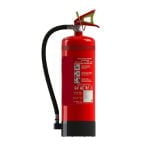
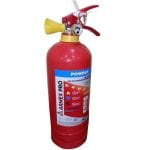
A clean, reliable smoke detector is only one layer of fire safety. Paired with the correct suppression equipment, it forms a complete system. One of the most common questions we receive at FireSupplies is about the difference between extinguisher types specifically, stored pressure vs cartridge operated extinguisher systems.
Feature | Stored Pressure | Cartridge Operated |
Pressure source | Pre-charged cylinder | Separate CO2 cartridge releases on activation |
Reliability after long storage | Can lose pressure over time | Cartridge stays sealed; more stable long-term |
Recharge ease | Requires full service recharge | Replace cartridge; faster to recommission |
Common in | Residential, offices | Industrial, heavy-duty commercial sites |
Buy online? | Yes | Yes including CO2 cartridge fire extinguisher models |
Service requirement | Annual inspection | Annual inspection; cartridge type fire extinguisher cartridge checked separately |
If you need to buy fire extinguisher online whether a standard stored-pressure unit or a cartridge operated fire extinguisher FireSupplies stocks both across all agent types. For larger facilities using industrial fire protection systems, we also supply and commission fire ball suppression devices a newer automatic suppression technology designed for unmanned plant rooms, server spaces, and electrical enclosures where a fire ball can self-activate on contact with flame without manual intervention.
Signs Your Smoke Detector Needs Cleaning Right Now
You do not always need to wait for your scheduled maintenance date. These are the clearest signals that your device needs immediate attention:
✓ Frequent false alarms with no visible smoke source in the room
✓ Chirping or beeping that persists after you have installed a brand-new battery
✓ Visible dust, discolouration, or webbing on or around the detector casing
✓ The LED indicator is dimmer than usual or flickering intermittently
✓ The alarm was recently exposed to construction dust, drywall particles, or renovation debris
✓ Pet hair is visible on the exterior grille a strong indicator of internal contamination
If cleaning resolves none of these issues, reset the device per the manufacturer’s instructions. If problems continue, the unit likely needs replacement. Most detectors have a maximum service life of 8-10 years the manufacture date is usually printed on the back of the unit.
Smoke Detector Cleaning in Commercial and Industrial Buildings
For businesses operating under a formal fire risk assessment, smoke alarm maintenance is a legal responsibility, not a suggestion. The approach in commercial environments differs from home maintenance in three important ways.
Use addressable or conventional detectors with diagnostics
Addressable detection systems allow individual device health to be monitored from a central panel. Fault codes indicate when a specific detector requires cleaning, removing the guesswork from maintenance scheduling. For industrial fire protection systems, this monitoring capability is essential in facilities where a single sensor may be inaccessible without specialist access equipment.
Always document each service event
Every cleaning visit must be logged: date, technician name, device location, findings, and any actions taken. This log is reviewed during fire risk assessments and insurance renewals. As a fire safety equipment supplier to commercial clients across the UK, FireSupplies recommends maintaining a digital maintenance log accessible to your appointed responsible person.
Commission certified technicians for annual inspections
Routine in-house cleaning between service visits is appropriate. Full annual inspection must be carried out by a qualified engineer. If you are searching for a fire extinguisher service near me or a smoke alarm inspection, FireSupplies can connect you with BAFE-certified engineers nationwide.
FAQ About How to Clean a Smoke Detector
Q1. How often should I clean my smoke detector at home?
The National Fire Protection Association recommends cleaning smoke detectors at least every six months as part of routine smoke alarm maintenance. In homes with pets, high dust levels, or frequent cooking, increase this to every three months. If your detector is triggering false alarms, clean it immediately regardless of when it was last serviced.
Q2. Can I use a compressed air canister to clean the inside of a smoke detector?
No. Compressed air canisters can force debris deeper into the sensing chamber and may deposit propellant residue on the sensor. Always use a soft-bristle brush and a vacuum with a soft brush attachment. This is the method recommended by most manufacturers and by fire safety equipment suppliers for both residential and commercial devices.
Q3. What is the difference between a cartridge operated fire extinguisher and a stored pressure model?
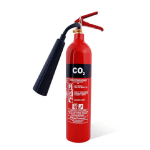
A cartridge type fire extinguisher uses a separate CO2 cartridge that releases gas into the agent cylinder on activation, meaning the main body is not pressurised during storage this improves long-term reliability. A stored pressure extinguisher is pre-charged and ready to use but can lose pressure over months or years. For industrial sites with irregular inspection schedules, the CO2 cartridge fire extinguisher design is often preferred. Both types are available to buy online through FireSupplies.
Q4. When should I replace a smoke detector rather than just cleaning it?
Replace your smoke detector if it continues to false-alarm or fails to respond after cleaning and a battery change, or when it reaches 8-10 years old. Most detectors have the manufacture date printed on the rear casing. As part of comprehensive fire safety solutions for buildings, FireSupplies recommends a full device audit every five years for commercial properties.
Q5. Do industrial fire protection systems require different smoke detector maintenance?
Yes. Industrial fire protection systems typically use addressable detectors that provide individual fault diagnostics, but physical cleaning is still required on a documented schedule often every 3 months in manufacturing or food production environments. Sensitivity testing must be performed by certified technicians annually. Maintenance records must be available for fire risk assessments and insurance compliance.
The Single Most Important Fire Safety Action You Can Take Today
Cleaning your smoke detector costs nothing and takes less than ten minutes but it is one of the most overlooked elements of fire safety in both homes and commercial buildings. A detector you can rely on is one that has been regularly cleaned, tested, and replaced on schedule. If your detectors are overdue for a service, or if you need to upgrade your suppression equipment from a basic stored pressure unit to a cartridge operated fire extinguisher, a fire ball suppression device, or a full industrial fire protection system FireSupplies has everything you need in one place.=
Ready to Upgrade Your Fire Safety Equipment? Browse our full range from smoke detectors and fire balls to CO2 cartridge fire extinguishers and industrial systems. UK delivery, expert advice, and certified service engineers. |

