
Your list is empty, add products to the list to send a request









What Are the Two Types of Fire Panels?

12
Aug
If you’re specifying, upgrading, or maintaining a fire detection system, the panel you choose determines how fast a fire gets located and how easily your team can manage the system for years to come. This guide breaks down the two core types of fire alarm control panels conventional and addressable using real, currently available panels so you can see exactly how each one performs in the field. It’s written for building owners, facility managers, and fire safety consultants specifying a fire alarm control panel for a new or retrofit installation.
Key Takeaways
- A fire alarm control panel (FACP) is the central brain of a fire detection system it receives detector signals, displays the location of an alarm, and triggers notification devices.
- Conventional fire alarm panels report alarms by zone (a group of devices on one circuit); they’re best suited to small, single-storey buildings with straightforward layouts.
- Addressable fire alarm panels report alarms down to the individual device, cutting search time during an emergency and simplifying fault-finding during maintenance.
- Panels like the Ravel RE-102R/104R (conventional) suit small commercial spaces, while the GST200N-2 and Simplex 4100ES (addressable) scale from mid-size buildings up to multi-building campuses.
- Panel choice should be driven by building size, occupancy risk, budget, and how much the system needs to expand or integrate with other building systems in the future.
Why Fire Panel Selection Matters in 2026
Fire codes and insurance underwriters are paying closer attention to response times and system traceability than they were even a few years ago. A mismatch between building complexity and panel type is one of the most common reasons fire safety audits flag a system for upgrade. Buildings that have added extensions, subdivided tenancies, or increased occupancy since their original installation are especially likely to have outgrown a conventional zone-based panel without anyone noticing until an inspection catches it.
At FireSupplies, the pattern we see most often is a building that was fitted with a 2- or 4-zone conventional panel a decade ago and has since tripled in floor area. The panel still “works,” but the zone it reports covers half a floor, which means the fire brigade or facilities team has to physically search the area rather than walk straight to the device. That gap in precision is exactly what addressable technology was built to close.
What Is a Fire Alarm Control Panel?
A fire alarm control panel is the hardware unit that ties every detector, call point, and sounder in a building into one monitored system. It continuously supervises wiring, battery condition, and mains power, and it activates alarms, relays, and notification circuits the moment a device reports smoke, heat, or a manual call point activation.
Every FACP, regardless of type, performs three core jobs:
- Monitoring constantly checking the status of every connected device and circuit.
- Processing deciding whether a signal is a genuine alarm, a fault, or a supervisory condition.
- Notifying triggering sounders, strobes, relays, or building integrations once an alarm is confirmed.
The difference between panel types comes down to how precisely the panel can tell you where the triggering event happened and that’s the whole conventional vs addressable fire alarm question in a nutshell.
Conventional Fire Alarm Panels Explained
A conventional fire alarm panel splits a building into zones physical groupings of detectors and call points wired onto shared circuits. When a device activates, the panel lights up the zone it belongs to, but it can’t tell you which specific detector triggered.
How Conventional Panels Work
Each zone runs on its own wiring circuit back to the panel. If any device on that circuit goes into alarm, the whole zone reports as “in alarm.” Locating the actual device still requires someone to walk the zone and check each unit.
Ravel RE-102R / RE-104R
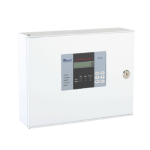
The Ravel RE-102R and Ravel RE-104R are a good illustration of a well-built entry-level conventional panel. The RE-102R covers 2 zones and the RE-104R covers 4, with each zone wired for conventional smoke detectors, heat detectors, and normally-open contact devices. Both models include a switch-mode power supply, a keypad-programmable controller that supervises AC voltage, battery condition, and field wiring, plus two programmable relays for fire and fault conditions. This class of panel is built for small commercial buildings and light industrial units spaces where a handful of zones is enough to make sense of an alarm without needing device-level detail.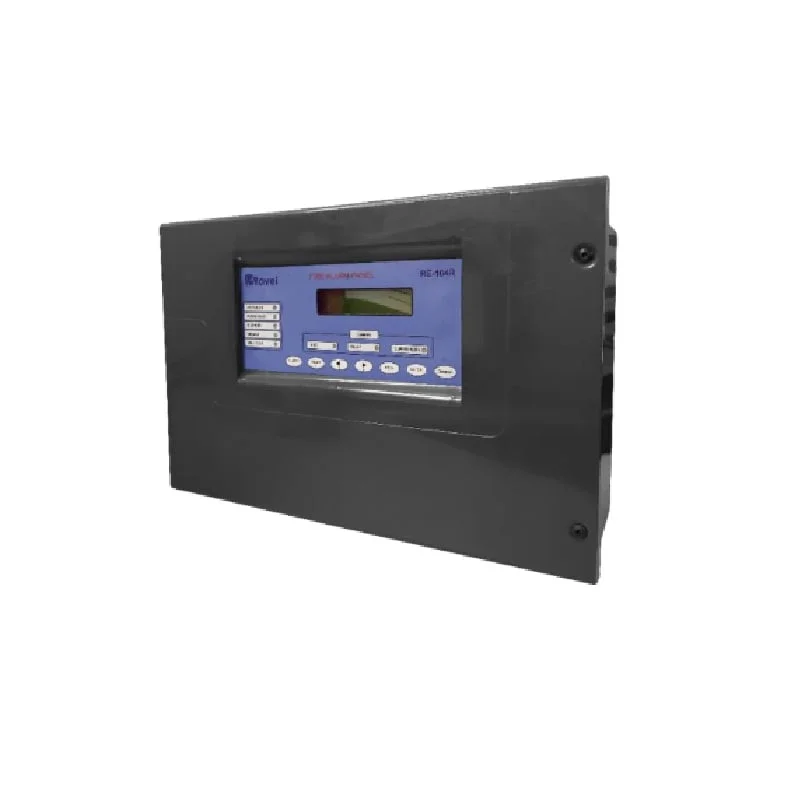
Best suited for:
- Small offices, retail units, and clinics
- Single-storey or small multi-tenant buildings
- Budget-constrained installations where 2–16 zones is sufficient
Addressable Fire Alarm Panels Explained
An addressable fire alarm panel puts every device on a shared communication loop, and each device carries its own digital address. Instead of reporting “Zone 3 is in alarm,” the panel tells you exactly which detector, call point, or module triggered often down to a specific room.
How Addressable Panels Work
Devices are wired in a loop rather than isolated zone circuits. The panel polls each device continuously, which means it also flags faults, dirty detectors, or disconnections at the individual device level long before they’d show up on a conventional system.
GST200N-2

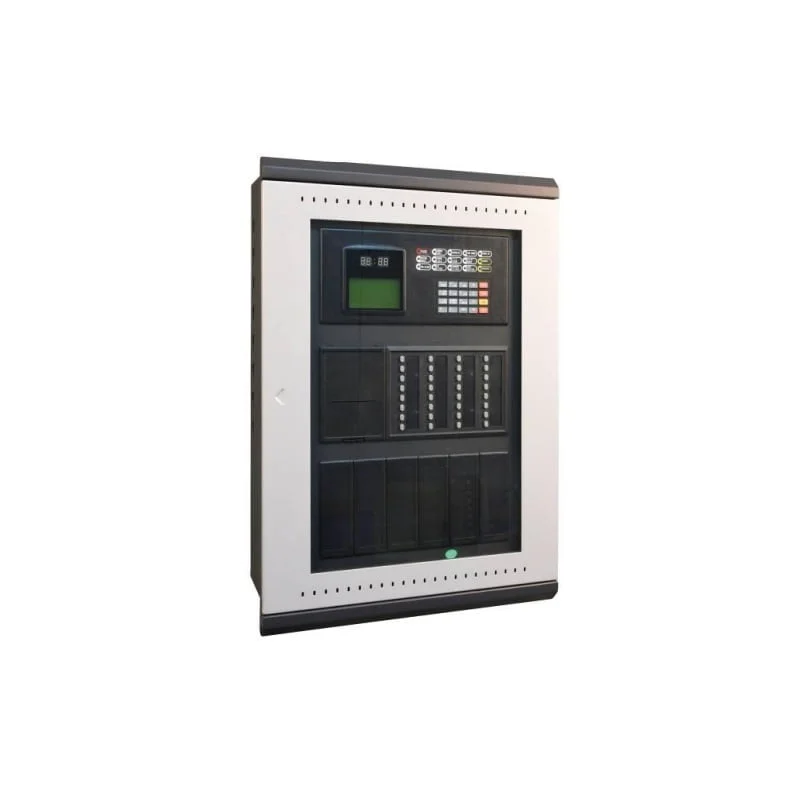
The GST200N-2 is a two-loop intelligent panel that supports up to roughly 240 addressable devices per loop, expandable to 477 across both loops. It supports up to 30 logically configurable zones on top of full device addressing, duplicate-address detection, dirty-detector reporting, and one-man walk-test functionality. This makes it a strong mid-tier choice enough capacity and diagnostics for a mid-size commercial building without the cost or complexity of an enterprise-grade platform.
Simplex 4100ES

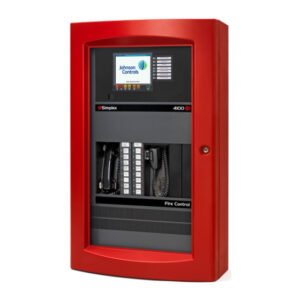
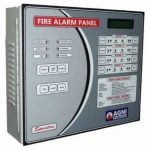
For large or campus-style facilities, the Simplex 4100ES sits at the enterprise end of addressable technology. It supports up to roughly 3,000 addressable points, IP-based networking across multiple panels and buildings, integrated voice evacuation, firefighter telephone communication, and suppression release control, all through a color touchscreen interface. It’s the kind of panel specified for hospitals, high-rises, and multi-building campuses where dozens of panels may need to operate as one coordinated network.
Best suited for:
- Hospitals, hotels, malls, and airports
- Warehouses and manufacturing plants
- Multi-building campuses needing networked panels
- Any site where minimizing false-alarm investigation time is a priority
Conventional vs Addressable Fire Alarm Panel At a Glance
Feature | Conventional (e.g. Ravel RE-102R/104R) | Addressable (e.g. GST200N-2, Simplex 4100ES) |
Detection level | Zone-based | Individual device |
Wiring | One circuit per zone | Shared loop wiring |
Fault diagnosis | Manual search within zone | Instant, device-specific |
Scalability | Limited (typically 2–32 zones) | High (hundreds to thousands of points) |
Networking | Not typically networked | Multi-panel, multi-building networking |
Upfront cost | Lower | Higher |
Best for | Small buildings | Medium to large / complex buildings |
How to Choose the Right Fire Alarm Panel Type
Work through these factors before specifying a panel:
- Building size and layout more floors and tenancies favor device-level addressing.
- Occupancy risk hospitals, hotels, and high-occupancy sites benefit from faster, more precise alarm location.
- Budget conventional panels have a lower upfront cost; addressable panels reduce long-term maintenance labor.
- Future expansion if the building is likely to grow, an addressable platform like GST200N-2 or 4100ES avoids a full system replacement later.
- Integration needs voice evacuation, suppression release, or building management system integration generally require addressable technology such as the Simplex 4100ES.
- Local fire code requirements always confirm zone/device requirements against applicable codes (e.g. BS 5839) before finalizing a design.
Installation and Maintenance Considerations
Regardless of panel type, correct installation and a disciplined maintenance schedule are what keep a system reliable:
Installation:
- Use a qualified fire alarm engineer for design and commissioning.
- Confirm wiring meets applicable standards.
- Test every zone or device individually after commissioning.
Maintenance:
- Monthly test at least one detector or call point.
- Quarterly check batteries, sounders, and fault indicators.
FAQs About Conventional and Addressable Fire Alarm Control Panels
- What is a fire alarm control panel?
A fire alarm control panel (FACP) is the central unit of a fire alarm system. It receives signals from detectors and call points, processes them, and activates notification appliances and building integrations during an emergency. - What’s the real difference between conventional and addressable fire alarm panels?
A conventional panel identifies the zone in alarm; an addressable panel identifies the exact device. Addressable systems give faster fault diagnosis, more precise incident location, and easier long-term maintenance. - When should I use a conventional fire alarm panel instead of addressable?
Conventional panels make sense for small, simply laid-out buildings offices, clinics, retail units, and schools where a handful of zones is enough to locate an alarm quickly without device-level detail. - Can a fire alarm control panel integrate with sprinklers or building management systems?
Yes. Addressable panels such as the Simplex 4100ES commonly integrate with suppression release systems, voice evacuation, emergency lighting, and building management platforms for coordinated emergency response. - How often should a fire alarm control panel be tested?
Fire alarm panels need monthly spot checks, quarterly inspection of batteries and sounders, and a full annual system test to remain reliable and code-compliant.
Conclusion
The single most important step is matching panel type to building complexity: conventional for small, simple layouts, and addressable whether a mid-tier GST200N-2 or an enterprise-grade Simplex 4100ES for anything larger, higher-risk, or likely to expand. Talk to the FireSupplies team for a free consultation on which fire alarm control panel fits your building.

