Your list is empty, add products to the list to send a request





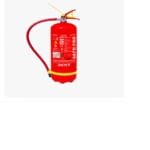
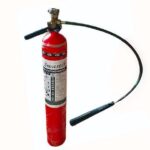
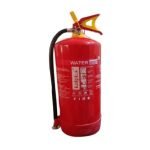






What is a Cartridge-Operated Fire Extinguisher?


02
Apr
A no-filler breakdown of how cartridge-operated fire extinguishers work, which type to choose, and where to buy or service one in India for facility managers, safety officers, and anyone responsible for fire protection in high-risk environments.
KEY TAKEAWAYS What You’ll Learn from This Guide ‣ A cartridge-operated fire extinguisher remains unpressurised until activation, using a separate CO₂ or nitrogen gas cartridge making it significantly more durable and reliable than stored-pressure models in industrial environments. ‣ The cartridge type fire extinguisher is BIS IS 15683-compliant and is the preferred choice for factories, mining sites, chemical plants, and aviation facilities in India. ‣ Maintenance is simpler: only the gas cartridge needs replacement after use no full hydrotest every year for the cylinder itself in most jurisdictions. ‣ Four main variants exist: dry chemical, water, foam, and CO₂ cartridge fire extinguisher each suited to specific fire classes (A, B, C). ‣ FireSupplies stocks, services, and refills cartridge-operated extinguisher systems across India, with same-day despatch available on in-stock models. |
Why the Cartridge-Operated Fire Extinguisher Still Matters in 2025
India reported over 22,000 fire incidents in industrial premises in the 2023–24 fiscal period, according to the National Crime Records Bureau. Yet a significant share of extinguishers found at inspection fail due to pressure loss a problem that is almost entirely eliminated with cartridge-operated extinguisher systems.
The Petroleum and Explosives Safety Organisation (PESO) and BIS both mandate regular maintenance of fire suppression equipment, and auditors increasingly flag stored-pressure units that have silently leaked below operational pressure. A cartridge-type fire extinguisher carries no such risk: the pressurising cartridge stays sealed and inert until the moment you need it.
As industrial fire protection systems grow more sophisticated in 2025, the stored-pressure vs cartridge-operated extinguisher debate has been settled in most high-hazard sectors. This guide explains exactly why and what to look for when you buy a fire extinguisher online or arrange a service visit.
What Is a Cartridge-Operated Fire Extinguisher Exact Definition
A cartridge-operated fire extinguisher is a portable fire suppression device in which a separate sealed cartridge filled with compressed CO₂ or nitrogen gas is housed inside or attached to the main cylinder. The cylinder stores the extinguishing agent (dry chemical, water, foam, or CO₂) at atmospheric pressure. The two components only combine at the moment of activation.
Step-by-Step: How a Cartridge-Operated Extinguisher Works
- Pull the safety pin to unlock the operating lever and expose the cartridge-puncture mechanism.
- Strike or squeeze the cartridge activator. A spike or valve punctures the gas cartridge, releasing CO₂ or nitrogen into the main cylinder under high pressure.
- The pressurised gas forces the extinguishing agent up the dip tube and out through the discharge hose within 1–2 seconds of activation.
- Sweep the nozzle at the base of the fire using the PASS technique: Pull → Aim → Squeeze → Sweep.
This on-demand pressurisation is the defining advantage of the fire extinguisher with gas cartridge design. Unlike stored-pressure units, there is no gradual leak over months or years. Each time an inspector checks a cartridge unit, the gas cartridge pressure can be independently verified.
4 Types of Cartridge-Operated Fire Extinguishers Which Do You Need?
Choosing the wrong agent type can be as dangerous as having no extinguisher at all. Here are the four variants, their extinguishing agents, and the fire classes each handles.
TYPE | DESCRIPTION & AGENT | FIRE CLASSES |
Dry Chemical (ABC) | Most common industrial choice. Contains monoammonium phosphate or sodium bicarbonate. Interrupts chemical chain reaction. | Class A, B & C |
Water Cartridge | Cools the fuel surface below ignition temperature. Strictly for Class A fires. Never use near live electrical equipment. | Class A only |
Foam Cartridge | Forms a smothering blanket over flammable liquid surfaces, preventing reignition. Ideal for fuel storage areas and paint shops. | Class A & B |
CO₂ Cartridge | Displaces oxygen and leaves zero residue. Best for server rooms, labs, and electrical panels. The CO₂ cartridge fire extinguisher is the only residue-free option. | Class B & C |
For most Indian industrial facilities handling mixed hazards, the dry chemical cartridge-operated fire extinguisher handles 95% of commercial fire scenarios. Consult a certified fire safety solutions provider before specifying for high-value environments like data centres or flammable liquid stores.
Cartridge vs Stored-Pressure Fire Extinguisher: Full Head-to-Head
The stored pressure vs cartridge-operated extinguisher question comes up in every fire safety tender across India. Here is a transparent, side-by-side breakdown so you can justify the specification in writing.
Feature | Cartridge-Operated | Stored-Pressure |
Pressurisation | On-demand at activation zero leakage risk at rest | Permanently pressurised susceptible to slow leaks |
Readiness Check | Gas cartridge weight checked independently; highly accurate | Gauge reading only can be inaccurate or stuck |
Maintenance | Simpler replace gas cartridge; refill agent | Complex full discharge, recharge, gauge check required |
Shelf Life | 10–15 years with annual cartridge checks | 5–10 years; pressure decay reduces reliability over time |
Discharge Rate | Stronger, more consistent initial burst | Pressure-dependent; reduces as agent is expelled |
Best Environment | Industrial, mining, chemical, aviation | Offices, retail, light commercial settings |
Refill Cost India | Lower per-service cartridge replacement only | Higher full cylinder service and recharge required |
BIS Standard | IS 15683 / IS 2878 | IS 15683 / IS 2171 |
Where Are Cartridge-Operated Fire Extinguishers Used? Real Industrial Contexts
The industrial fire extinguisher cartridge type is not just a preference in several sectors it is a regulatory expectation. Here is where these units are most commonly mandated or preferred across India:
Manufacturing & Chemical Facilities
Factories processing flammable chemicals, solvents, or paints require extinguishers that can be trusted after sitting unused for 12+ months. Cartridge units deliver consistent pressure regardless of ambient temperature fluctuations in non-air-conditioned floor spaces.
Mining Operations
Underground environments experience pressure differentials that accelerate pressure loss in stored-pressure units. BIS and DGMS guidelines for mines strongly favour cartridge-operated systems for reliability in low-visibility, high-stress activation scenarios.
Aviation & Defence
MRO facilities and airside environments require extinguishers that function reliably after months of standby in extreme temperatures. Military procurement specifications in India specifically list cartridge-operated dry powder units as standard.
Construction Sites
Sites with diesel generators, LPG cylinders, and temporary electrical infrastructure need fire safety Equipment for buildings under construction cartridge units withstand rough handling during site moves better than glass-tube stored-pressure models.
Cartridge Fire Extinguisher Refill & Servicing: What’s Actually Involved
One of the most misunderstood aspects of fire equipment management is the true cost of ongoing servicing. The cartridge fire extinguisher refill process is substantially simpler than equivalent stored-pressure maintenance.
Annual Inspection Checklist
- Weigh the gas cartridge against its stamped full-weight. A loss of more than 10% means replacement.
- Inspect the cylinder body for corrosion, dents, or discharge nozzle blockages.
- Check the safety pin and tamper seal both must be intact.
- Confirm the extinguishing agent fill level (dry powder settles; tap the base and reweigh).
- Record inspection date, inspector credentials, and next service due date on the service tag.
After discharge, servicing involves: replacing the gas cartridge, refilling the extinguishing agent, reassembling under quality-controlled conditions, and re-stamping the service tag. The cylinder body typically does not require hydrostatic testing every year only the cartridge is pressure-tested. This is where cartridge-operated extinguisher price advantages compound over time versus stored-pressure equivalents.
Search for a fire extinguisher service near me through FireSupplies’ nationwide dealer network we offer on-site servicing for facilities with 10+ units anywhere in India.
FREQUENTLY ASKED QUESTIONS · FAQPage Schema
Common Questions About Cartridge-Operated Fire Extinguishers
Q: What is the difference between a cartridge-operated and a stored-pressure fire extinguisher? |
A stored-pressure extinguisher keeps the agent and propellant gas in the same cylinder under constant pressure, which can leak slowly over time. A cartridge-operated fire extinguisher stores a separate sealed gas cartridge inside or alongside the agent cylinder; the two only combine when the cartridge is punctured at activation. This makes cartridge units dramatically more reliable for long-term deployment in industrial environments where regular pressure checks are difficult to guarantee. |
Q: How often does a cartridge-operated fire extinguisher need to be serviced in India? |
Under BIS IS 15683 and standard fire safety protocols in India, cartridge-operated extinguishers require a full annual inspection and a hydrostatic (pressure) test of the cylinder every five years. The gas cartridge weight should be checked every year and replaced if it has lost more than 10% of its rated fill weight. Many insurance underwriters and factory inspectors also require a bi-annual inspection for high-hazard occupancies such as chemical or petroleum facilities. |
Q: Can I buy a cartridge-operated fire extinguisher online and have it delivered across India? |
Yes. FireSupplies offers cartridge-operated extinguishers for purchase online with pan-India delivery, including BIS-certified dry powder, foam, and CO₂ variants. Bulk procurement for industrial and commercial projects qualifies for dedicated account pricing. All units are despatched with a factory-sealed gas cartridge, BIS compliance certificate, and service log card. For quantities above 20 units, on-site commissioning and tagging is included. |
Q: What does a cartridge fire extinguisher refill involve, and what does it cost? |
A cartridge fire extinguisher refill involves: replacing the spent gas cartridge (CO₂ or nitrogen), refilling the extinguishing agent to the specified weight, replacing the safety pin and tamper seal, and updating the service tag. The cost in India ranges from ₹350–₹900 per unit depending on cylinder size and agent type significantly lower than stored-pressure refills, which require full pressure re-testing of the cylinder body. Contact FireSupplies for a site-specific servicing quote. |
Q: Is a CO₂ cartridge fire extinguisher safe for use in enclosed spaces like server rooms? |
A CO₂ cartridge fire extinguisher is one of the best choices for server rooms and enclosed electrical areas because it leaves no residue and does not damage electronic equipment. However, CO₂ displaces oxygen rapidly, so operators must evacuate the space before or immediately after discharge. In very small, sealed rooms, the risk of oxygen depletion to occupants is real ventilate immediately after use. Always follow the manufacturer’s guidance and ensure all personnel are aware of the CO₂ evacuation protocol. |
A cartridge-operated fire extinguisher is the right call for any environment where reliability cannot be left to chance industrial plants, mining facilities, pharmaceutical warehouses, aviation MROs, and any building where annual audits need to pass every time. The separate gas cartridge design eliminates the single most common failure mode found in fire equipment: silent pressure loss. Start by auditing your existing extinguishers with a certified inspector, then contact FireSupplies to review whether a switch to cartridge-operated systems makes sense for your site most facilities that make the switch never go back. |
Need a Cartridge-Operated Fire Extinguisher? FireSupplies is India’s trusted fire safety solutions partner BIS-certified products, pan-India delivery, and on-site servicing for industrial facilities of any size. → Visit FireSupplies.in | Call Our Fire Safety Team Today |