
Your list is empty, add products to the list to send a request








What Are the Principles of Fire Extinguisher? Complete Guide to Fire Suppression Science

18
Jun
This guide explains the science behind every type of fire extinguisher from ABC dry powder and CO2 fire extinguisher gas to foam, wet chemical, and the fire extinguishing ball so you can select, place, and operate the right unit for every fire risk in your building. Written for safety officers, facility managers, and homeowners who want more than the label.
KEY TAKEAWAYS |
✓ Every fire extinguisher works by disrupting the fire triangle — removing heat, oxygen, or fuel from the combustion process. ✓ ABC dry powder extinguishers interrupt the chemical chain reaction and cover Class A, B, and C fires with a single unit. ✓ CO2 fire extinguisher gas displaces oxygen rapidly, making it the safest choice for live electrical equipment. ✓ The fire extinguishing ball is an auto-activation device that deploys without manual operation — ideal for unmanned rooms. ✓ Emergency exit lights and emergency lights are mandatory fire safety equipment under NBC for all commercial buildings. |
Why Understanding Fire Extinguisher Science Matters for Building Safety in 2026
fire safety solutions for buildings have improved substantially in terms of product availability yet fire-related property losses continue to rise in commercial and industrial sectors. The gap is not the absence of fire safety equipment; it is equipment that is incorrectly selected, poorly maintained, or operated by people who do not understand how it works.
At FireSupplies , we audit buildings across sectors and find the same pattern repeatedly: a fire extinguisher cylinder on the wall, never serviced; a CO2 unit beside electrical equipment, but no one trained on how fire extinguisher gas works; and in newer facilities, fire extinguishing balls installed in server rooms with no documentation or staff awareness. Industrial fire protection systems are only as effective as the knowledge base behind them.
Whether you are looking to buy fire extinguisher online for a home kitchen, spec out fire safety solutions for buildings in a new commercial development, or locate a reliable fire extinguisher service near you, this guide gives you the foundational knowledge to make the right decisions.
The Fire Triangle: The Science Behind All Fire Extinguishment
Every type of fire extinguisher — regardless of whether it uses water, CO2 gas, ABC powder, foam, or the newer fire extinguishing ball — works by attacking one or more sides of the fire triangle. Understanding this model is the foundation of all fire safety equipment selection.
A fire requires three elements to ignite and sustain itself: Heat, Fuel, and Oxygen. Remove any one, and combustion stops. This is the principle that defines every fire suppression system and every extinguishing agent on the market.
Fire Triangle Side | Extinguishment Method | Extinguishing Agent |
Heat | Cooling | Water, CO2 |
Oxygen | Smothering | Foam, CO2 gas, fire extinguishing ball |
Fuel | Starving | ABC dry powder, fire suppression systems |
The fourth method chemical inhibition is specific to dry powder agents. ABC extinguishers interrupt the free radical chain reaction within the combustion process itself, stopping the fire at a molecular level rather than just cooling or smothering it. This is why they are the most versatile type of fire extinguisher across hazard classes.
Every Type of Fire Extinguisher: How Each One Works
Selecting the correct type of fire extinguisher for a given hazard is not optional using the wrong agent can accelerate a fire or create a secondary hazard. FireSupplies stocks the full range of certified fire safety equipment for every building type and risk classification.
Type | Fire Class | How It Works / Best Use |
Water | Class A | Cools burning material; never use on electrical or liquid fires |
Foam | Class A & B | Forms a smothering blanket over flammable liquids |
CO2 Gas | Class B & C | Displaces oxygen; safe on live electrical equipment |
ABC Dry Powder | Class A, B & C | Interrupts chemical chain reaction; most versatile type |
Wet Chemical | Class K / F | For cooking oils and fats — commercial kitchens |
Fire Extinguishing Ball | Class A, B & C | Auto-activates on contact with flame; no manual operation needed |
The fire extinguishing ball , the newest addition to fire safety equipment
The fire extinguishing ball is a sphere-shaped passive suppression device that activates automatically on contact with flame, releasing a cloud of ABC dry chemical agent within 3 seconds of ignition. Unlike a conventional fire extinguisher cylinder, it requires no manual operation — making it ideal for unmanned server rooms, electrical cupboards, and storage areas where a fire could go undetected. It is one of the most innovative fire safety products available to buy online from FireSupplies .
Emergency lights and emergency exit lights
While not an extinguishing tool, emergency lights and emergency exit lights are mandatory fire safety equipment under NBC . They ensure occupants can navigate to exits safely in a power failure or smoke-filled environment. FireSupplies supplies battery-backed emergency light units and illuminated emergency exit light signs for all commercial and industrial applications.
The ABC Fire Extinguisher: Principle, Mechanism, and Best Use
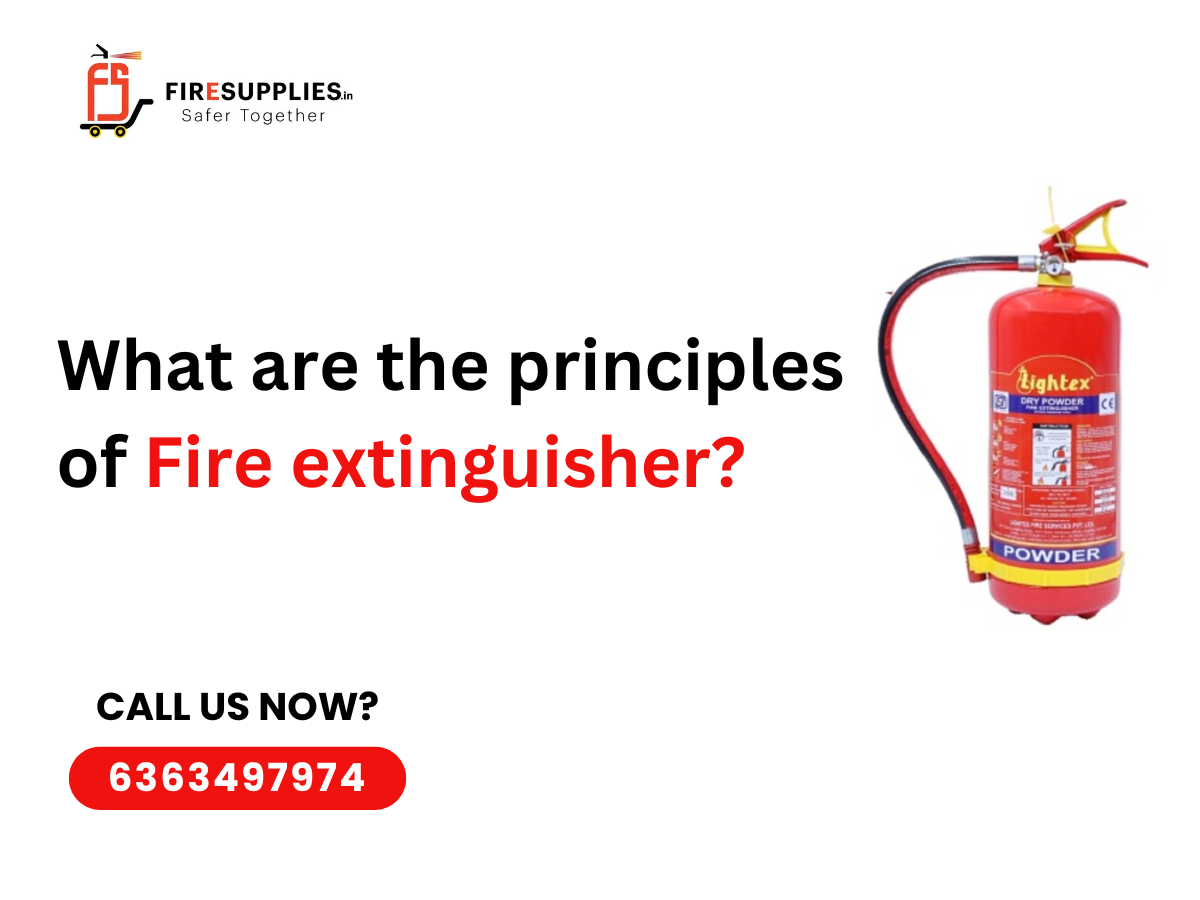
The ABC dry powder extinguisher is the most widely deployed type of fire extinguisher in — and for good reason. A single fire extinguisher cylinder covers three fire classes, making it the default choice for offices, schools, warehouses, and residential buildings.
What is inside an ABC fire extinguisher cylinder?
ABC extinguishers are filled with monoammonium phosphate a fine dry chemical powder stored under nitrogen pressure inside the fire extinguisher cylinder. When discharged, the powder does three things simultaneously: it coats the fuel source, blocking oxygen contact; it decomposes under heat to release gases that further displace oxygen; and it chemically interferes with the free radical chain reaction that sustains combustion.
Stored pressure principle
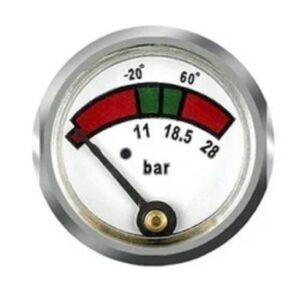
ABC units and most CO2 fire extinguisher gas units operate on the stored pressure principle: the extinguishing agent and the propellant (nitrogen for powder, liquefied CO2 for gas units) are held in the same chamber. Pressure forces the agent through the nozzle when the handle is activated. An easy-read pressure gauge on the cylinder face shows at a glance whether the unit is charged and ready.
PASS technique — operating any fire extinguisher cylinder
P — Pull | Remove the safety pin from the fire extinguisher cylinder handle. |
A — Aim | Point the nozzle low — at the base of the fire, not the flames. |
S — Squeeze | Press the handle to discharge the extinguishing agent. |
S — Sweep | Move side to side at the fire base until fully extinguished. |
Always position yourself between the fire and your nearest exit before operating. If the fire does not respond within 10–15 seconds, evacuate immediately and close doors behind you.
Fire Safety Equipment Placement, Maintenance, and Where to Buy
Owning the right type of fire extinguisher is only effective if it is correctly placed, regularly maintained, and easy to locate. FireSupplies India provides placement consultancy as part of every fire safety solutions for buildings package.
Placement guidelines
- Mount fire extinguisher cylinders at 3.5–5 feet above floor level with the handle accessible.
- Position near exits, kitchens, electrical panels, and server rooms — never above or beside a heat source.
- Install emergency exit lights above every fire exit door and at all stairwell landings.
- Place emergency lights along corridors and in rooms with no natural light source.
- Ensure no obstruction blocks access — signage must be visible from 10 metres in both directions.
- Install fire extinguishing balls inside unmanned rooms, storage areas, and electrical cupboards.
Maintenance schedule
- Monthly: Check pressure gauge, tamper seal, and physical condition of the fire extinguisher cylinder.
- Annual: Professional service by a certified fire extinguisher service near you — pressure test, agent check, nozzle inspection.
- Post-discharge: Refill or replace immediately — a partially discharged unit is not reliable.
- Replacement: Replace fire extinguisher cylinders every 10–15 years even if unused.
- Emergency lights: Test battery backup monthly; replace batteries every 3 years.
Buy fire extinguisher , FireSupplies
FireSupplies is a certified fire safety equipment supplier in India, delivering ISI-marked fire extinguisher cylinders, CO2 fire extinguisher gas units, fire extinguishing balls, emergency lights, emergency exit lights, and complete industrial fire protection systems nationwide. You can browse the full catalogue and buy fire extinguisher online with same-day dispatch available for most locations.
5 FIRE PREVENTION RULES — FIRESUPPLIES ✓ Keep flammable materials stored away from heat sources and electrical panels at all times. ✓ Install smoke alarms and emergency lights on every floor — test both monthly. ✓ Never overload electrical circuits; inspect wiring and outlets annually for damage. ✓ Store fire extinguisher cylinders in accessible, clearly signed, unobstructed locations near exits. ✓ Educate all building occupants on fire safety equipment use, the PASS method, and emergency procedures. |
FAQ About Fire Extinguisher Science and Fire Safety Equipment
Q: What are the 4 methods of fire extinguishment? A: The four methods are: Cooling (removing heat, typically using water), Smothering (removing oxygen, using foam, CO2 gas, or a fire extinguishing ball), Starving (removing fuel by cutting off the fire’s source), and Chemical Inhibition (interrupting the combustion chain reaction using ABC dry powder). Most fire suppression systems and fire extinguisher types use one or a combination of these methods. |
Q: Why is oxygen removed to stop a fire? A: Oxygen is one of the three sides of the fire triangle — without it, combustion cannot continue. When a CO2 fire extinguisher gas or foam unit displaces the oxygen surrounding a fire, the chemical reaction that sustains burning is broken. This is why smothering methods are especially effective on contained fires such as those in electrical panels, vehicles, and enclosed server rooms. |
Q: What is a fire suppression system? A: A fire suppression system is an engineered set of components — including sprinkler heads, agent storage, piping, and detection devices — designed to automatically detect and suppress a fire without manual intervention. Industrial fire protection systems include gaseous suppression (CO2 or FM-200), foam deluge systems, and dry chemical systems. They are mandatory in high-risk commercial and industrial premises under NBC Part 4. |
Q: How does a CO2 fire extinguisher work? A: A CO2 fire extinguisher works by releasing fire extinguisher gas — carbon dioxide — under high pressure from a pressurised fire extinguisher cylinder. The CO2 displaces oxygen around the fire, removing the element needed for combustion. Because it leaves no residue, it is the preferred type for electrical fires, server rooms, and laboratory environments. CO2 extinguishers cover Class B and Class C fires. |
Q: Which fire extinguisher is best for electrical fires? A: A CO2 fire extinguisher is the best choice for electrical fires. The fire extinguisher gas (CO2) is non-conductive, meaning it will not conduct electricity back to the user. ABC dry powder extinguishers can also be used on electrical fires but leave a corrosive residue that damages sensitive equipment. Never use water or foam extinguishers on electrical fires — both conduct electricity and can cause electrocution. |
Understanding how your fire safety equipment works is not a technical exercise — it is the difference between using it correctly under pressure and reaching for the wrong unit at the wrong moment. Start by identifying every type of fire extinguisher in your building today, confirm each fire extinguisher cylinder is in date and accessible, and make sure every occupant knows the PASS technique and the location of every emergency exit light and emergency light on their floor.
At FireSupplies , we supply, install, and service the full range of fire safety solutions for buildings — from ABC dry powder and CO2 fire extinguisher gas units to fire extinguishing balls, emergency exit lights, and industrial fire protection systems. If you need a trusted fire safety equipment supplier in your area or want to buy fire extinguisher online, FireSupplies delivers certified ISI-marked products nationwide.
→ Read next: Top 10 Fire Safety Rules Every Home and Workplace Must Follow

