
Your list is empty, add products to the list to send a request
















Fixed vs Portable Gas Detector: Complete Buying Guide

01
Jun
Choosing between a Fixed vs Portable Gas Detector is one of the most important safety decisions for any facility manager, safety officer, or procurement professional. Both types of gas detectors serve a critical role in protecting lives and infrastructure but they work differently, cost differently, and suit different environments. This guide breaks down everything you need to know so you can make a confident, cost-effective, and safety-first decision for your workplace or industrial site.
What Is a Fixed vs Portable Gas Detector?
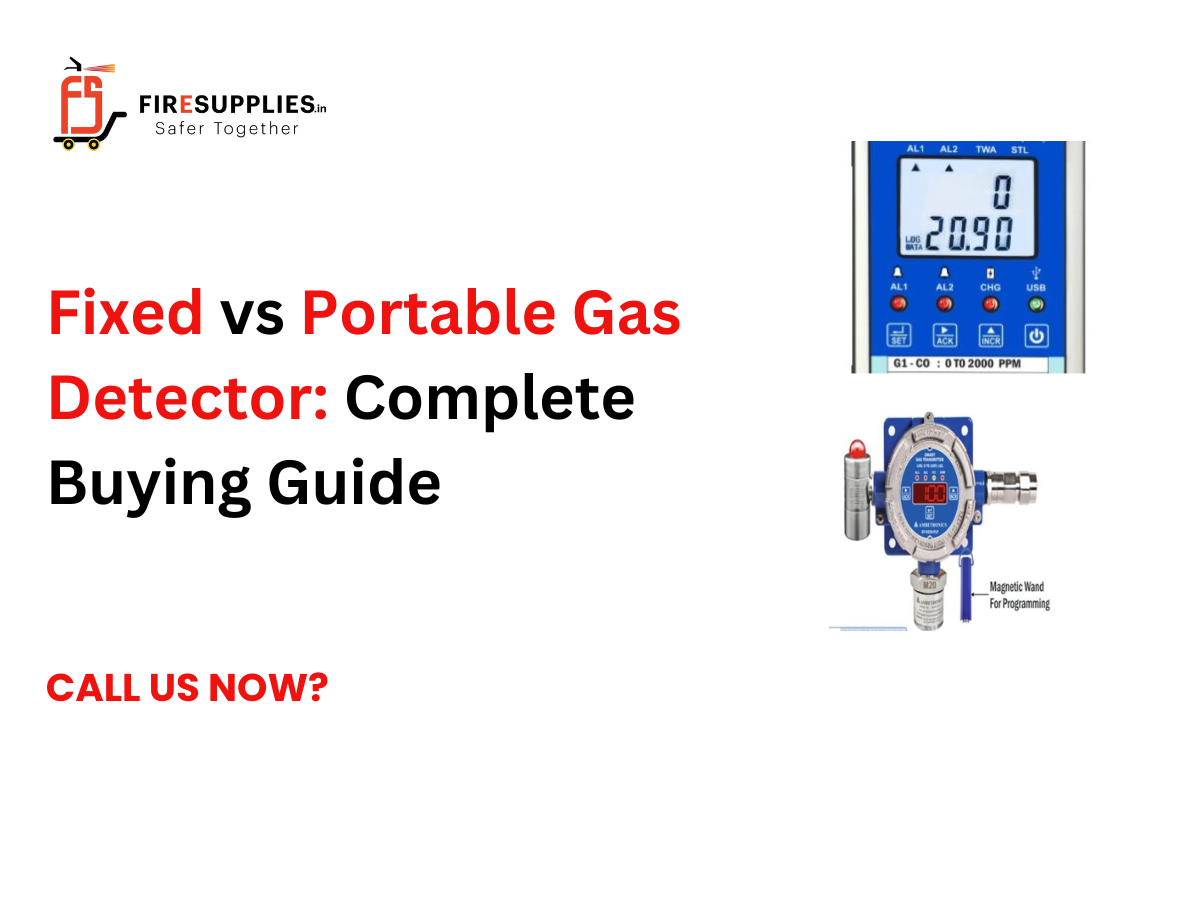
A fixed gas detector is a permanently installed device that continuously monitors a specific location for dangerous gas leaks. It is wired into a control panel, such as the NG Global GEACP6Z 6-Zone Gas Alarm Panel, and triggers alarms automatically when gas concentration exceeds a set threshold.
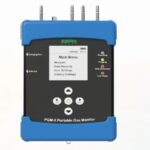
A portable gas detector is a handheld or wearable device carried by a worker to monitor gas levels in real time, especially in locations where fixed sensors cannot be installed such as confined spaces, mobile worksites, or during inspections. Products like the Honeywell BW Solo Single-Gas Detector and the Realix Gas-min Series are popular portable choices.
Together, fixed and portable gas detectors form a comprehensive gas detection system that protects both people and property.
Technical Comparison: Fixed vs Portable Gas Detector
| Feature | Fixed Gas Detector | Portable Gas Detector |
| Installation | Permanent, wall or pipe-mounted | Handheld or clip-on wearable |
| Power Source | Mains power (4–20mA loop) | Rechargeable battery |
| Monitoring Area | Continuous zone coverage | Point-of-use / personal protection |
| Response Time | Immediate, system-wide alerts | Personal audible/visual alarm |
| Integration | Connects to fire alarm system / control panel | Standalone operation |
| Data Logging | Yes (panel-based) | Yes (device memory) |
| Gases Detected | LPG, PNG, H2S, CH4, VOC, CO, O2 | O2, CO, H2S, multi-gas variants |
| Example Products | Honeywell Sensepoint XCD H2S, Crowcon Xgard IR CH4, Senko SI-200E VOC, NG Global GEA0319 LPG/PNG | Honeywell BW Solo O2, Realix Gas-min CO/H2S, Watchgas SST1, Karam UGS |
| Certification | ATEX, IECEx, IS | ATEX, IECEx, IS |
| Best For | Industrial plants, commercial kitchens, boiler rooms | Confined space entry, field inspections, personal protection |
Use Cases and Applications for Gas Detection Equipment
Understanding where each type of gas detection equipment performs best helps you invest wisely.
Fixed Gas Detection Systems
Fixed gas detectors are ideal when continuous, unattended monitoring is required. Common use cases include:
- Industrial manufacturing plants Detect methane (CH4) and volatile organic compounds (VOC) around machinery and pipelines
- Commercial kitchens and restaurants Monitor LPG and PNG (natural gas) leaks near cooking equipment
- Boiler rooms and utility spaces Continuously monitor CO and combustible gas buildup
- Chemical storage and processing facilities Detect H2S and toxic vapours before they reach dangerous levels
- Gas storage areas Provide 24/7 leak monitoring with automatic panel alerts via NG Global GEA-HMS Gas Alarm Hooter
Portable Gas Detection Devices
Portable gas detectors are essential for workers who move between locations or enter hazardous areas. Common applications include:
- Confined space entry Verify oxygen levels and check for H2S or CO before workers descend
- Oil and gas maintenance Carry the Realix Gas-min or Honeywell BW Solo during field inspections
- Sewage treatment and water utility work Detect H2S in underground chambers
- Emergency response First responders use portable detectors to assess incident scenes safely
- Routine safety inspections Quality control officers use the Watchgas SST1 for spot-checking
Advantages and Limitations: Fixed vs Portable Gas Detector
Every fire protection equipment solution has trade-offs. Here is an honest look at both types.
Fixed Gas Detector : Advantages
- Provides continuous, round-the-clock monitoring without human involvement
- Integrates directly with your fire alarm system and control panels for automated response
- Covers wide areas using multiple sensor heads connected to a single panel
- Reduces long-term labour costs associated with manual gas checks
- Products like the Honeywell Sensepoint XCD and Crowcon Xgard IR CH4 are built for harsh industrial environments
Fixed Gas Detector : Limitations
- Higher upfront cost for equipment and professional installation
- Not suitable for temporary worksites or frequently changing environments
- Requires periodic sensor calibration and professional maintenance
- Location-specific cannot follow a worker into a confined space
Portable Gas Detector : Advantages
- Personal protection for workers in high-risk or confined environments
- Lightweight, compact, and easy to carry ideal for the Karam UGS or Watchgas SST1
- Quick to deploy with no installation required
- Flexible can be used across multiple sites and worksites
- Cost-effective for smaller teams or infrequent monitoring needs
Portable Gas Detector : Limitations
- Dependent on battery life must be charged regularly
- Covers only the immediate area around the worker
- Cannot provide facility-wide automatic alerts without a connected system
- Requires training for correct use and alarm response
Buying Guide: How to Choose the Right Gas Detector
Whether you are a fire safety equipment supplier, a facilities manager, or a safety officer, use this quick checklist to guide your purchase decision.
Step 1 Identify the Gas(es) You Need to Detect
Different sensors detect different gases. Match the product to your risk:
- LPG / PNG → NG Global GEA0319 or GT-4220-FLP-A (fixed)
- H2S → Honeywell Sensepoint XCD H2S (fixed) or Realix Gas-min H2S / Karam UGS (portable)
- CH4 (Methane) → Crowcon Xgard IR CH4 (fixed)
- VOC → Senko SI-200E Diffusion Type (fixed)
- CO (Carbon Monoxide) → Realix Gas-min CO (portable)
- O2 (Oxygen) → Honeywell BW Solo O2 (portable) or Realix Gas-min O2 (portable)
Step 2 Assess Your Environment
Ask yourself:
- Is the hazard in a permanent location? → Choose a fixed gas detector
- Does the risk follow a worker? → Choose a portable gas detector
- Do you need both? → Many industrial sites deploy fixed + portable gas detection systems together
Step 3 Check Certification Requirements
Ensure your chosen device carries relevant certifications such as ATEX, IECEx, or BIS IS markings, especially for use in explosive atmospheres. Compliance with IS 17773 and IEC 60079 standards is mandatory in many regulated Indian industries.
Step 4 Consider System Integration
If you already operate a fire alarm system or intend to install one, fixed gas detectors that support 4–20mA or relay output can be connected to your panel for automated alerts. The NG Global GEACP6Z 6-Zone Gas Alarm Panel and GEA-HMS Hooter are compatible system components.
Step 5 Factor in Maintenance and Calibration Costs
Both fixed and portable detectors require regular bump testing and sensor calibration typically every 3–6 months. Factor service costs into your total cost of ownership before purchasing.
Standards and Certifications for Gas Detection Equipment
Using certified fire protection equipment is not optional it is a legal and safety requirement in most industries.
Key standards to look for when purchasing a gas detector:
- ATEX Directive (EU) Required for equipment used in explosive atmospheres in Europe
- IECEx Certification International certification for explosive environment equipment
- IS 17773 (BIS, India) Indian Standard for fixed gas detectors in industrial use
- IEC 60079 Series International standard for equipment in flammable gas atmospheres
- EN 45544 / EN 60079-29-1 Performance standards for toxic and flammable gas detectors
- UL 2075 US standard for gas and vapor detectors
Always verify that your supplier whether a fire safety equipment supplier or a direct brand distributor provides the relevant certification documentation with each product.
For further reference on gas detection standards, the following authoritative sources provide up-to-date guidance:
- OSHA (Occupational Safety and Health Administration): https://www.osha.gov Guidelines on confined space gas monitoring and permissible exposure limits
- NFPA (National Fire Protection Association): https://www.nfpa.org Standards for gas detection in fire protection systems
- IEC (International Electrotechnical Commission): https://www.iec.ch IEC 60079 series standards for hazardous area equipment
FAQs About Fixed vs Portable Gas Detector
1. What is the difference between a fixed gas detector and a portable gas detector?
A fixed gas detector is permanently installed to continuously monitor a specific area for gas leaks. A portable gas detector is carried by workers to detect hazardous gases during inspections, maintenance, or confined space entry.
2. Which is better: a fixed gas detector or a portable gas detector?
Neither is inherently better. Fixed gas detectors provide continuous area monitoring, while portable gas detectors offer personal protection. Many facilities use both for comprehensive gas detection and safety.
3. How do I choose the right gas detector?
Choose a gas detector based on the gas type, application, monitoring area, and safety requirements. Consider whether you need fixed or portable detection, sensor type, alarm features, and calibration requirements.
Ready to protect your facility with the right gas detection solution?
Whether you need a portable gas detector for personal worker protection or a fixed gas detection system for continuous facility monitoring, Fire Supplies has you covered. We supply trusted brands including Honeywell, Crowcon, Senko, Realix, Karam, Watchgas, and NG Global all certified and ready to deploy.
Browse our full range of gas detectors, fire alarm systems, and fire protection equipment today or contact our expert team for a free consultation and site assessment.
Call us now | Email our fire safety specialists | Shop online at Fire Supplies
Our team helps facilities across industries select the right combination of fixed detectors, portable detectors, gas alarm panels, and fire safety products to meet safety regulations and protect every worker on site.
Fire Supplies Your trusted fire safety equipment supplier for industrial gas detectors, fire alarm systems, fire protection equipment, and fire fighting products.

