
Your list is empty, add products to the list to send a request











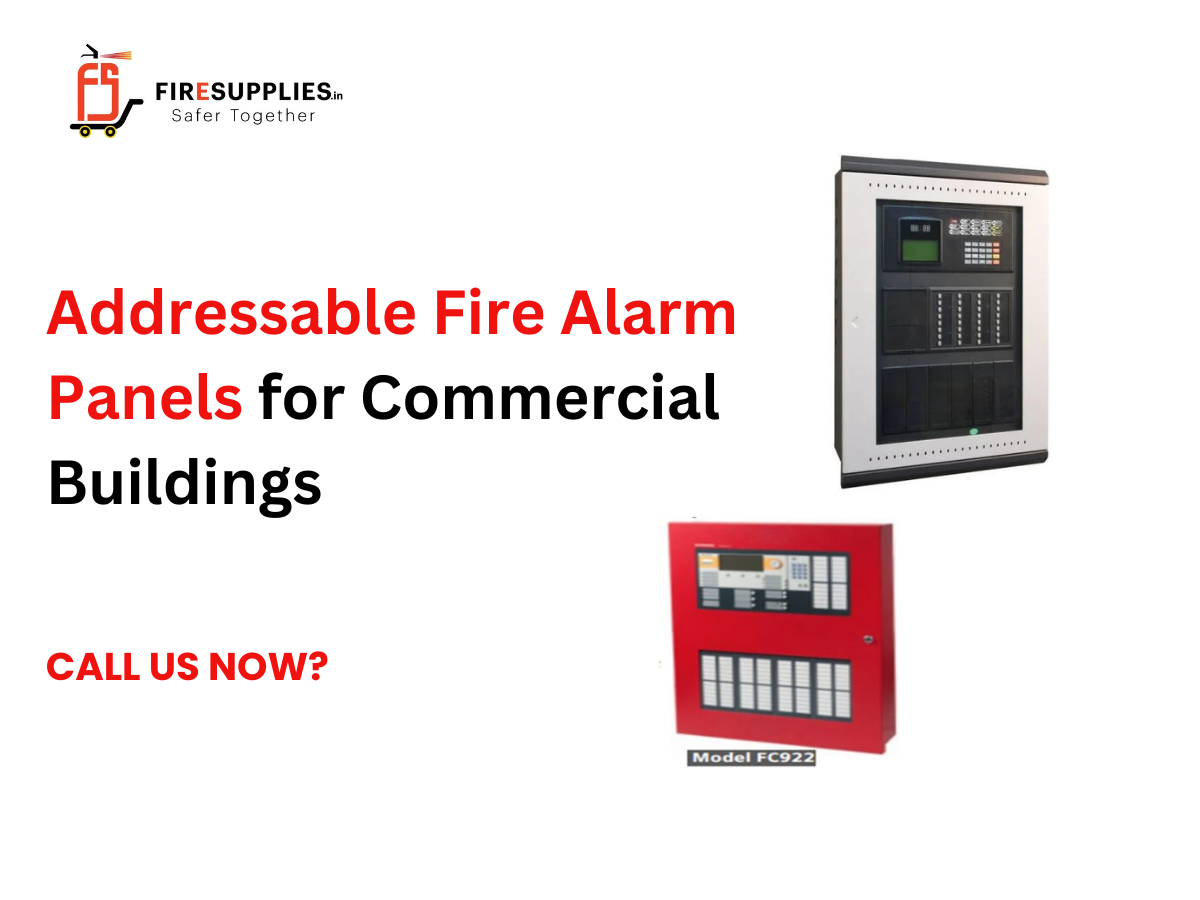
Addressable Fire Alarm Panels for Commercial Buildings

19
May
If you manage, own, or design fire safety systems for a commercial building, you already know that a standard detector-and-panel setup is not always enough. Modern offices, hospitals, hotels, shopping centres, and industrial facilities demand a fire detection and alarm system that can pinpoint exactly where a fire starts and respond in seconds. That is exactly what an Addressable Fire Alarm Panel for Commercial Buildings delivers.
This guide covers everything you need to know: how these intelligent panels work, which products are best suited to your project, how to compare brands, what the standards require, and how to buy smart. Whether you are specifying a new build or upgrading an ageing conventional fire alarm system, this page is your starting point.
What Is an Addressable Fire Alarm Panel?
An Addressable Fire Alarm Panel is an intelligent fire alarm control unit that assigns a unique address to every detector, call point, sounder, and module connected to it. When any device triggers whether it is a smoke detector on Floor 3 or a manual call point in a stairwell the panel identifies that exact device and its location on the system map instantly.
Unlike a conventional fire alarm system, where all devices on a zone share one circuit and only the zone is identified, an addressable system gives device-level precision. This makes it the standard choice for commercial fire safety systems in buildings with multiple floors, complex layouts, or high occupancy loads.
The panel is often called an Intelligent Fire Alarm Panel, a Fire Alarm Control Panel (FACP), or a Fire Alarm Control Unit (FACU) these terms all refer to the same category of product.
Technical Specifications: Top Addressable Fire Alarm Panels Compared
The four panels below are among the most widely specified commercial fire alarm panels in India and globally. The comparison covers loop capacity, device count, networking, and certifications the factors that matter most when sizing a system for a large building.
| Feature | GST200N-2 | Siemens FC922 | Honeywell IFP-2100 | Simplex 4100ES |
| Loop Capacity | 2 Loops (expandable) | 2 or 4 Loops | 4 Loops | 1–12 Loops |
| Devices per Loop | Up to 127 | Up to 126 | Up to 250 | Up to 250 |
| Max Devices | 254 | 504 | 1,000 | 3,000+ |
| Panel Sync / Networking | Supported | Supported | Supported | Supported |
| Repeater Panel Support | Yes | Yes | Yes (RA-2000) | Yes |
| Touchscreen / LCD | LCD | LCD + Graphic | LCD + Graphic | LCD Annunciator |
| Third-Party Integration | Moderate | High | High | High |
| Certifications | IS / CE | EN 54, VdS | UL, EN 54 | UL Listed |
| Typical Application | Mid-size commercial | Large commercial/industrial | High-rise, hospitals | Large campuses, airports |
| Image | 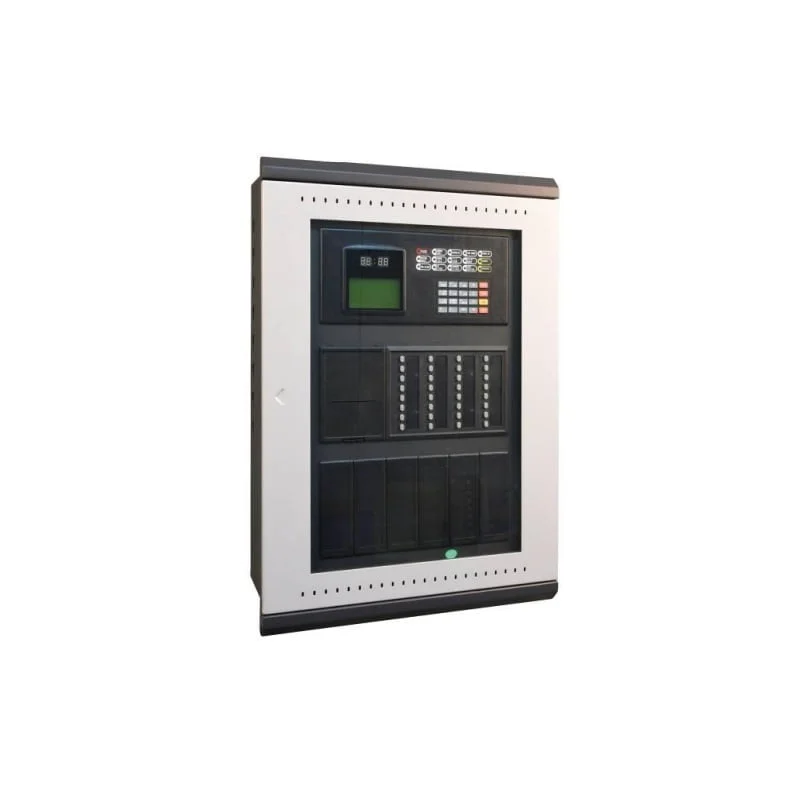 |  |  | 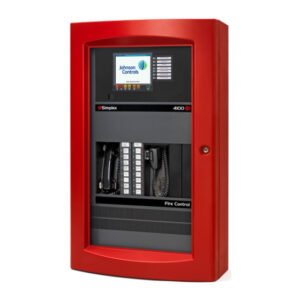 |
| Link to Shop | GST200N-2 | Siemens FC922 | Honeywell IFP-2100 | Simplex 4100ES |
A loop is the wiring circuit that connects devices to the panel. Each loop supports a fixed number of addressable devices. A 4-loop addressable fire alarm panel such as the Honeywell IFP-2100 or Siemens FC924 can therefore connect up to 1,000 or more individual devices ideal for large hospitals, airports, or multi-storey office towers.
Where Addressable Fire Alarm Systems Are Used: Real-World Applications
The Addressable Fire Detection System is the backbone of fire protection in almost every large commercial and institutional building type. Here are the most common applications:
- Commercial offices and corporate campuses
- Hospitals, clinics, and healthcare facilities (strict evacuation zone management)
- Hotels, resorts, and serviced apartments (zone isolation, minimal guest disturbance)
- Shopping malls and retail complexes (high foot traffic, multiple tenancies)
- Industrial plants, warehouses, and logistics hubs (large open areas, gas hazard zones)
- Data centres and server rooms (early warning, aspiration detection integration)
- Educational institutions, universities, and student housing
- Government buildings, airports, and transport terminals
In each of these environments, the ability of the addressable smoke detection system to identify a specific device and isolate a fault or alarm to one zone prevents unnecessary full-building evacuations and reduces false alarms significantly.
Advantages of Addressable Fire Alarm Panels for Commercial Buildings
- Precise fault and alarm location: The panel tells you exactly which device triggered, not just which zone.
- Reduced false alarm disruption: Alarms can be investigated device by device before a full evacuation is triggered.
- Scalability: Most panels including the Simplex 4100ES (up to 12 loops) and GST200N-2 are expandable as the building grows.
- Intelligent cause-and-effect programming: The panel can automatically activate specific sounders, suppress ventilation systems, release fire doors, and notify monitoring stations based on which device triggered.
- Remote monitoring and integration: Modern panels support building management system (BMS) integration, remote annunciator panels, and central station monitoring.
- Faster maintenance: Engineers can identify and replace a single faulty device without shutting down the whole system.
- Compliance with IS 2189 and EN 54 standards for large commercial buildings.
Limitations to Be Aware Of
- Higher initial cost compared to a basic conventional fire alarm system though total cost of ownership is often lower over time.
- Installation and commissioning requires trained engineers familiar with addressable protocols (Apollo, Hochiki, or proprietary).
- Panel programming and zone mapping require careful planning at the design stage.
- Battery backup sizing must account for the full device load on each loop.
How to Choose the Right Addressable Fire Alarm Control Panel: Buying Guide
Selecting the right Addressable Fire Alarm Panel for Commercial Buildings depends on five key factors:
- Building size and device count For buildings with up to 250 devices, the GST200N-2 (2-loop) is a cost-effective choice. For 500–1,000 devices, the Siemens FC922/FC924 or Honeywell IFP-2100 is appropriate. For very large campuses or hospitals, the Simplex 4100ES with up to 12 loops is the right specification.
- Detector protocol Check whether your specified detectors (Apollo, Hochiki, Edwards, etc.) are compatible with the panel’s loop protocol. Mixing protocols without an interface module is not possible.
- Certifications required For projects under NBC 2016 or insurance requirements, panels with UL listing (Simplex, Honeywell), EN 54 certification (Siemens), or IS 2189 compliance are usually mandatory.
- Integration requirements If the building uses a BMS or requires cause-and-effect relay outputs for HVAC, elevators, or suppression systems, confirm the panel supports those output modules.
- After-sales support and spare parts availability Choose brands with a strong local service network. For India-based projects, GST, Ravel, Honeywell, and Simplex have established support channels.
As a leading fire safety equipment supplier, we stock all four of the panels compared in this guide along with the complete range of compatible detectors, call points, sounder strobes, isolator modules, and repeater panels required for a fully compliant fire protection system.
FAQs About Addressable Fire Alarm Panels
- What is an addressable fire alarm panel?
An addressable fire alarm panel is a type of fire alarm control unit that communicates with each connected device smoke detectors, heat detectors, call points, and output modules via a unique digital address. When a device activates, the panel displays the exact device identity and location on screen. This is the defining feature that separates an Addressable Fire Detection System from a conventional one.
- What is a 4-loop addressable fire alarm panel?
A 4-loop addressable fire alarm panel contains four independent wiring circuits, each capable of supporting up to 125–250 addressable devices depending on the manufacturer. The Honeywell IFP-2100 and Siemens FC924 are classic examples. With four loops, a single panel can manage between 500 and 1,000 devices enough for a mid-size hospital, a multi-storey office building, or a large hotel. Loops can also be networked across multiple panels for very large building fire alarm systems.
- What is the difference between addressable and non-addressable fire panels?
A conventional (non-addressable) fire alarm panel divides the building into zones, and all devices in a zone share one circuit. If a device triggers, you know the zone but not the specific device. An Addressable Fire Alarm Panel assigns a unique ID to every device on the system so when an alarm or fault occurs, the panel tells you exactly which detector on which floor triggered it. Addressable systems also support condition monitoring (pre-alarm, fault, maintenance alerts) that conventional panels cannot provide.
- When should you use an addressable fire alarm system?
An Addressable Fire Alarm System is recommended and in many cases required under IS 2189 or NBC 2016 when:
- The building has more than two floors or covers more than 500 sq. metres per floor.
- Precise evacuation zone management is required (hospitals, hotels, data centres).
- The building has a complex layout or multiple tenancies.
- BMS integration or cause-and-effect output control is required.
- Minimising false alarms and unnecessary evacuations is a priority.
- What are the disadvantages of addressable fire alarm systems?
The main disadvantages are higher upfront cost, the need for specialist installation engineers, and more complex commissioning compared to conventional systems. Programming cause-and-effect logic, device addressing, and zone mapping all require experience. However, for any commercial building over a modest size, these costs are far outweighed by the precision, reliability, and compliance benefits that an Addressable Fire Alarm Panel for Commercial Buildings provides.
- Can an addressable panel connect to conventional detectors?
Yes, with the use of a zone interface module (also called a conventional zone card or input module). Products like the Edward SIM-INTL or the Simplex 4090-series input modules allow conventional detector circuits to be connected to an addressable loop and appear as addressable points on the panel. This is useful when retrofitting legacy systems or when conventional detectors are specified for cost reasons in low-priority areas.
- How many devices can one addressable loop support?
Most addressable loop protocols support 127 to 250 devices per loop, depending on the manufacturer. Apollo XP95 and Discovery loops support up to 126 devices. Hochiki ESP and many Notifier/Honeywell protocols support up to 159 or 250 per loop. The GST200N-2 supports 127 per loop; the Simplex 4100ES supports 250 per loop.
- Is an addressable fire alarm panel required by Indian fire codes?
Yes. Under IS 2189:2008 (the Indian Standard for fire detection and alarm systems) and the National Building Code (NBC) 2016, automatic fire detection using an addressable system is mandated for high-rise buildings (above 15 metres), hospitals, educational buildings, assembly halls, and industrial occupancies above certain floor areas. Always consult the applicable Authority Having Jurisdiction (AHJ) for the precise requirements of your project.
Standards and Certifications for Fire Alarm Systems in India
- IS 2189:2008 Selection, installation, and maintenance of automatic fire detection and alarm systems in India.
- NBC 2016 (National Building Code of India) Mandates fire detection type based on building occupancy, height, and area.
- EN 54 (Parts 1–4 and beyond) European standard for fire detection and alarm system components. Required for Siemens, Honeywell, and many other imported panels.
- UL 864 Underwriters Laboratories standard for control units for fire protection signalling systems. Required for Simplex and some Honeywell products.
- BIS (Bureau of Indian Standards) certification Required for detectors and panels sold in India under the IS 2175 / IS 2189 framework.
Get Expert Help Specifying Your Addressable Fire Alarm System
We supply and support the complete range of Fire Safety Products and Fire Protection Equipment from top global brands including GST, Siemens, Honeywell, Simplex, Edwards, Apollo, Notifier, Ravel, and TNA.
Our technical team can help you select the right Addressable Fire Alarm Panel for Commercial Buildings, size the system correctly, and ensure full compliance with IS 2189, NBC 2016, and any relevant EN 54 or UL requirements.
✓ Request a system consultation and product quote today.
✓ Send us your building plans or BOQ and we will recommend the right panel, detectors, and accessories.
✓ Need stock urgently? Check availability of GST200N-2, Siemens FC922, Honeywell IFP-2100, and Simplex 4100ES in stock and ready to dispatch.
Contact Fire Supplies us now and protect your building with the right fire safety products from day one.

