
Your list is empty, add products to the list to send a request








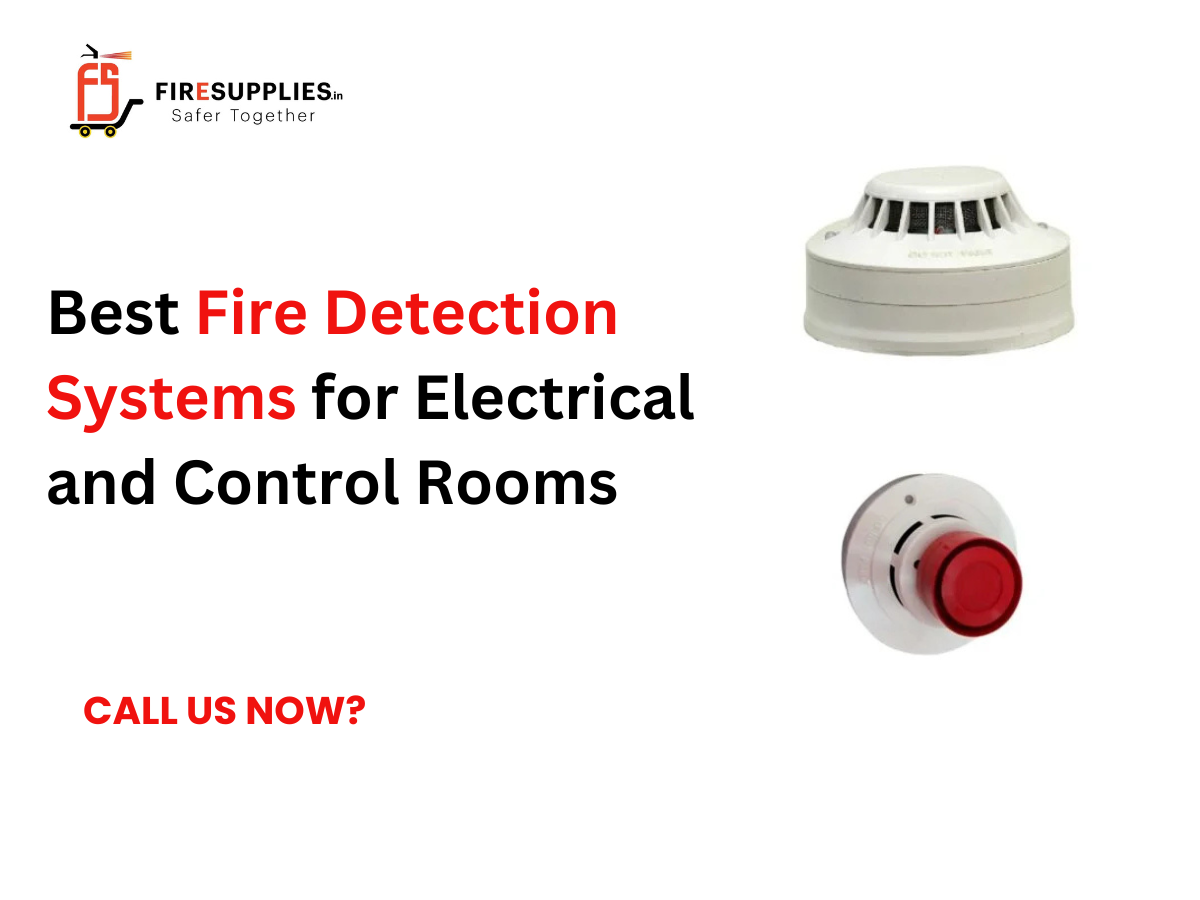
Best Fire Detection Systems for Electrical and Control Rooms

11
May
Electrical and control rooms are among the most fire-vulnerable spaces in any facility. Protecting them with the right Fire Detection Systems for Electrical and Control Rooms is not optional it is critical for operational continuity, equipment protection, and life safety.
What Are Fire Detection Systems for Electrical and Control Rooms?
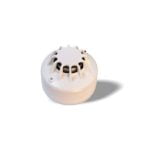
Fire Detection Systems for Electrical and Control Rooms are purpose-built fire safety systems designed to detect smoke, heat, or combustion gases at the earliest possible stage inside environments that house electrical panels, switchgear, control equipment, and servers. These systems typically combine aspirating smoke detectors, optical smoke detectors, heat detectors, duct smoke detectors, and intelligent alarm panels to provide multi-layered, early warning fire detection with minimal false alarms. They are essential fire protection equipment in power plants, data centres, manufacturing facilities, and commercial buildings where electrical faults pose a high ignition risk.
Why Electrical and Control Rooms Demand Specialised Fire Detection Solutions
Standard fire alarms are not enough in electrical environments. Electrical fires often start slowly invisible smoke particles accumulate for minutes or even hours before flames appear.
By the time a conventional detector triggers, damage to critical equipment may already be severe. Advanced fire detection solutions catch threats at the pre-combustion stage, giving facilities time to respond before a fire takes hold.
Key risk factors in electrical rooms include:
- Overloaded circuits and faulty wiring
- Poor cable management generating heat build-up
- Dust accumulation on electrical panels
- Cooling failures in server or UPS rooms
- Arcing inside enclosed switchgear
Technical Specifications: Fire Detection Systems for Electrical and Control Rooms
The table below outlines core technical parameters you should evaluate when selecting electrical room fire alarm systems or control room fire detection systems.
| Feature | Specification to Look For |
| Detection Technology | Aspirating (ASD), Optical, Multi-sensor, Thermal |
| Sensitivity Range | 0.001% obs/m (aspirating) to standard threshold |
| Loop Capacity | Expandable addressable loops (up to 250 devices/loop) |
| Panel Synchronisation | Multi-panel sync across networked sites |
| Power Supply | Mains + 24–72 hr battery backup |
| Communication Protocol | SLC (Signalling Line Circuit), TCP/IP, RS-485 |
| Alarm Output | Audible, visual, relay, BMS integration |
| False Alarm Management | Software-configurable thresholds, cause & effect logic |
| Environmental Rating | IP54 or higher for dusty/humid environments |
| Standards Compliance | EN 54, UL 268, BS 5839, NFPA 72 |
Best Fire Safety Products for Electrical and Control Rooms
Choosing the right fire safety equipment starts with selecting proven, certified products. Below are the top recommended products across each detector and panel category.
Smoke Detectors
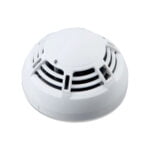
Smoke detection systems for control rooms must be highly sensitive while filtering out false alarms from dust or electrical interference.
- Notifier FSP-951 Photoelectric point detector with advanced drift compensation; ideal for clean electrical environments with stable air conditions.
- Honeywell HM-PSE-S2 Multi-criteria detector combining optical and thermal sensing; reduces nuisance alarms in areas prone to temperature fluctuation.
- Apollo XP95 Optical Smoke Detector Industry benchmark for addressable detection; compatible with major loop controllers and known for reliability in industrial settings.
Aspirating Smoke Detection Systems
Aspirating smoke detection systems (ASD) actively draw air from the protected space through a pipe network, analysing it in a highly sensitive detection chamber. They are the gold standard for fire safety systems for server rooms and high-value control environments.
- SECURITON ASD 532 Class-leading aspirating detector with four configurable alarm levels; detects invisible combustion particles at concentrations as low as 0.001% obs/m. Suitable for large electrical switch rooms and mission-critical infrastructure.
Heat Detectors
Heat detectors are ideal where smoke detectors may produce false alarms for example, near battery banks or in areas with normal operational fumes.
- Honeywell HM-RHSE Rate-of-rise and fixed temperature detector; triggers on both rapid heat increase and absolute temperature threshold.
- Ravel RE-316H Compact, addressable heat detector suited to electrical panel enclosures and confined equipment rooms.
Duct Smoke Detectors
HVAC and ventilation systems can spread smoke rapidly through a facility. Duct smoke detectors monitor air handling units and return air ducts.
- Edwards SD-T18 Reliable duct detector with wide air velocity range; prevents contaminated air from recirculating when smoke is detected.
- Honeywell DNR Duct detector with remote LED capability; supports zone isolation when integrated with the building fire alarm system.
Intelligent Fire Alarm Panels
The intelligent fire alarm system panel is the brain of your fire detection network. It processes signals from all detectors, manages alarm outputs, and integrates with building management systems.
- Simplex 4100ES Enterprise-grade, fully networkable fire alarm control panel; supports up to 3,000 points, multi-panel synchronisation, and integrated mass notification.
- Honeywell IFP-2100 Addressable panel with high bandwidth communication, graphical user interface, and cause-and-effect programming for complex control room scenarios.
- GST200N-2 Cost-effective two-loop panel delivering 240 addressable devices per loop; widely used in mid-sized commercial and industrial fire protection applications.
Alarm Devices (Notification Appliances)
Alerting occupants fast is as important as early detection.
- System Sensor SYS-HS Horn/strobe combination device delivering synchronised audible and visual alerts compliant with ADA requirements.
- Simplex 49AO-WRF Wall-mounted speaker/strobe with field-selectable candela output; suitable for large open control room floors.
Use Cases and Applications of Fire Detection Systems
Industrial fire detection systems and commercial fire detection solutions serve a broad range of applications where electrical equipment is at risk:
- Electrical switchgear rooms Early warning detection prevents catastrophic arc flash and cable fire events.
- Control rooms and SCADA centres Protecting operational technology from fire-related downtime.
- Data centres and server rooms Sub-threshold aspirating detection safeguards servers before visible smoke forms.
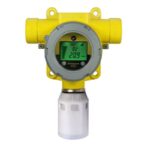
- UPS and battery rooms Thermal and gas detection monitors overheating battery banks.
- Manufacturing plant control panels Industrial-grade detectors withstand harsh ambient conditions while maintaining sensitivity.
- Substations and power distribution rooms Robust fire safety systems protect high-voltage assets and critical grid infrastructure.
Advantages and Limitations of Different Detection Technologies
Understanding the trade-offs helps you build the most effective electrical control room safety solution.
Aspirating Smoke Detection
Advantages: Ultra-early detection; actively samples air; ideal for high-airflow environments; highly configurable sensitivity. Limitations: Higher installation cost; pipe network requires maintenance; not suited to very dirty or wet environments without protection.
Optical/Photoelectric Smoke Detectors
Advantages: Excellent for slow, smouldering fires; cost-effective; widely compatible with addressable panels. Limitations: Can false-alarm from steam or dust; less effective for fast-flaming fires.
Multi-Sensor Detectors
Advantages: Combines smoke and heat sensing for lowest false alarm rate; intelligent algorithms adapt to changing environments. Limitations: Higher unit cost than single-sensor devices.
Heat Detectors
Advantages: Highly reliable in dusty, steamy, or fume-prone spaces; zero false alarms from airborne particles. Limitations: Detect fire at a later stage than smoke detectors; not suitable as sole protection in rooms with sensitive equipment.
Buying Guide: How to Choose the Right Fire Detection System
Selecting the right automatic fire detection system does not need to be complicated. Use this quick buying guide:
- Assess the risk profile Identify the main ignition risks: electrical fault, overheating, arcing, or cable fire.
- Evaluate the environment Is the space air-conditioned, dusty, or subject to vibration? This determines detector type.
- Set the detection threshold Mission-critical rooms (data centres, SCADA) need aspirating detectors. Standard electrical rooms may suit optical or multi-sensor detectors.
- Plan the panel architecture Choose an intelligent, addressable panel that can scale with your facility and integrate with your BMS.
- Check compliance requirements Ensure all products meet EN 54, NFPA 72, or BS 5839 depending on your region.
- Work with a certified supplier Source products from a qualified fire safety equipment supplier with documented installation and commissioning experience.
- Budget for maintenance Include annual testing, detector cleaning, and battery replacement in your total cost of ownership.
Standards and Certifications for Fire Detection Systems
All fire protection equipment used in electrical and control rooms should comply with recognised international standards:
- EN 54 (Europe) The primary European standard for components of fire detection and fire alarm systems.
- NFPA 72 (USA) National Fire Alarm and Signalling Code governing installation, testing, and maintenance.
- BS 5839 (UK) British Standard for fire detection and alarm systems in buildings.
- UL 268 / UL 217 UL certification for smoke detectors used in commercial applications.
- IEC 60079 For installations in potentially explosive atmospheres (relevant for certain industrial electrical rooms).
- ISO 7240 International standard series for fire detection and alarm system components.
Working with a fire safety products supplier whose products carry these certifications ensures compliance, insurance validity, and regulator approval.
FAQs About Fire Detection Systems for Electrical and Control Rooms
1. Which is the best fire detection system for electrical and control rooms?
The best fire detection systems for electrical and control rooms include smoke detectors, heat detectors, aspirating smoke detection systems, and intelligent fire alarm systems designed for early warning and equipment protection.
2. Why are fire detection systems important for control rooms?
Fire detection systems help identify smoke, overheating, or electrical faults at an early stage, reducing the risk of equipment damage, operational downtime, and safety hazards in control rooms.
3. How do I choose the right fire detection system for electrical rooms?
Choose a fire detection system based on room size, electrical load, sensitivity requirements, compliance standards, and integration with existing fire alarm and suppression systems. Contact experts for a customized solution.
Protect Your Electrical and Control Rooms Get Expert Fire Safety Advice Today
Do not wait for an incident to reveal gaps in your fire protection. Whether you need a full Fire Detection System for Electrical Rooms, a single aspirating smoke detector for a server room, or a complete panel upgrade, our team is ready to help.
Contact for full range of fire safety products, fire fighting products, fire alarm systems, and fire protection equipment and speak to a specialist today.

