
Your list is empty, add products to the list to send a request











What Type of Smoke Detector Is Best for Home?


14
May
Choosing the best smoke detector for your home is not simply a matter of picking whatever is on the nearest shelf. The type of fire your home is most at risk from, the size of your rooms, and whether your building has reliable electricity all affect which alarm will actually save your life when it matters. This guide is for homeowners, renters, builders, and facility managers across India who want a clear, expert-backed answer.
KEY TAKEAWAYS
→ Photoelectric smoke detectors are the most effective home smoke alarms for Indian homes they detect slow, smoldering fires caused by electrical short-circuits, the most common residential fire type in India.
→ Ionization smoke detectors respond faster to fast-flaming fires (paper, grease) but produce more false alarms in kitchens, making them less suitable as standalone units.
→ Dual-sensor smoke detectors combine both technologies and are ideal for whole-home coverage, especially in multi-storey buildings.
→ The NFPA reports that 3 in 5 home fire deaths occur in properties with no working smoke alarm a statistic directly applicable to India’s growing urban density risks.
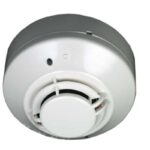
→ A BIS-certified, standalone photoelectric detector like the Agni Hunt offers reliable protection at an affordable price point for most Indian households.
Why Choosing the Right Smoke Detector Matters More in 2026
India’s urban fire risk profile has shifted significantly. Apartment density, ageing electrical wiring in older buildings, and increased load from ACs and EV chargers have made electrical short-circuit fires the leading cause of residential blazes in major Indian cities. Unlike a grease fire in a kitchen that flames up instantly, these fires start as slow smoulders inside walls often for several minutes before they become visible.
A standard ionization detector, which is what many Indian homes still use, may not trigger until it is far too late. That is why understanding the difference between photoelectric, ionization, and dual-sensor alarms is no longer just technical knowledge it is a life-safety decision. As a fire safety equipment supplier in India, FireSupplies sees this gap every day in the queries we receive from homeowners, builders, and housing societies.
India’s National Building Code 2016 already recommends automatic fire detection systems for residential buildings above a certain height. With smart buildings, interconnected alarm systems, and fire ball suppression devices gaining traction, 2026 is the year Indian homeowners need to upgrade from basic alarms to the right alarms.
Types of Smoke Detectors: Which Technology Protects Your Home?
There are three primary smoke detection technologies available for residential use. Each works differently, responds to different fire types, and suits different rooms.
Type | How It Works | Best For | Limitations |
Ionization Smoke Detector | Radioactive ionization chamber disrupted by smoke particles | Fast-flaming fires (paper, grease, kitchen) | More false alarms; slower on smoldering fires |
Light beam scattered by smoke particles in sensing chamber | Smoldering fires from electrical faults, bedrooms, halls | Slightly slower on fast-flaming fires | |
Combines both ionization + photoelectric in one unit | Whole-home coverage, high-risk zones, basements | Higher cost; not always necessary in every room |
Standalone vs. Interconnected Alarms
Standalone alarms operate independently when one detects smoke, only that unit sounds. Interconnected alarms (wired or wireless smoke alarm systems) link all units so that if one triggers, every alarm in the building activates. For large homes or multi-storey apartments, interconnected alarms are strongly preferred since they alert occupants in every part of the building simultaneously.
Smart Smoke Detectors: Are They Worth It?
Smart smoke detectors for home connect via Wi-Fi or Zigbee, sending alerts directly to your smartphone even when you are away. They integrate with home automation systems and can be muted remotely to avoid nuisance alarms. For homes with elderly residents, children, or mixed-use buildings, a smart smoke detector paired with a wireless smoke alarm system provides a level of coverage that traditional units simply cannot match.
Which Smoke Detector Is Best for Home Use in India?
For the overwhelming majority of Indian homes apartments, independent houses, and co-living units a photoelectric smoke detector is the best smoke alarm for the house. Here is the specific reasoning:
- Electrical faults and overloaded circuits produce slow-smoldering smoke before any flame appears.
- Photoelectric technology detects this type of smoke up to 15–30 minutes before an ionization unit would.
- Fewer false alarms from cooking fumes means residents are less likely to disable the alarm a dangerous but extremely common behaviour when nuisance alarms are frequent.
- Lower lifetime cost due to fewer battery replacements (models with 10-year lithium cells are now widely available)
Where Should You Install a Smoke Detector at Home?
Correct placement is as important as the correct detector type. A residential smoke detector installed in the wrong location will either trigger false alarms constantly or, worse, miss the early stages of a real fire.
Location | Recommended Detector | Key Note |
Master bedroom | Photoelectric | Install inside the room, not outside |
Children’s bedroom | Photoelectric | Use high-volume models (85 dB+) |
Kitchen | Ionization | Place at least 10 feet from cooking surface |
Living room / hall | Dual-Sensor | Central ceiling mount preferred |
Staircase / landing | Photoelectric | Interconnect with all units if possible |
Basement / utility room | Dual-Sensor | High fire risk dual coverage essential |
Installation Tips That Actually Matter
- Mount smoke detectors on the ceiling or within 30 cm of the ceiling on a wall smoke rises.
- Keep at least 1 metre away from ceiling fans, air conditioners, and vents to avoid false triggering.
- Test weekly by pressing the test button. Replace batteries every 6–12 months, or choose a 10-year lithium battery model.
- Never paint over a detector or block its sensing chamber with dust covers a common mistake during renovations.
Beyond the Detector: Fire Balls, Gas Alarms, and Complete Fire Safety Solutions
A smoke detector for home is the first layer of protection not the whole system. For comprehensive residential fire safety, FireSupplies recommends pairing your alarm with these complementary products:
Fire Ball | Gas Leak Detector | Fire Extinguisher | Industrial Systems |
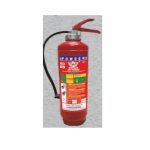
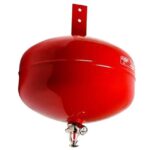
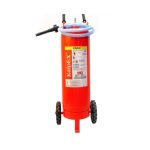
Self-activating suppression device. Deploys dry chemical powder when exposed to flames. Zero maintenance ideal for meter rooms and kitchens. | Essential for Indian LPG kitchens. Detects combustible gas before it reaches ignition levels. Pair with a home smoke alarm. | Class ABC or CO2 extinguisher for small confirmed fires. Annual fire extinguisher service near me checks are essential. | Industrial fire protection systems with sprinkler networks and addressable panels for warehouses, factories, and commercial buildings. |
FAQs About Home Smoke Alarms
- Which type of smoke detector is best for a residential home in India?
For most Indian homes, a photoelectric smoke detector is the best choice. It excels at detecting slow-smoldering fires caused by electrical short circuits the most common fire type in Indian residential buildings. It also produces fewer false alarms than ionization models, reducing the likelihood of residents disabling the alarm.
- What is the difference between ionization and photoelectric smoke detectors?
An ionization smoke detector uses a tiny amount of radioactive material to detect fast-burning, flaming fires. A photoelectric smoke detector uses a light sensor to detect smoke particles from slow, smoldering fires. Photoelectric models generate fewer nuisance alarms and are better suited to bedrooms and living areas, while ionization units can complement coverage in utility areas where fast-flaming fires are more likely.
- How many smoke detectors do I need for a 2BHK or 3BHK apartment?
For a 2BHK apartment, a minimum of three detectors is recommended: one inside each bedroom and one in the main hall or corridor. For a 3BHK, add a fourth unit. The NFPA recommends at least one smoke alarm on every level, inside every bedroom, and outside each sleeping area. Interconnecting all units is best practice.
- What is a fire ball and how is it different from a smoke detector?
A fire ball is an automatic fire suppression device, not a detection device. It contains dry chemical powder and self-activates when exposed to flames. A smoke detector detects smoke and sounds an alarm so occupants can respond. Both serve different functions: a smoke detector warns you, while a fire ball begins suppression automatically. Using both together provides layered residential fire protection.
- Where can I find a reliable fire safety equipment supplier in India?
FireSupplies, operated by South Fire Systems Pvt. Ltd., is India’s first dedicated online fire safety store. It offers BIS-certified smoke detectors, gas leak alarms, fire extinguishers, fire balls, emergency lights, and fire safety solutions for buildings all available with expert guidance and fast delivery across India.
Conclusion: The Single Most Important Fire Safety Decision You Can Make Today
Installing the right type of smoke detector in the right rooms is, by a wide margin, the most cost-effective fire safety decision for any Indian household. Choose a photoelectric smoke detector for bedrooms and living areas, pair it with an ionization or dual-sensor unit in utility spaces, and test every unit monthly. If you manage a larger building, explore interconnected wireless smoke alarm systems and supplement with industrial fire protection systems, fire extinguisher service, and automatic fire ball suppression devices for high-risk zones.
Your family’s safety is not a product category it is a decision. Make it once, make it right.

