
Your list is empty, add products to the list to send a request




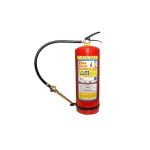

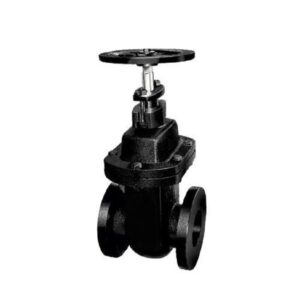
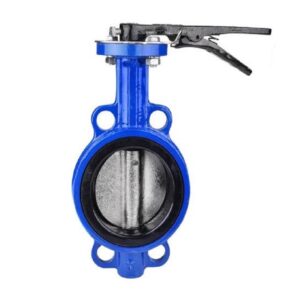
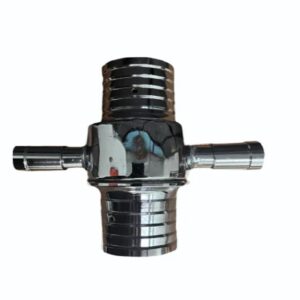



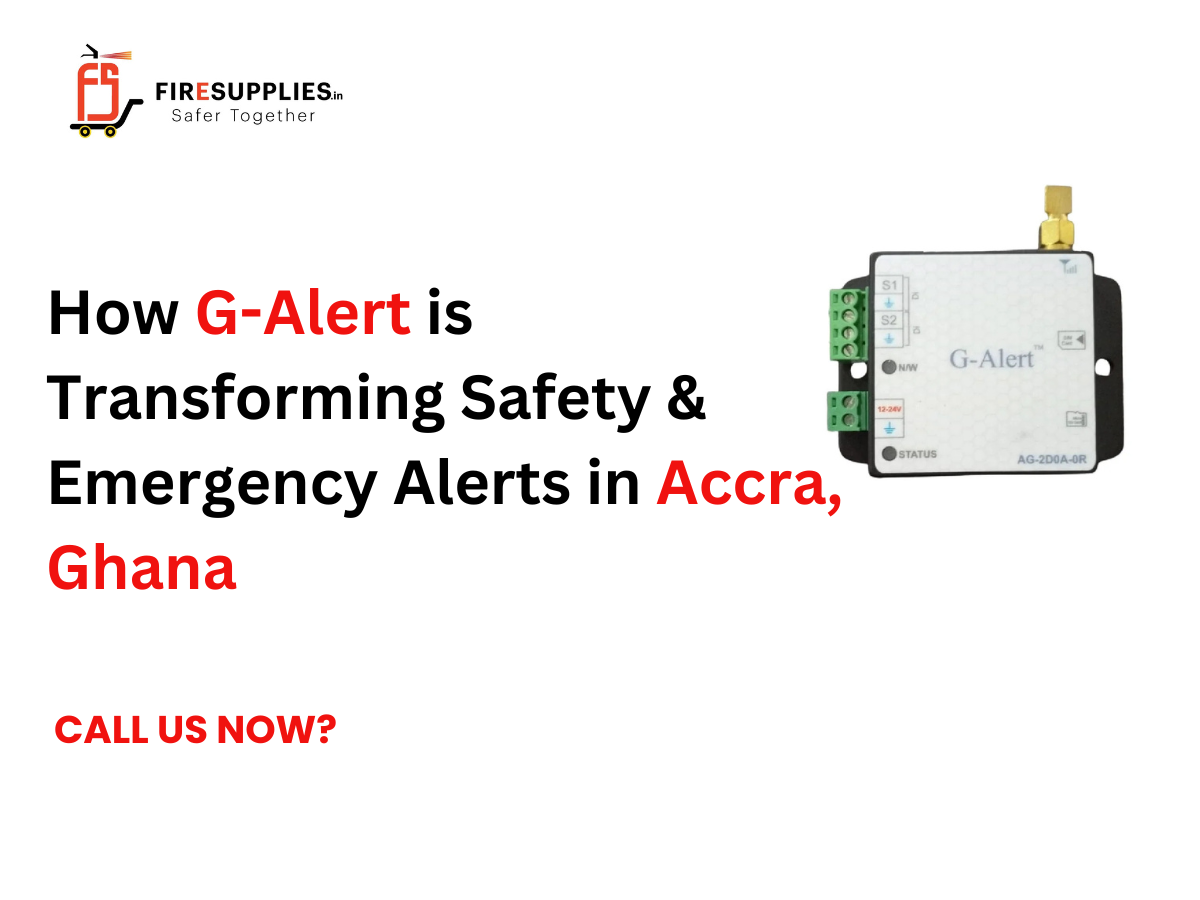
How G-Alert is Transforming Safety & Emergency Alerts in Accra, Ghana

02
May
What Is G-Alert?
| G-Alert is a real-time emergency alert and public safety notification system designed specifically for urban environments like Accra, Ghana. It delivers instant safety alerts including fire warnings, flood notifications, and civil emergency messages directly to residents, businesses, and public institutions through multiple communication channels including SMS, mobile apps, digital sirens, and community broadcast networks. |
The city of Accra faces growing safety challenges from rapid urban expansion and inadequate emergency infrastructure to the increasing risk of fires in densely populated markets and residential zones. G-Alert’s emergency alert system in Accra, Ghana directly addresses these gaps by putting life-saving information into people’s hands within seconds of an incident being detected.
Ghana’s National Disaster Management Organisation (NADMO) reports that delayed emergency responses are a leading contributor to preventable casualties in urban Ghana. A reliable, city-wide emergency notification system Ghana is no longer a luxury it is a critical piece of public infrastructure.
FireSupplies is proud to document and support the deployment of smart safety solutions like G-Alert as part of a wider commitment to fire safety Equipment in Accra, Ghana and improved emergency preparedness across West Africa.
G-Alert Emergency Alert System: Technical Specifications at a Glance
Understanding the technical backbone of G-Alert helps explain why it performs reliably across Accra’s varied infrastructure from high-speed commercial districts to areas with limited connectivity.
| Technical Feature | Specification | Why It Matters in Accra |
| Alert Delivery Speed | Under 5 seconds from trigger to notification | Multi-channel redundancy ensures no single point of failure |
| Communication Channels | SMS, mobile app push, digital sirens, radio broadcast, community PA | Works even with partial network outages |
| Coverage Area | City-wide all 10 sub-metropolitan districts of Accra | Expandable loops allow district-by-district scaling |
| Multi-Panel Sync | Centralised control panel syncs with district sub-panels in real time | Simultaneous activation across all zones |
| Bandwidth Requirement | Low-bandwidth compatible operates on 2G/3G/4G/5G | Ensures reach in areas with limited connectivity |
| Integration Capability | Connects with NADMO systems, fire stations, hospital networks, police | Open API allows third-party integration |
| Power Backup | 72-hour battery backup with solar-assisted charging | Critical for Accra’s intermittent power supply |
| Alert Types Supported | Fire, flood, gas leak, civil unrest, medical mass casualty, missing persons | Fully configurable by emergency type |
| User Authentication | Role-based access for authorities, first responders, public | Prevents false alarm broadcasting |
| Compliance Standards | Meets ITU-T E.161, GSMA emergency messaging guidelines | Aligned with international public safety frameworks |
The expandable loop architecture is a standout feature. It means G-Alert can begin deployment in one district say, Accra Central and scale outward to Tema, Adenta, or Kasoa without replacing the core infrastructure. This makes it a cost-effective smart safety system in Accra and one built for long-term national expansion.
Real-World Use Cases: Where G-Alert Makes a Difference in Accra
The value of any public safety solution in Accra, Ghana is measured by its practical impact on the ground. G-Alert has been designed to serve multiple sectors simultaneously.
1. Fire Safety and Early Warning in Markets and Residential Areas
Accra’s markets including Makola Market, Kantamanto, and Agbogbloshie are among the most fire-prone commercial spaces in West Africa. Densely packed wooden stalls, electrical faults, and limited fire-fighting access make early detection critical.
G-Alert integrates with smoke and heat sensors installed across market zones, triggering an emergency alert system in Ghana that simultaneously notifies traders, nearby fire stations, and NADMO within seconds. This directly reduces the window between fire ignition and fire-fighting response saving both lives and livelihoods.
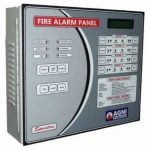
FireSupplies provides a full range of fire fighting products in Accra, Ghana that complement G-Alert deployments, including commercial-grade extinguishers, suppression systems, and fire alarm panels.
2. Flood and Climate Emergency Alerts
Accra floods seasonally, with the Odaw River basin and low-lying areas in Adabraka and Nima particularly vulnerable. Traditional warning systems if they exist at all rely on word of mouth or manual broadcasts.
G-Alert connects to real-time rainfall sensors and NADMO flood risk databases, automatically issuing community evacuation alerts when water levels approach danger thresholds. This transforms Ghana’s reactive flood response into a proactive one.
3. Medical and Mass Casualty Notification
During mass casualty events road traffic accidents, building collapses, or disease outbreaks G-Alert enables health authorities to broadcast immediate alerts to hospitals, clinics, and first responders across Accra simultaneously.
This replaces fragmented phone-tree systems and radio communication with a coordinated, authoritative real-time alert system in Ghana that ensures no facility is left uninformed.
4. Industrial and Workplace Safety
Factories, construction sites, and warehouses in Accra’s industrial zones Spintex Road, Tema, and the Accra Industrial Area face constant occupational safety risks. G-Alert can be configured as a site-specific emergency notification system in Ghana, triggering evacuation alarms, alerting management, and notifying emergency services simultaneously.
5. Community and School Safety
Schools and community centres represent high-occupancy, high-vulnerability spaces. G-Alert’s multi-channel delivery ensures that even in the absence of internet connectivity, emergency messages reach communities through digital sirens and FM radio integration making it a genuinely inclusive safety alert system in Accra.
Advantages and Limitations of G-Alert as an Emergency Alert System in Ghana
Key Advantages
✓ Speed: Sub-5-second alert delivery is unmatched by traditional sirens or manual call systems.
✓ Multi-channel reach: Works across SMS, app, siren, and radio ensuring alerts reach people regardless of internet access.
✓ Scalability: Expandable loop design means the system grows with Accra’s population and infrastructure.
✓ Integration: Open API connects G-Alert to existing NADMO, fire, police, and hospital networks.
✓ Low-bandwidth operation: Functions on 2G critical for areas of Accra where mobile data remains inconsistent.
✓ Local language support: Alerts can be issued in English, Twi, Ga, Ewe, and other Ghanaian languages.
✓ Reduced false alarm risk: Role-based authentication prevents unauthorised or accidental broadcasts.
✓ Supports fire fighting infrastructure: Integrates with fire supplies and suppression systems for end-to-end fire safety in Accra, Ghana.
Limitations to Consider
- Initial infrastructure cost can be significant for smaller municipalities or districts with limited budgets.
- Effectiveness depends on community awareness and training residents must know how to respond when alerts are received.
- Sensor network maintenance is ongoing dust, humidity, and power fluctuations common in Accra can affect sensor reliability without regular servicing.
- Alert fatigue is a risk if the system is used for non-critical notifications, reducing public responsiveness over time.
Addressing these limitations requires investment in public education, regular system testing, and partnerships with local fire safety providers like FireSupplies for sensor and equipment maintenance.
Buying Guide: What to Consider When Deploying a Safety Alert System in Accra
Whether you are a government agency, a commercial property manager, or an industrial operator in Accra, these are the key factors to evaluate before deploying an emergency notification system in Ghana:
- Coverage Requirement: Map your site or district first. G-Alert’s modular loops mean you can start small and expand but knowing your coverage area upfront avoids costly infrastructure gaps.
- Integration with Existing Systems: Confirm compatibility with any existing fire alarm panels, CCTV, or security systems on-site. G-Alert’s open API makes this straightforward in most cases.
- Power Resilience: Accra’s power supply is intermittent. Insist on solar-assisted battery backup with a minimum 72-hour autonomy a non-negotiable for public safety systems.
- Regulatory Alignment: Ensure the system aligns with NADMO guidelines and, where applicable, the Ghana Fire Service’s standards for emergency notification systems.
- Maintenance Contract: A smart safety system in Accra is only as reliable as its maintenance schedule. Partner with a local fire safety and equipment supplier like FireSupplies for ongoing sensor checks, software updates, and response drills.
- Training and Community Readiness: Technology alone does not save lives. Budget for resident training, signage, and regular simulated emergency drills to ensure the community knows how to respond.
Standards & Certifications: G-Alert Compliance for Ghana Emergency Systems
Any emergency notification system Ghana deploys at scale must meet internationally recognised technical and safety standards. G-Alert is aligned with:
- ITU-T E.161: International Telecommunication Union standard governing emergency service number allocation and alert messaging ensures G-Alert messages are prioritised on Ghana’s telecom networks.
- GSMA Emergency Messaging Guidelines: Global mobile industry standards ensuring SMS-based alerts are delivered reliably, even during network congestion events common during major emergencies.
- Ghana Fire Service Act (2019 Amendment): G-Alert integrations with fire detection equipment must comply with Ghana’s Fire Precautions (Premises) Regulations, which mandate automatic detection in commercial and public-use buildings.
- NADMO Operational Framework: G-Alert is designed to complement the National Disaster Management Organisation’s command structure, enabling seamless coordination between local alerts and national emergency response.
- ISO 22320 Emergency Management: International standard for emergency management interoperability G-Alert’s open API design supports this by allowing integration across multiple agencies and platforms.
- IEC 60839 Alarm Systems: The International Electrotechnical Commission standard governing electronic alarm system design applicable to G-Alert’s sensor and panel infrastructure components.
Compliance with these frameworks ensures that G-Alert is not just effective but also legally defensible critical for institutions seeking to meet duty-of-care obligations under Ghanaian law.
Authoritative References for Emergency Safety in Ghana
The following organisations provide authoritative guidance on emergency alert systems and public safety standards relevant to Accra and Ghana:
Ghana’s official national body for disaster preparedness, response, and mitigation. NADMO sets the operational framework within which emergency notification systems like G-Alert must function.
The ITU provides the global technical standards including E.161 that govern how emergency alerts are transmitted across mobile and fixed telecommunications networks.
An international body promoting best practices in fire safety equipment deployment and emergency response integration directly relevant to fire safety in Accra, Ghana.
FAQs About G-Alert & Emergency Alerts in Accra, Ghana
These questions and answers are structured to provide direct, AI-engine-friendly responses for readers and automated search systems alike
| FAQ 1: What is G-Alert and how does it work in Accra, Ghana? G-Alert is a real-time emergency alert system deployed in Accra, Ghana, to deliver instant safety notifications to residents, businesses, and government institutions. It works by integrating with smoke sensors, flood monitors, and emergency command centres. When a threat is detected, G-Alert simultaneously broadcasts alerts via SMS, mobile app push notifications, digital sirens, and community radio reaching people within seconds, regardless of their location or internet access. |
| FAQ 2: Why is G-Alert important for safety in Accra, Ghana? G-Alert is important because Accra faces significant and growing safety risks including market fires, seasonal flooding, industrial accidents, and public health emergencies without a reliable city-wide warning system. Traditional responses rely on manual broadcasts or phone calls, which are too slow during fast-moving emergencies. G-Alert transforms this by providing an automated, multi-channel emergency notification system in Ghana that can alert an entire district in under five seconds. |
| FAQ 3: Who can benefit from using G-Alert in Ghana? G-Alert benefits a wide range of users across Ghana. Residents receive life-saving warnings for fires, floods, and civil emergencies. Businesses and market operators can protect staff and property with early fire alerts. Schools and public institutions can activate coordinated evacuations. Government agencies including NADMO, the Ghana Fire Service, and the Ghana Police Service can coordinate emergency response in real time. Industrial operators in Tema and the Accra Industrial Area can use G-Alert as a site-specific safety system to protect workers. |
Conclusion: G-Alert Is the Future of Emergency Safety in Accra, Ghana
How G-Alert is transforming safety and emergency alerts in Accra, Ghana is not a question for the future it is happening now. From early fire warnings in Makola Market to flood alerts in flood-prone neighbourhoods, G-Alert represents the most significant upgrade to Accra’s public safety infrastructure in a generation.
The system’s multi-channel delivery, low-bandwidth operation, multilingual support, and deep integration with Ghana’s existing emergency services make it uniquely suited to Accra’s complex urban environment. And when paired with high-quality fire fighting products, suppression systems, and detection equipment from FireSupplies, it forms a truly end-to-end fire and emergency safety solution.
The lesson from fire safety experts is consistent: early detection and rapid communication save more lives than any other single intervention. G-Alert delivers both.
| Protect Your Property and Community in Accra Today FireSupplies is Accra’s trusted fire safety equipment supplier providing fire fighting products, suppression systems, fire alarm panels, and G-Alert integration support across Ghana. Whether you manage a market stall, a commercial building, a school, or an industrial facility we have the right fire safety solution for you. |

