
Your list is empty, add products to the list to send a request





















The History of Fire Fighting and How It Has Evolved Over Time

15
Jun
The history of firefighting dates back thousands of years, with proof of early firefighting techniques seen in old civilizations.
Here is a brief overview of the history of firefighting and how it has developed over time:
Ancient Times: Firefighting in old times depended on simple methods like forming bucket brigades, where people would pass buckets of water to extinguish fires. Some civilizations, like the ancient Romans, had organized firefighting teams known as “vigiles” who patrolled the city streets to detect andfire extinguisher.
Middle Ages: During the Middle time, cities started to set regulations and laws regarding fire prevention and firefighting. This period saw the emergence of rudimentary firefighting equipment such as hooks, hand-operated pumps, and early fire hose pipe.
17th and 18th Centuries: Let’s move on the 17th and 18th centuries, prominent advancements were made in firefighting technology. The invention of the fire engine, which used hand-operated pumps, enhanced the efficiency of fire hose boxes. Firefighting organizations like the London Fire Brigade in 1666, were established to respond to fire emergencies.
19th Century: The 19th century brought important advancements in firefighting equipment and techniques. Steam-powered fire engines were presented, enabling firefighters to pump water at higher pressures and higher distances. Fire hydrant systems and water supply networks were also created to ensure a reliable water mist fire extinguisher.
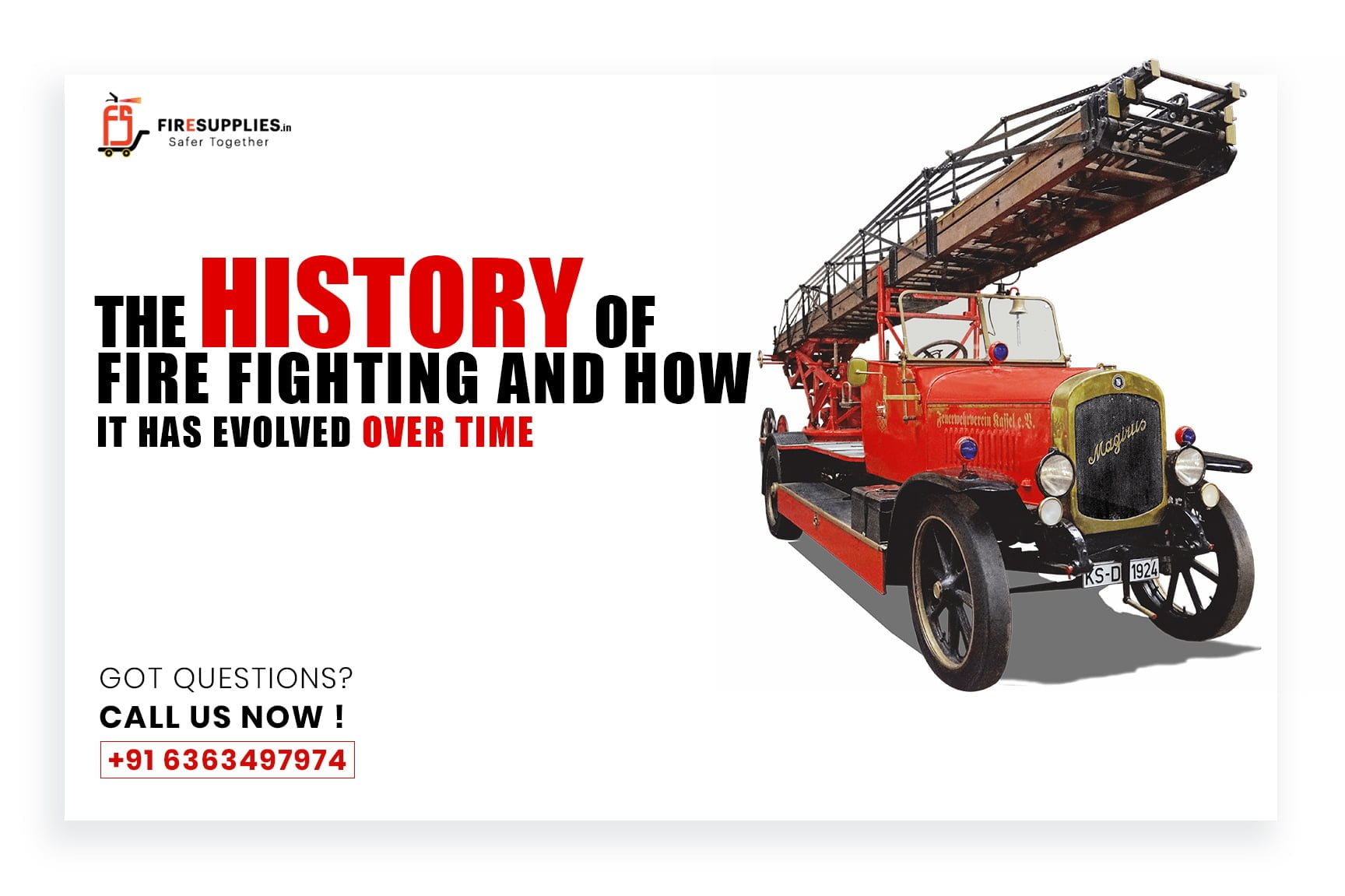
20th Century: The 20th century witnessed further advancements in firefighting technology. Motorized fire engines replaced horse-drawn engines, enhancing mobility and response times. Protecting equipment like helmets, fire-resistant clothing, and breathing apparatus became standard for firefighters. The introduction of sprinkler systems, fire alarms, and fire-resistant building materials also improved fire safety measures and safety shoe liberty.
.Modern Era: In the recent world, technology is playing a vital role in firefighting. Fire departments have embraced advanced communication systems for quick emergency response. Thermal imaging cameras and gas in fire extinguisher help in rescue operations and fire detection. Firefighting aircraft, like helicopters and planes, help in aerial firefighting and water or foam drops.
In addition, building codes, fire safety education, and fire prevention campaigns have become essential in decreasing fire incidents and promoting public safety.
In short, the history of firefighting reflects a progression from basic manual techniques to sophisticated equipment and strategies.
The evolving understanding of fire behavior, associated with technological advancements, has significantly enhanced firefighting capabilities, leading to more effective fire suppression and prevention efforts.

