
Your list is empty, add products to the list to send a request










Welding Cable Selection Guide for Beginners

21
Jan
If you are new to welding, choosing the right welding cable can feel confusing. Cable size, insulation, flexibility, and quality all affect safety and welding performance, yet many beginners overlook these details.
This welding cable selection guide for beginners explains everything you need to know in simple terms. By the end, you will understand how to choose the correct welding cable for your machine, working conditions, and long-term reliability.
What Is a Welding Cable?
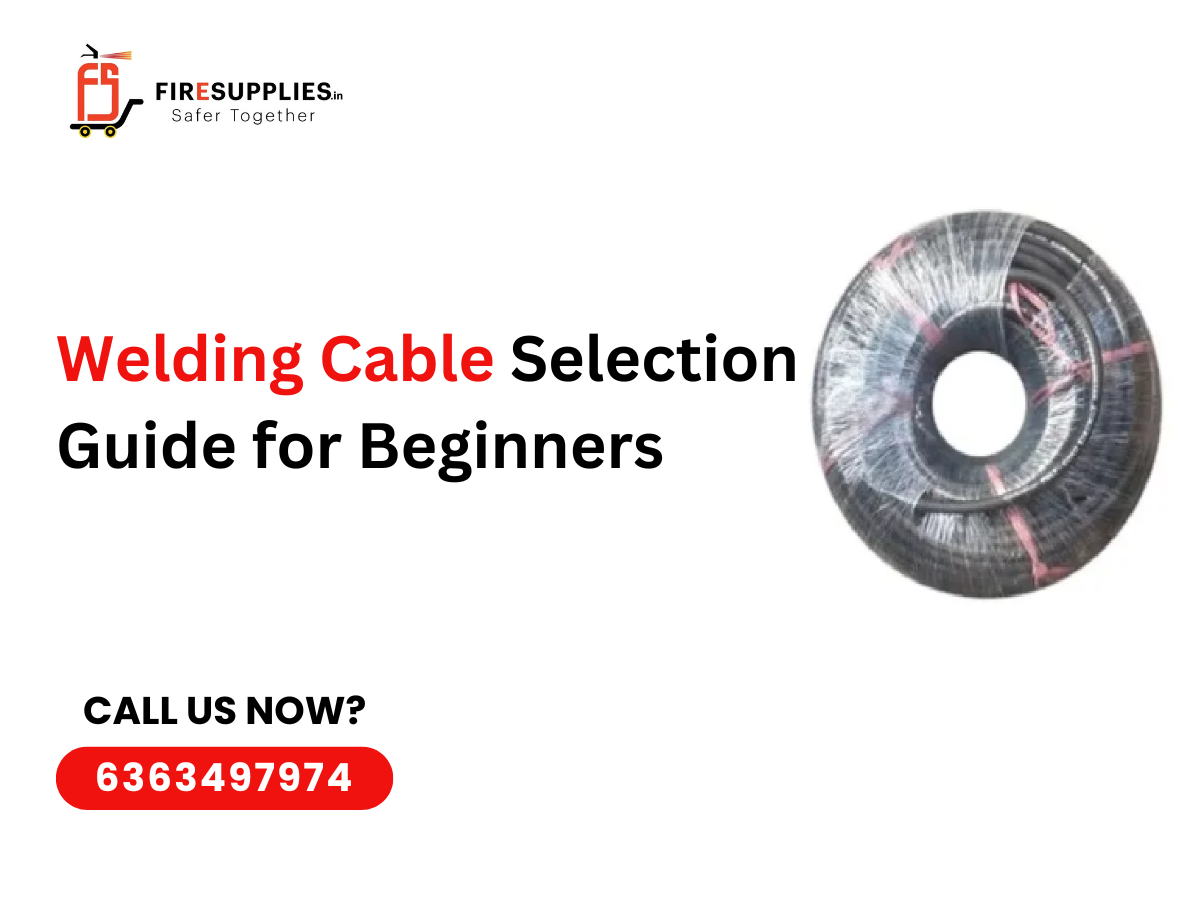
A welding cable is a highly flexible electrical cable designed to carry high current from a welding machine to the electrode holder or torch. It is built using fine-stranded copper conductors and durable insulation to handle heat, movement, and electrical load safely during welding operations.
Why Choosing the Right Welding Cable Matters
For beginners, the wrong welding cable can lead to poor weld quality and safety risks.
A properly selected welding cable:
- Delivers stable current to the arc
- Prevents overheating and voltage drop
- Improves weld consistency
- Reduces strain on the welding machine
Good cable selection protects both the welder and the equipment.
Technical Details of a Welding Cable
Understanding basic technical features helps beginners make informed choices.
| Parameter | Details |
| Conductor Material | Multi-stranded copper |
| Flexibility | Very high for easy handling |
| Insulation Type | PVC or rubber |
| Voltage Rating | Suitable for welding circuits |
| Temperature Resistance | Designed for heat exposure |
| Current Capacity | Depends on cable size (mm²) |
These characteristics define how well a welding cable performs.
Understanding Welding Cable Size (mm²)
Cable size is one of the most important factors.
The size, measured in square millimetres (mm²), determines how much current the cable can safely carry. A cable that is too small may overheat, while an oversized cable adds unnecessary cost and weight.
Beginners should always match cable size to machine amperage.
How Welding Cable Length Affects Performance
Longer cables create more electrical resistance.
As cable length increases:
- Voltage drop increases
- Heat buildup becomes more likely
- Welding performance may reduce
If long runs are unavoidable, a thicker welding cable is recommended.
Copper vs Other Materials in Welding Cable
Copper is the preferred conductor material for welding cables.
Copper offers:
- Excellent electrical conductivity
- Lower resistance
- Better flexibility
- Reliable performance under high load
For beginners, copper welding cable provides better margin for error and safety.
PVC vs Rubber Sheath for Welding Cable
Insulation type affects durability and flexibility.
PVC insulation:
- Cost-effective
- Suitable for light to medium use
- Less flexible in cold conditions
Rubber insulation:
- Highly flexible
- Better heat resistance
- Ideal for heavy-duty or outdoor welding
Beginners working frequently benefit from rubber-sheathed welding cable.
Flexibility: A Key Feature for Beginners
Welding often requires movement around the workpiece.
A flexible welding cable:
- Reduces operator fatigue
- Prevents internal conductor breakage
- Makes positioning easier
High-strand-count copper cables offer the best flexibility.
Applications for Welding Cable
Welding cables are used in many environments.
Common applications include:
- Home workshops
- Fabrication shops
- Automotive repair
- Structural welding
- Maintenance and repair work
Each use case requires correct sizing and insulation.
Advantages of Choosing the Right Welding Cable
Proper cable selection offers long-term benefits.
Advantages include:
- Improved weld quality
- Reduced power loss
- Longer cable life
- Enhanced safety
- Lower maintenance costs
These benefits are especially important for beginners.
Limitations and Common Beginner Mistakes
Beginners often make avoidable mistakes.
Common issues include:
- Choosing undersized cables
- Ignoring insulation quality
- Using damaged or stiff cables
- Overlooking standards compliance
Learning early prevents costly replacements later.
Welding Cable Selection for Beginners
When buying your first welding cable, keep it simple.
Beginner buying checklist:
- Choose a pure copper conductor
- Select the correct mm² size for your machine
- Prefer flexible insulation
- Buy from a trusted supplier
- Ensure compliance with Indian standards
Recommended Welding Cable for Beginners
The Indu Copper Welding Cable is a reliable option for beginners.
It offers:
- High-purity copper conductors
- Excellent flexibility
- Durable insulation for daily use
Product page: https://www.firesupplies.in/product/indu-copper-welding-cable/
Certifications for Welding Cable in India
Standards ensure safety and consistency.
In India, welding cables typically comply with:
- Relevant Indian Standards (IS)
- Electrical safety guidelines
- Manufacturer quality controls
FAQs: Welding Cable Selection for Beginners
FAQ 1: How do I size welding cable for a 200A machine?
For a 200A welding machine, the welding cable size should match the machine output and duty cycle. A properly sized copper welding cable prevents overheating and ensures stable arc performance.
FAQ 2: Should beginners choose PVC or rubber sheath welding cable?
Beginners who weld frequently or move around the workpiece should choose rubber-sheathed welding cable for better flexibility and durability. PVC is suitable for lighter, occasional use.
FAQ 3: What is the flex life of a quality welding cable?
A high-quality welding cable with fine copper strands can withstand thousands of bending cycles. Proper handling and storage significantly extend its flex life.
Start your welding journey with confidence.
Choose a reliable welding cable designed for safety, flexibility, and performance.

