
Your list is empty, add products to the list to send a request













What Is the General Rule for Smoke Detectors?

21
May
If you’ve ever wondered whether your home or building has enough smoke detectors and whether they’re in the right places this guide answers exactly that. We’ll walk through the general rule for smoke alarm placement, the different types of fire smoke detectors available in 2026, how often to replace them, and what UK and international fire safety regulations actually require. Whether you’re a homeowner upgrading your setup or a facilities manager reviewing a commercial site, every answer you need is here.
KEY TAKEAWAYS • The general rule for smoke detectors is: one per bedroom, one outside each sleeping area, and one on every floor — including the basement. • According to the NFPA, three out of five fire-related deaths occur in homes without working smoke alarms. • Smoke detectors should be replaced every 8-10 years and tested monthly to remain reliable. • Ceiling-mounted detectors must sit at least 4 inches from any wall; wall-mounted units should be 4-12 inches below the ceiling. • Smart and wireless smoke alarm systems now allow mobile alerts, remote testing, and battery monitoring — ideal for rental properties and larger buildings. |
Why Smoke Detector Placement Still Gets It Wrong in 2026
Despite decades of public awareness campaigns, fire deaths linked to absent or poorly placed smoke alarms remain stubbornly high. The National Fire Protection Association (NFPA) reports that three out of five home fire deaths happen in properties without functioning detectors a statistic that hasn’t shifted because the problem isn’t awareness, it’s application.
In 2026, the gap between knowing you need a smoke detector and actually installing one in the right location remains significant. New builds benefit from integrated wireless fire alarm systems, but older properties and many rental units still rely on a single battery-powered unit mounted in a hallway. That’s not enough.
UK Regulations (specifically BS 5839-6 Grade D, Category LD2) now recommend interlinked smoke and heat alarms in kitchens, all principal rooms, and circulation spaces. In commercial settings, the Regulatory Reform (Fire Safety) Order 2005 mandates regular fire risk assessments that include a full review of fire alarm detectors and their coverage.
The General Rule for Smoke Detectors: What You Actually Need
The standard guidance, consistent across NFPA 72 (US), BS 5839-6 (UK), and most national fire codes, boils down to a simple framework:
Inside every bedroom Fires starting at night are particularly dangerous. A detector inside each bedroom gives the earliest possible warning. | Outside each sleeping area A smoke alarm on the landing catches fire spreading from living areas before it reaches sleeping occupants. | Every floor including basement Each level needs independent coverage. A fire in the basement must be detected before smoke travels upward. | Min. 10 ft from cooking areas Too close to a cooker causes constant false alarms, leading occupants to disable the unit entirely. |
For larger properties, add units near stairways, in utility rooms, and in any room with high fire risk. For commercial spaces, one detector per 500 sq. ft. is the minimum baseline, but addressable systems which pinpoint the exact location of smoke are the professional standard.
Which Smoke Detector Type Is Right for Your Property?
Choosing the best smoke detector for your situation depends on the type of fire risk you’re most likely to face. Here’s a direct comparison:
Detector Type | Best For | Where to Use | Verdict |
Ionization | Fast, flaming fires | Living rooms, offices | Situational |
Photoelectric | Slow, smouldering fires | Bedrooms, hallways | Recommended |
Dual-Sensor | Both fire types | Any room | Best for homes |
Addressable / Optical | Commercial, industrial | Large buildings, warehouses | Professional grade |
Smart / Wireless | Remote monitoring | Rental properties, multi-occupancy | Modern standard |
Battery smoke detector vs. hardwired: which should you choose?
A battery smoke detector is simple to install and needs no electrician, making it the default choice for retrofitting older homes. However, standard 9V batteries should be replaced every six months. Opt for a smoke alarm with battery backup if you’re installing hardwired units power cuts shouldn’t disable your fire detection system. For the most convenient option, 10-year sealed lithium battery units eliminate annual replacement entirely.
What is a wireless smoke detector and when do you need one?
A wireless smoke detector or wireless fire alarm system uses radio frequency to link detectors without cable runs. When one unit triggers, all connected alarms sound simultaneously. This is the practical choice for listed buildings where drilling through walls isn’t permitted, or for landlords needing to quickly retrofit interlinked alarms across multiple units. Smart versions also send push notifications to your phone, making them ideal for second homes, holiday lets, or commercial premises managed remotely.
Where to Install and Where Never to Place a Smoke Alarm
Correct installation positions
- Mount ceiling detectors centrally: Place ceiling-mounted units at least 4 inches from the nearest wall. Central ceiling positions give the widest detection radius.
- Wall mounting 4 to 12 inches from ceiling: If ceiling mounting isn’t practical, wall-mounted smoke alarms must sit in the upper zone just below the ceiling where smoke accumulates first.
- Keep away from air vents and fans: Airflow from vents disperses smoke before it reaches the sensor, causing delayed alerts. Maintain a minimum clearance of 3 feet from any air supply vent.
- Avoid peak humidity zones: Bathrooms and areas prone to steam trigger nuisance alarms and corrode sensor components. Keep detectors at least 10 feet from steam sources.
Smoke Detector Maintenance: How to Keep Every Alarm Working
Even the best smoke detector for home use becomes useless without regular upkeep. Detector failure is almost always preventable, and the maintenance routine is straightforward:
Testing and battery replacement schedule
- Test monthly: Press the test button on each unit. A functioning detector produces a loud alarm within two seconds. Log the date each time you test.
- Replace standard batteries twice a year: Spring and autumn when clocks change is the common reminder. Or upgrade to a smoke alarm with battery backup using sealed 10-year lithium cells to eliminate this entirely.
- Clean the casing every 6 months: Use a vacuum on the exterior vent slots. Dust and cobwebs are the most common causes of delayed response in ageing units.
- Replace the entire unit every 8-10 years: Check the manufacture date on the back of your detector. Sensors degrade over time regardless of whether the unit appears functional. This is non-negotiable and a legal requirement in many jurisdictions for rented properties
Industrial Fire Protection Systems and Commercial Smoke Detection
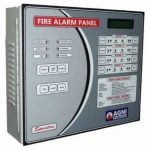
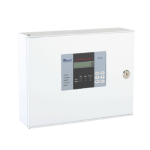
For commercial properties, warehouses, and industrial sites, the basic domestic smoke alarm isn’t sufficient. Industrial fire protection systems require addressable detectors units that communicate with a central fire alarm control panel and identify the precise location of any triggered device.
The Apollo Addressable Optical Smoke Detector is a benchmark product for this category: it uses optical sensing (photoelectric technology) to detect particulate matter in the air, reports back to the panel with a zone-specific address, and integrates with wider building management systems. For facilities managers looking for fire safety solutions for buildings, addressable systems dramatically reduce evacuation response times and false alarm callouts.
UK commercial premises must comply with BS 5839-1, which requires periodic inspection by a competent person typically a BAFE-registered engineer. If you’re sourcing equipment from a fire safety equipment supplier in the UK, ensure products carry the relevant certification and come with documented installation compliance.
For businesses evaluating their setup, a fire ball suppression system an automatic fire extinguishing ball deployed on contact with flame is worth considering for server rooms, electrical cupboards, and unoccupied high-risk areas. These complement your wider detection network rather than replacing it.
FAQs About Smoke Alarms
Q1: What is the general rule for smoke detector placement in a home?
The general rule is to install one smoke detector inside every bedroom, one outside each sleeping area (typically on the landing), and one on every floor of the property — including the basement. For larger homes, add units in hallways and near stairwells. All detectors should be at least 10 feet from cooking appliances to avoid false alarms.
Q2: How many smoke detectors do I need in a 3-bedroom house?
At a minimum: three detectors inside bedrooms, one outside the sleeping area (landing), and one per additional floor. For a standard two-storey three-bedroom home, that’s a minimum of five to six units. UK regulations under BS 5839-6 also recommend a heat alarm in the kitchen and a carbon monoxide detector where gas appliances are present.
Q3: What is the best type of smoke alarm for home use in 2026?
For most homes, a dual-sensor detector combining ionization and photoelectric technologies provides the broadest protection against both fast-flaming and slow-smouldering fires. If you want remote monitoring, a smart smoke detector with Wi-Fi connectivity and a companion app adds meaningful protection for holiday lets and rental properties. Hardwired units with battery backup are the standard for new builds.
Q4: Is a wireless fire alarm system worth it for a residential property?
Yes , particularly for multi-storey homes, listed buildings, or rental properties. A wireless smoke alarm system links all detectors via radio frequency so that when one triggers, all alarms sound simultaneously across the property. This is significantly safer than standalone units where a bedroom fire might not be heard from the ground floor. Modern systems also offer smartphone integration for remote alerts.
The single most important action you can take today Walk through your property right now and test every smoke alarm. If any unit is more than 10 years old, fails to respond, or is missing from a bedroom or floor — replace it. Fire safety is one area where “good enough” is never acceptable. SHOP SMOKE DETECTORS AT FIRESUPPLIES Visit firesupplies.co.uk to explore our full range of domestic and commercial fire detection products. |

