
Your list is empty, add products to the list to send a request













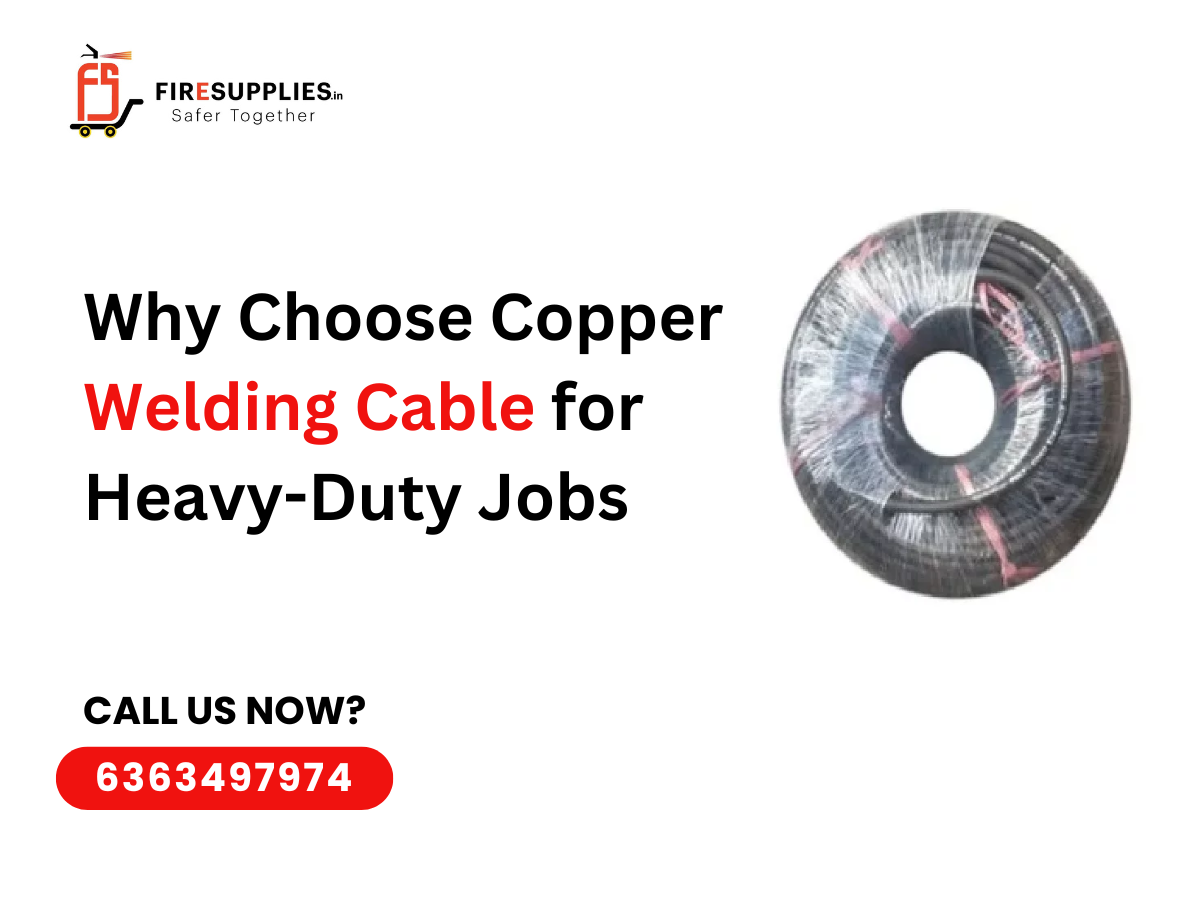
Why Choose Copper Welding Cable for Heavy-Duty Jobs

20
Jan
When welding performance matters, your welding cable plays a bigger role than many people realise. In heavy-duty welding jobs, poor cable quality can lead to voltage drops, overheating, and inconsistent welds.
Copper welding cable is widely trusted for demanding applications because it delivers stable current flow, flexibility, and durability. This guide explains why copper welding cables outperform alternatives and how to choose the right one for industrial use.
What Is Copper Welding Cable?
Copper welding cable is a highly flexible electrical cable made from fine-stranded pure copper conductors, designed to carry high current safely during welding operations. It is built to handle heat, movement, and electrical load without compromising performance, making it ideal for heavy-duty welding jobs.
Why Welding Cable Quality Matters in Heavy-Duty Jobs
Heavy-duty welding involves high amperage, continuous operation, and harsh environments. In such conditions, the wrong welding cable can become a safety risk.
High-quality copper welding cable ensures:
- Stable arc performance
- Reduced energy loss
- Lower operating temperatures
- Longer service life
This directly impacts weld quality and operator safety.
Technical Details of Copper Welding Cable
Understanding the construction helps explain its performance advantages.
| Parameter | Details |
| Conductor Material | Electrolytic grade copper |
| Strand Design | Fine multi-stranded |
| Insulation | Heat and abrasion-resistant |
| Voltage Rating | Suitable for welding circuits |
| Flexibility | High, even at low temperatures |
| Current Carrying Capacity | Excellent for heavy loads |
These features make copper welding cable reliable in tough environments.
How Copper Improves Welding Performance
Copper has superior electrical conductivity compared to other materials. This allows more current to flow with less resistance.
As a result:
- The arc remains stable
- Less heat is wasted in the cable
- Weld penetration is consistent
This is especially important in thick metal fabrication and industrial welding.
Copper Welding Cable vs CCS Welding Cable
Copper-clad steel (CCS) cables may look similar but perform very differently.
Copper welding cable advantages over CCS:
- Better conductivity
- Lower resistance
- Reduced voltage drop
- Greater flexibility
CCS cables can overheat under heavy loads, making copper the safer choice.
Flexibility Benefits of Copper Welding Cable
Heavy-duty welding often requires constant movement.
Copper welding cable remains flexible even under:
- Repeated bending
- Tight routing
- Cold conditions
This reduces operator fatigue and prevents internal conductor breakage.
Heat Resistance in Heavy-Duty Welding
High current generates heat. Poor cables trap heat and degrade quickly.
Copper welding cable:
- Dissipates heat efficiently
- Protects insulation from cracking
- Maintains performance under continuous load
This makes it ideal for long welding cycles.
Applications of Copper Welding Cable
Copper welding cable is used across demanding industries.
Common applications include:
- Heavy fabrication workshops
- Structural steel welding
- Shipbuilding and railways
- Mining and power plants
- Industrial repair and maintenance
Advantages of Copper Welding Cable
Copper welding cable offers long-term operational value.
Key advantages include:
- High current capacity
- Excellent durability
- Minimal power loss
- Improved safety
- Consistent weld quality
These benefits outweigh the higher upfront cost.
Amp Rating and Cable Size Considerations
Choosing the right cable size is essential.
Factors influencing amp rating:
- Cable cross-sectional area
- Welding current
- Duty cycle
- Ambient temperature
A correctly sized copper welding cable prevents overheating and energy loss.
Choosing the Right Welding Cable
When buying a welding cable, focus on performance, not price alone.
What to check before buying:
- Pure copper conductor
- Flexible insulation
- Correct size (mm²)
- Compliance with Indian standards
- Trusted manufacturers
A quality cable improves both productivity and safety.
Recommended Copper Welding Cable for Heavy-Duty Jobs
The Indu Copper Welding Cable is designed for demanding applications.
It offers:
- High-purity copper conductors
- Excellent flexibility
- Strong insulation for industrial use
Standards and Certifications for Welding Cable in India
Compliance ensures safety and reliability.
Copper welding cables in India commonly align with:
- Indian Standard (IS) specifications
- Electrical safety guidelines
- Manufacturer quality benchmarks
Standards ensure consistent current handling and insulation performance.
FAQs
FAQ 1: What makes copper welding cable better than CCS?
Copper welding cable offers better conductivity, lower resistance, and higher flexibility than CCS cables. This results in stable welding arcs, less heat buildup, and longer cable life during heavy-duty use.
FAQ 2: What is the amp rating for a 35mm² welding cable?
A 35mm² copper welding cable typically supports high current suitable for industrial welding, depending on duty cycle and installation conditions. Always match the cable size to machine output and usage duration.
FAQ 3: Which IS standard applies to Indian welding cable?
Indian welding cables generally follow applicable IS standards for flexible conductors and insulation, ensuring safety, durability, and reliable electrical performance in welding applications.
Upgrade your welding performance with a reliable welding cable built for demanding jobs.
Choose Indu Copper Welding Cable for durability, safety, and consistent results.

